
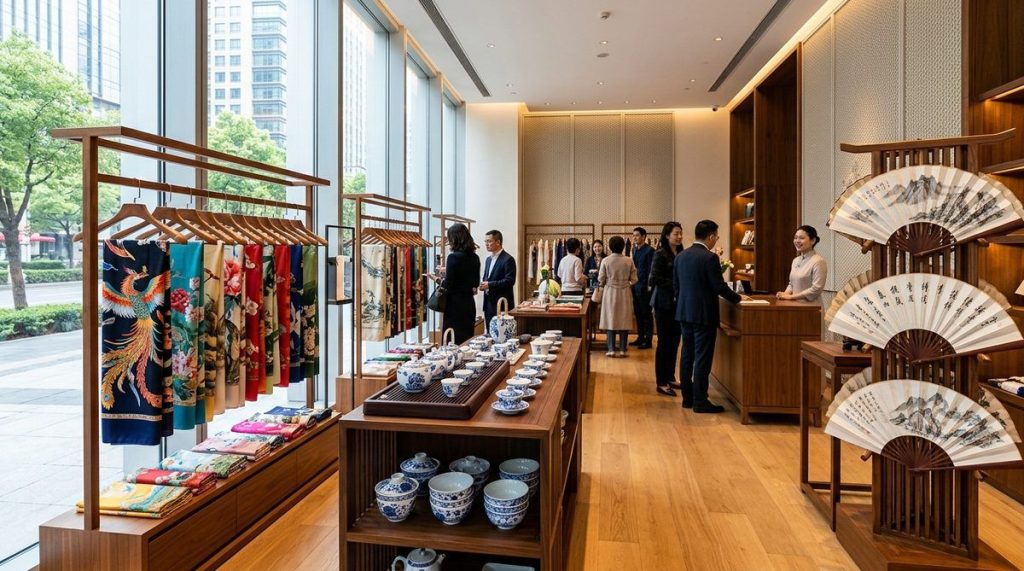
Shopping for souvenirs in China offers an incredible journey through thousands of years of craftsmanship, from delicate Jingdezhen porcelain and hand-loomed Mulberry silk to artisanal teas and high-tech gadgets. However, navigating the shopping landscape requires knowing when to negotiate assertively and when prices are strictly non-negotiable, as well as knowing how to separate genuine artisan products from mass-produced synthetic imitations.
Bargaining is an accepted cultural art form in tourist markets and flea stalls, but it does not belong in standard retail stores or department malls. Mastering the rules of engagement, authenticating materials on the spot, and understanding export restrictions ensures you bring home memorable treasures rather than overpriced regrets.
Quick Takeaways: Shopping & Bargaining in China
1. Where to Bargain vs. Where Prices Are Fixed
One of the most common mistakes first-time travelers make is attempting to bargain in the wrong retail environments. In modern China, price negotiation is restricted to specific venues.
Fixed-Price Environments (Zero Bargaining):
Modern shopping malls, department stores, brand boutiques, supermarket chains, convenience stores, and official museum gift shops (such as the Forbidden City or Shanghai Museum shops) operate with computerized barcode inventory and marked prices (Míngmǎ Biāojià, 明码标价). The cashier has zero authority to discount items. State-owned traditional pharmacies (like Tongrentang) and formal Friendship Stores also maintain strictly non-negotiable prices.
Bargaining Markets (Assertive Negotiation Expected):
Specialized tourist souvenir hubs—including Beijing’s Silk Market (秀水街) and Panjiayuan Antique Market, Shanghai’s Yuyuan Bazaar and South Bund Fabric Market, and Xi’an’s Muslim Quarter stalls—rely on negotiation. Stalls outside major scenic landmarks (Great Wall exits, Yangshuo West Street, Chengdu Jinli Street) also expect buyers to haggle.
2. The 5 Rules of Polite and Effective Haggling
Bargaining in China is a social game of humor, patience, and mutual respect. Following this proven sequence yields the fairest prices without creating tension:
Rule 1: Never Show Excessive Enthusiasm. The moment you pick up an item and exclaim how much you love it, the vendor registers your emotional attachment and anchors their starting price high. Browse casually, inspect multiple items, and ask the price of an unrelated object first.
Rule 2: Use the Calculator Method. Language barriers disappear over a digital calculator. When the merchant taps in an opening quote of 400 RMB, shake your head with a gentle smile, take the calculator, and enter your counteroffer—typically around 100 to 120 RMB (25% to 30% of the opening figure). The seller will feign shock, tap a lower number like 320 RMB, and the dance begins.
Rule 3: Bundle for Greater Discounts. If you want to buy silk scarves, tea canisters, or carved chops for multiple family members, negotiate for the bundle. Saying “How much for three?” (Sān gè duōshǎo qián?, 三个多少钱) allows the vendor to grant substantial volume discounts while maintaining margin.
Rule 4: Execute the Courteous Walk-Away. If negotiations stall and the seller refuses to drop below a figure you consider unreasonable, thank them politely, smile, and slowly walk toward the next stall. In 80% of cases, the vendor will call after you or tap your shoulder, offering your target price or meeting you halfway. If they let you walk away, you have reached their absolute bottom wholesale threshold.
Rule 5: Honor the Agreed Price. Once a vendor agrees to your stated counteroffer, backing out is considered poor etiquette. Have your Alipay or cash ready to complete the transaction smoothly.
3. Authenticating Chinese Silk and Avoiding Synthetic Traps
China produces 80% of the world’s raw silk, with centers of excellence in Hangzhou, Suzhou, and Huzhou. However, tourist stalls are flooded with inexpensive polyester blends marketed as “raw silk” or “ice silk” (Bīngsī, 冰丝).
Here is how to verify genuine Mulberry silk (Sāngshènsī, 桑蚕丝):
The Thread Burn Test: Reputable silk tailors and scarf shops will willingly pull a tiny loose thread from the inner seam or provide a fabric sample to burn with a lighter. Genuine 100% animal silk burns slowly, smells distinctly like singed hair or burning wool, stops burning the instant the flame is removed, and crumbles into fine, powdery black ash between your fingers. Synthetic polyester melts rapidly into a chemical-smelling black liquid and hardens into an uncrushable plastic bead.
Check the Momme Weight (姆米, Mǔmǐ): Momme measures the density and thickness of silk fabric. High-quality silk scarves, pillowcases, and shirts range between 16 and 19 momme. Luxury heavyweight silk apparel runs between 22 and 30 momme. Anything under 12 momme is sheer, fragile, and prone to snagging.
Luster vs. Shine: Genuine silk has a subtle, shimmering, multi-tonal pearlescence that changes shade slightly under different light angles due to its triangular prism fiber structure. Synthetic fabrics produce a flat, uniform, high-gloss white sheen.
4. Buying Authentic Tea in Wholesale Markets
Purchasing tea along popular tourist streets (such as Beijing’s Qianmen or Shanghai’s Nanjing Road) often results in steep markups for mediocre leaves in flashy metal tins. For authentic quality, visit dedicated multi-story wholesale tea markets like Beijing Maliandao Tea City (马连道茶城) or Shanghai Tianshan Tea Market.
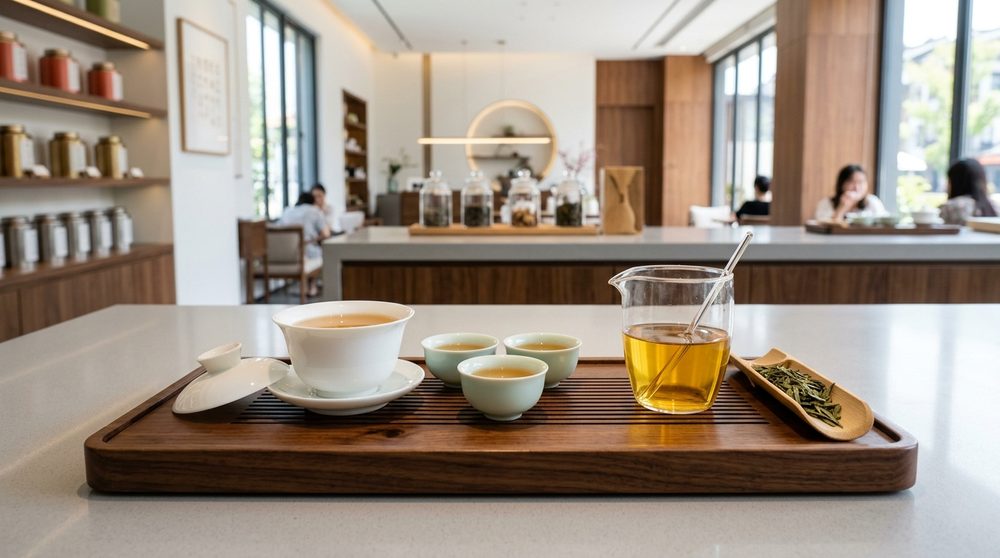
In wholesale tea markets, individual tea merchants operate private tasting booths with polished wooden Gongfu tea tables. Sit down, greet the proprietor, and taste different harvests for free. The shopkeeper will brew fresh Gaiwan infusions of Longjing Green Tea (龙井), Tieguanyin Oolong (铁观音), Dahongpao Rock Tea (大红袍), or aged Yunnan Pu’er (普洱).
Always inspect the dried whole leaves before brewing: they should be uniform in size, free of dusty debris or stems, and fragrant without artificial perfumed scents. Once you agree on a price per 500 grams (1 Jin / 斤), ask the merchant to vacuum-seal (Zhēnkōng Bāozhuāng, 真空包装) the leaves into 50g or 100g foil pouches to preserve freshness for your journey home.
5. The Tourist Jade Reality Check
Jade (Yù, 玉) holds profound cultural and spiritual significance in China, symbolizing purity, wisdom, and moral integrity. However, buying jade as an investment is one of the most perilous traps for foreign tourists.
True nephrite jade (Hetian jade / 和田玉) and gem-grade jadeite (Feicui / 翡翠) are extraordinarily rare, with top-tier pieces fetching hundreds of thousands of dollars. More than 95% of jade jewelry sold at souvenir stands, hotel gift shops, and organized tour stops consists of dyed quartz, serpentine, pulverized stone resin, or colored glass.
Unless you are an expert gemologist accompanied by a trusted local appraiser, treat street-market jade purely as attractive costume jewelry. Never spend more than 50 to 100 RMB ($7–$14 USD) on an uncertified jade bangle, pendant, or carved figurine, regardless of what elaborate “certificates of authenticity” the seller displays.
6. Customs Duty Rules and Cultural Relic Restrictions
Before packing your purchases, ensure they comply with Chinese export laws and your home country’s agricultural regulations:
Strict Ban on Pre-1949 Cultural Relics: Chinese heritage laws strictly prohibit the unauthorized export of cultural antiques produced before 1949. Genuine antiques cleared for export must bear an official red wax seal stamped by the State Administration of Cultural Heritage and be accompanied by an export sales receipt. Falsely stamped “antiques” sold at flea markets will either be confiscated by Chinese customs or cause serious delays at border inspection.
Tea and Agricultural Imports: Commercial, dried, vacuum-sealed teas are fully permitted into the United States, Canada, the European Union, and the United Kingdom without quarantine issues. However, you must declare them on your customs arrival form. Unprocessed roots, seeds, fresh tea leaves, or raw animal products (like bird’s nest or raw honey) will be confiscated at Western border controls.
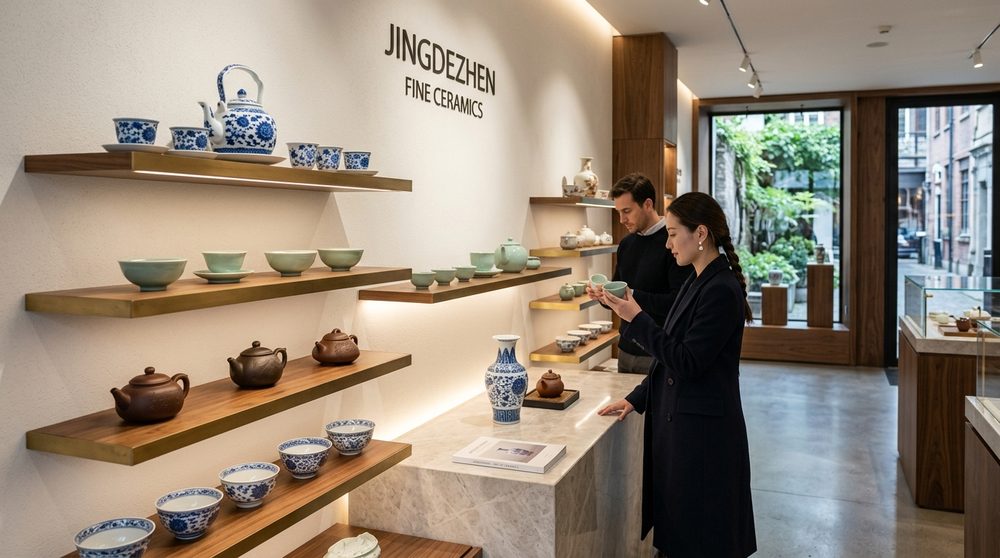
Porcelain Packaging: When purchasing handmade Jingdezhen ceramic vases, bowls, or tea sets, request double bubble-wrap and form-fitted cardboard gift boxes (Lǐhé, 礼盒). Most reputable porcelain galleries can safely pack delicate porcelain for checked luggage or arrange international courier shipping directly to your home address via SF Express or DHL.