
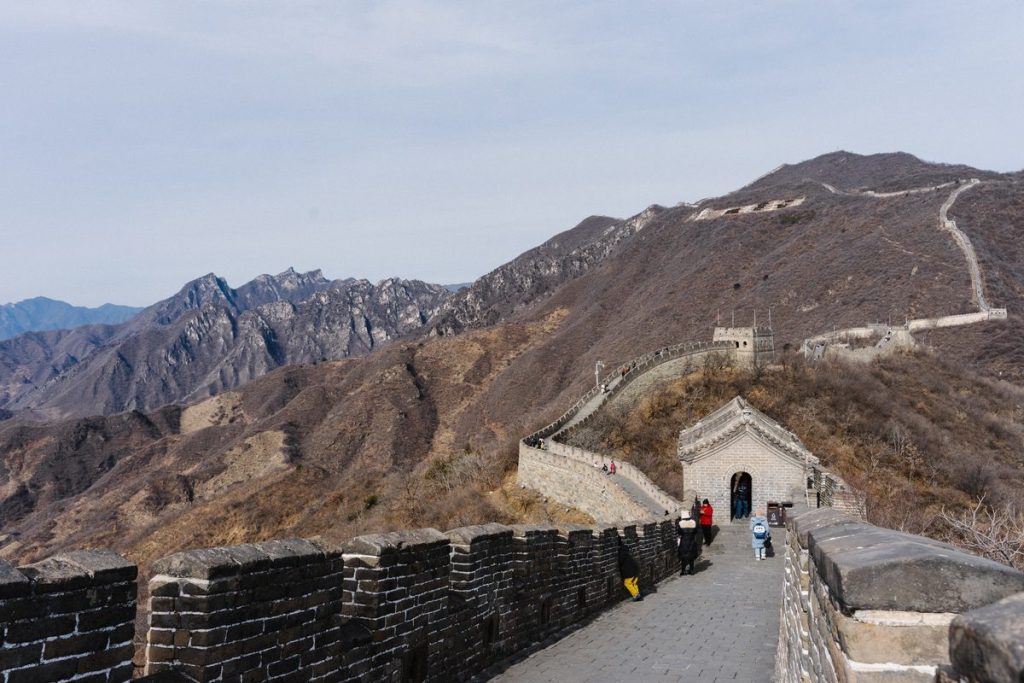
Booking a guided day trip offers an appealing way to explore distant historical wonders like the Mutianyu Great Wall, Xi’an’s Terracotta Army, or the Longji Rice Terraces without the stress of navigating rural transit. However, navigating the tour market requires caution: beneath glossy flyers offering rock-bottom rates lies a widespread industry of forced shopping detours, commission-driven jade factories, and unlicensed guides.
Understanding how legitimate tour operators structure their services—and learning to identify the telltale signs of subsidized shopping expeditions—ensures your precious vacation hours are spent marveling at ancient history rather than waiting inside factory showrooms.
Quick Facts: Day Tour Safety in China
1. The Myth of the “Ultra-Budget” Day Tour
Pamphlets scattered across hotel reception desks, hostel bulletin boards, or distributed near central subway stations frequently advertise full-day excursions to bucket-list sights for as little as 100 to 150 RMB ($15 to $20 USD). These packages usually claim to include round-trip luxury coach transfers, professional English commentary, and a multi-course banquet lunch.
Simple math reveals the reality: highway toll fees, round-trip fuel, and entrance tickets alone exceed that price tag. Operators make their margins by docking the tour bus at two or three massive “tourist handicraft demonstration centers” along expressway corridors. These stops—typically disguised as government jade carving academies, traditional silk quilt workshops, or traditional Chinese medicine clinics—often hold tourists hostage for up to 90 minutes each while sales staff employ aggressive high-pressure tactics.
To avoid spending your afternoon inside a windowless jewelry showroom, book only tours verified as “Pure Sightseeing” (纯玩 – Chun Wan). True zero-shopping excursions generally cost between 380 and 650 RMB ($55 to $90 USD) per person, providing licensed bilingual guides, comfortable vehicles, and unhurried hours exploring archaeological wonders.

2. Phony Docents and the Jade Detour at Historic Sites
Outside the main ticket plazas of major institutions like the Terracotta Army Museum or Beijing’s Summer Palace, freelance operators wearing smart suits and laminated badges frequently approach foreign visitors. Introducing themselves as “senior museum cultural lecturers” or “special heritage educators,” they offer cut-rate guided tours, promising to bypass crowded ticket queues through “insider access channels.”
While the initial historical commentary is often engaging, the tour frequently concludes in a private retail salon located just outside the museum perimeter. Here, visitors are introduced to a “visiting master artisan” offering exclusive, one-day clearance discounts on supposedly ancient jade pendants or cloisonné ceramics accompanied by impressive-looking official appraisal papers.
Legitimate docents employed by national cultural heritage bureaus never steer travelers to private retail establishments or solicit commission sales. When seeking a licensed English guide, proceed directly through the security checkpoint to the official Audio Guide & Docent Desk (人工讲解服务处) located inside the visitor center, where certified, badge-wearing professionals are assigned at fixed, regulated rates.
3. Bizarre Upsell Claims: The “Hidden Scenic Spot” Mirage
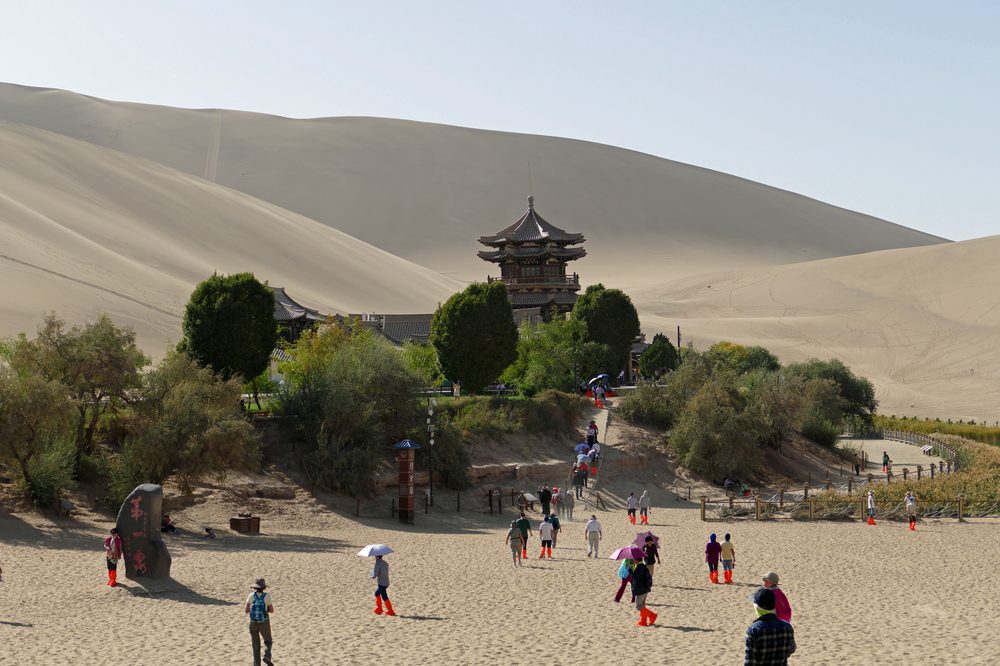
A curious scam reported in western and northwestern travel destinations—such as Dunhuang’s Mingsha Mountain, Qinghai Lake, or the Yunnan highlands—involves freelance drivers trying to convince international travelers that official viewpoints are artificial imitations. Near Dunhuang’s famous Crescent Spring (月牙泉), rogue buggy operators have been known to tell foreign tourists: “The spring you see from the marked wooden boardwalk is an artificial pool filled with pumped tap water; the real sacred ancient desert oasis is located six miles deeper in the dunes. Pay 300 RMB for my dune buggy to see the authentic spring.”
Every premier Chinese scenic destination (officially categorized as a 5A National Tourist Attraction) strictly protects documented natural monuments within its designated boundaries. There are no “secret second versions” hidden behind ticket gates. Always stick to official paved paths and wooden boardwalks, follow the park’s bilingual map signage, and ignore unauthorized drivers soliciting off-grid excursions.