
As the starting point of the ancient Silk Road and the imperial capital of thirteen dynasties spanning over eleven centuries, Xi’an (西安) represents the monumental cradle of Chinese civilization. While modern Xi’an has transformed into a thriving western technological and educational hub, its historical soul remains intact within its colossal rectangular Ming Dynasty stone walls and surrounding imperial mausoleums.
Spending forty-eight hours in Xi’an offers the perfect window to experience its three quintessential attractions: standing face-to-face with the thousands of subterranean soldiers guarding China’s First Emperor, cycling atop the world’s most complete medieval fortification, and exploring the culinary street alleys of the historic Muslim Quarter.
48 Hours in Xi’an: Essential Itinerary Plan
1. Day 1 Morning: Visiting the Terracotta Army Without Crowds
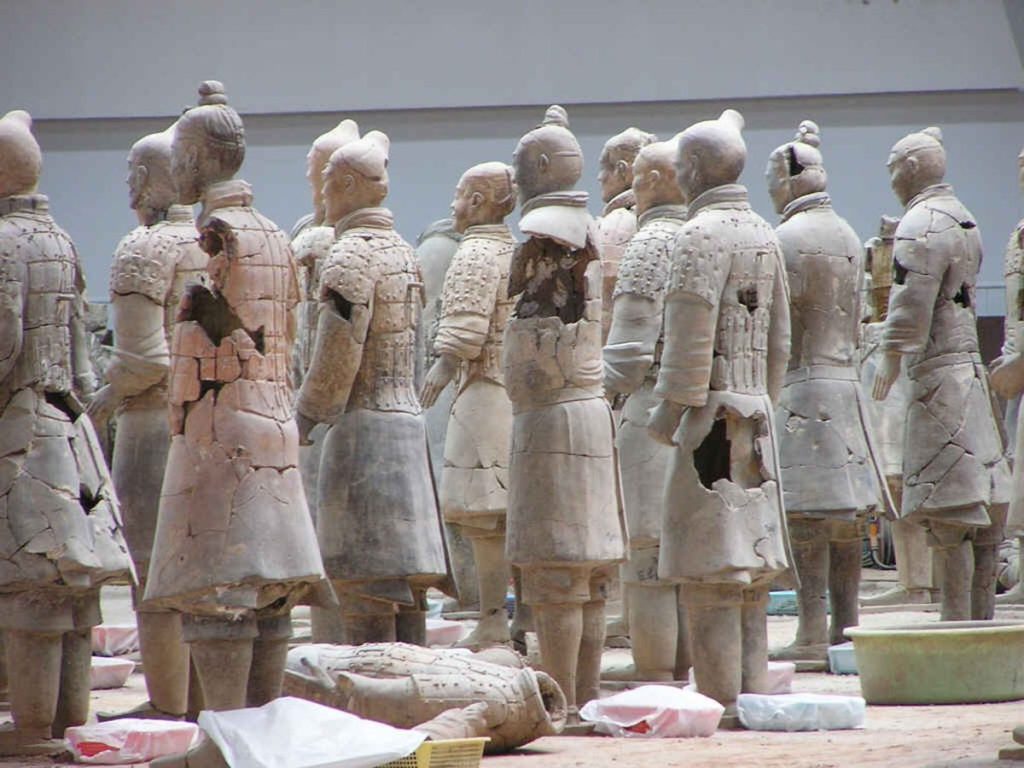
Discovered accidentally by local well-diggers in 1974, the Emperor Qinshihuang Mausoleum Site Museum (秦始皇帝陵博物院) houses an underground terracotta army constructed over 2,200 years ago to guard China’s unifier in the afterlife. The site is located approximately 40 kilometers east of downtown Xi’an in Lintong District.
Transportation Options:
• Metro + Short Bus (Cheapest): Take Metro Line 1 or 6 to Fangzhicheng Station, transfer to Metro Line 9 east to Huaqingchi Station (Exit C), and take Lintong Bus 613 directly to the museum gate (total transit time: 60–75 minutes, cost: 9 RMB).
• Direct Tourist Shuttle: Board the official tourist coach departing from the East Square of Xi’an Railway Station (around 30 RMB one-way).
• DiDi / Taxi: A one-way ride from central Xi’an costs 120 to 150 RMB ($17–$21 USD) and takes approximately 45 minutes on the expressway.
Mastering the Pit Routing: Admission costs 120 RMB and must be booked seven days in advance using your passport on the official museum WeChat portal. The gates open at 8:30 AM. Arrive by 8:15 AM to clear security and follow this strategic order to avoid the dense mid-morning tour groups:
1. Pit 1 (One-Hour Window): Head directly into Pit 1, the largest airplane-hangar-sized excavation containing over 6,000 infantrymen and chariots standing in battle formation. In the early morning, the front viewing platform is relatively uncrowded. Notice that every soldier possesses unique facial features, hairstyles, armor plates, and hand postures.
2. Pit 3 (The Command Center): Move to Pit 3, the smallest pit, representing the military command post where senior generals held strategic councils and performed divination rituals before war.
3. Pit 2 (Specialist Units): Walk to Pit 2, containing archers, cavalrymen, and chariots. Here, visit the glass display cases showcasing pristine individual figures: the famous Kneeling Archer (retaining traces of its original cinnabar red and green mineral lacquer) and the High-Ranking Officer.
4. Lishan Mausoleum Park: Your ticket includes a free shuttle bus to the actual tomb mound of Emperor Qinshihuang at Lishan, where two intricate half-scale bronze imperial chariots and horses are displayed in the bronze exhibition hall.
2. Day 1 Afternoon: Shaanxi History Museum & Giant Wild Goose Pagoda
Return to central Xi’an by 14:00 PM for lunch, then visit the Shaanxi History Museum (陕西历史博物馆). Considered one of China’s premier national museums, it houses over 370,000 cultural relics charting the rise of the Zhou, Qin, Han, and Tang empires. General admission is free but strictly capped; tickets must be reserved three days ahead via their official WeChat mini-program. Pay the modest 30 RMB fee for the Exhibition of Tang Mural Paintings, which features exquisite tomb frescoes of palace maids, court polo matches, and Silk Road camel drivers.
At sunset, walk south to the Giant Wild Goose Pagoda (大雁塔). Admire the elegant 64-meter brick pagoda built in 652 CE to preserve Buddhist sutras. The North Square hosts the largest musical fountain show in Asia every evening (typically 19:00 and 21:00 PM). Continue walking through the vibrant pedestrian boulevard of the Grand Tang Everbright City (大唐不夜城), filled with street performers in traditional Hanfu attire, illuminated pavilions, and floating acrobats.
3. Day 2 Morning: Cycling the 13.7-Kilometer Ancient City Wall
The Xi’an Ancient City Wall (西安古城墙) was constructed during the early Ming Dynasty (1370–1378) atop the foundations of the Tang Dynasty imperial palace. Standing 12 meters high, 12 to 14 meters wide across the top, and stretching 13.74 kilometers in circumference, it is the most complete surviving ancient city defense wall in the world.
Cycling Logistics and Depots:
• Entry Point: Enter at Yongning Gate (South Gate, 永宁门), the grandest gate featuring a double barbican defense system. Admission is 54 RMB. Ascend the wide horse ramp (mǎdào) to the top.
• Bike Rental Rules: Official bicycle rental stations operate directly at Yongning Gate and the other three cardinal gates. A single standard bicycle costs 45 RMB for three hours; a tandem bicycle costs 90 RMB. A refundable deposit (or Alipay authorization) of 100 RMB is required. You can pick up a bicycle at South Gate and return it at any other cardinal gate if you choose not to complete the full loop.
• Riding Realities: The entire top surface is paved with ancient stone pavers. The surface is bumpy and causes constant vibration through the handlebars. Complete the circuit at a relaxed pace (roughly 90 minutes to two hours). The wide ramparts offer unique views: looking inward reveals tranquil low-rise courtyard neighborhoods and the Bell Tower, while looking outward showcases modern skyscrapers across the surrounding moat parks.
Reserve Xi’an Attraction Tickets & High-Speed Rail
The Terracotta Warriors strictly enforce timed entry limits for passport holders. Reserve official museum entry and high-speed rail connections in advance:
4. Day 2 Afternoon & Evening: The Muslim Quarter & Food Secrets
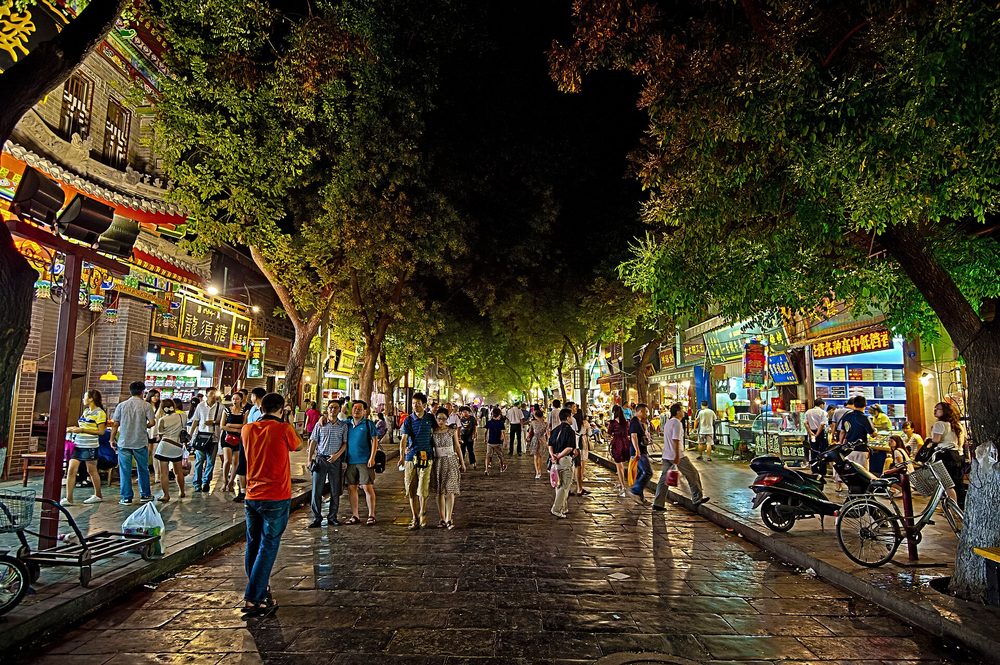
Descend from the wall at South Gate and walk ten minutes north past the illuminated Bell and Drum Towers into the Muslim Quarter (回民街, Huímín Jiē). This vibrant ethnic Hui Muslim enclave has thrived here since Tang Dynasty merchants arrived along the Silk Road.
The Great Mosque of Xi’an (西安化觉巷清真大寺): Before exploring the food stalls, escape into the serene courtyards of the Great Mosque, founded in 742 CE. Unlike Middle Eastern mosques with domes and minarets, this complex is built entirely in classical Chinese courtyard architecture, featuring wooden pagodas, upturned eaves, and stone archways carved with Arabic calligraphy styled like Chinese characters.
Authentic Food Tasting Strategy: Avoid the main tourist drag of Beiyuanmen, where souvenir stalls sell mass-produced trinkets. Instead, turn west into the narrower, authentic back alleys of Dapiyuan (大皮院) and Xiyangshi (西羊市) where local families have operated small specialty kitchens for generations:
• Yangrou Paomo (羊肉泡馍): The signature Xi’an dish. You are given a large ceramic bowl and two discs of unleavened flatbread (tuótuó mó). You must tear the bread by hand into tiny, pea-sized crumbs. Hand the bowl back to the kitchen, where the chef ladles rich, spiced lamb broth, tender lamb slices, and glass noodles over the bread. Eat it with sweet pickled garlic cloves (tángsuàn) and chili paste (35–50 RMB).
• Roujiamo (肉夹馍): Frequently hailed as the “Chinese hamburger,” featuring slow-braised pork belly or spiced beef stewed in a master stock of star anise and Sichuan peppercorns, finely chopped and stuffed inside a crisp, flatbread bun (15–20 RMB).
• Biangbiang Noodles: Thick, wide, belt-like noodles slapped against the prep counter with a rhythmic “biang-biang” sound, boiled, topped with chili flakes, minced garlic, and scallions, then scalded with smoking hot vegetable oil (18–25 RMB).
• Liangpi (凉皮): Refreshing cold wheat starch noodles dressed in black rice vinegar, sesame paste, garlic water, and fiery red chili oil (8–12 RMB).