
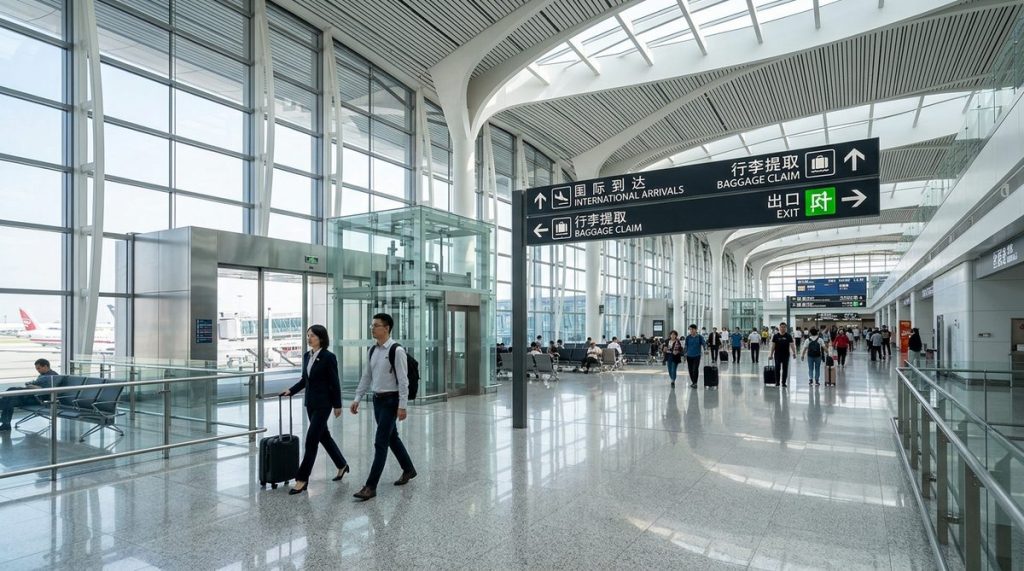
Landing at an international gateway like Beijing Capital, Shanghai Pudong, or Guangzhou Baiyun begins with a straightforward administrative step: completing the official paper Arrival Card for foreigners. Every international visitor holding a foreign passport—including travelers entering under 15-day or 30-day visa-free policies, 144-hour or 240-hour transit exemptions, or conventional tourist visas—must present this signed slip at border control before proceeding to baggage claim.
While the document requires only basic flight and lodging details, simple oversights such as omitting a local contact number or paying for fake electronic cards online create unnecessary friction. Following the correct airport sequence guarantees quick clearance through the immigration hall in under twenty minutes.
Quick Takeaways: China Arrival Card Rules
1. Who Must Complete the Physical Arrival Card?
Every non-Chinese national arriving in mainland China must complete a paper Arrival Card prior to border inspection. This rule applies equally to tourists with standard consular visas, citizens of bilateral visa-exempt nations, and transit passengers utilizing the 144-hour or 240-hour visa-free transit facilities. Only Chinese citizens, permanent residence card holders, and travelers with specialized diplomatic credentials bypass this requirement.
Cabin crew distribute the physical cards approximately two hours before arrival on long-haul international flights. If you sleep through distribution or arrive via a short regional connection where cards ran out, do not panic. Dozens of brightly lit writing desks equipped with pens and blank forms stand directly in front of the fingerprint scanning bank at all primary international terminals.
Unlike customs declarations in some Western nations where one form covers an entire household, China requires an individual card for each traveler, including infants and young children. Parents or guardians fill out and sign separate slips on behalf of minors.
2. Avoiding the “Paid Online Arrival Card” Trap
There is no mandatory paid online registration system for entering mainland China as a tourist. Several commercial websites run sponsored search advertisements under terms like “China arrival card online application” or “China electronic arrival declaration,” charging travelers between $40 and $85 to issue a generic printable PDF. These services have zero affiliation with China’s National Immigration Administration (NIA).
The official arrival card is 100% free and supplied directly by border authorities on arrival. While authorities occasionally trial digital mini-programs for customs declarations or transit pre-clearance, standard immigration inspection booths continue to collect the signed physical slip. Never enter credit card details or upload passport scans to private third-party registration portals.
Legitimate requirements never ask for payment at immigration desks. If any individual or website asks for processing fees to secure border entry documentation outside of official consular visa fees, treat it immediately as a commercial mark-up or phishing attempt.
3. Line-by-Line Form Completion Instructions
The card is printed in English and Chinese, requiring clear Latin script in block letters. Ensure your entries match your passport machine-readable zone to avoid clerical questions at the counter.
Complete each line using the following standard guidelines:
Family Name & Given Names: Write your legal surname and first/middle names exactly as shown in your passport biographical page.
Nationality & Passport Number: Enter your full passport number carefully, double-checking letters like ‘O’ versus digits like ‘0’.
Flight Number: Enter the inbound flight code that lands you in China (such as MU588, CA986, or UA857), not connecting domestic legs taken earlier.
Visa Number or Entry Category: If entering with a consular visa sticker, write the 8-digit red or black number located at the top right of the sticker. If entering under bilateral visa-exempt policies (such as passport holders from Germany, France, Italy, Australia, Singapore, or Malaysia), write “VISA-FREE”. If utilizing the multi-day regional transit exemption, write “144-HOUR TRANSIT”.
Place of Visa Issuance: Write the city of the Chinese consulate that issued your visa. Leave this line blank if entering visa-free.
Inviting Unit or Contact Person in China: Independent travelers without personal sponsors should write the registered name of their first booked hotel (for instance, “Grand Hyatt Beijing”) and the hotel front desk phone number. Having your booking confirmation accessible offline on your phone or in printed format makes copying these details painless.
Address in China: Write the street address or general district of your initial accommodation (e.g., “Dongcheng District, Beijing”).
Purpose of Visit: Mark the primary box corresponding to your trip (“Sightseeing/Leisure”, “Business”, or “Visiting Relatives”).
4. Airport Entry Workflow: Kiosks, Counters, and Luggage
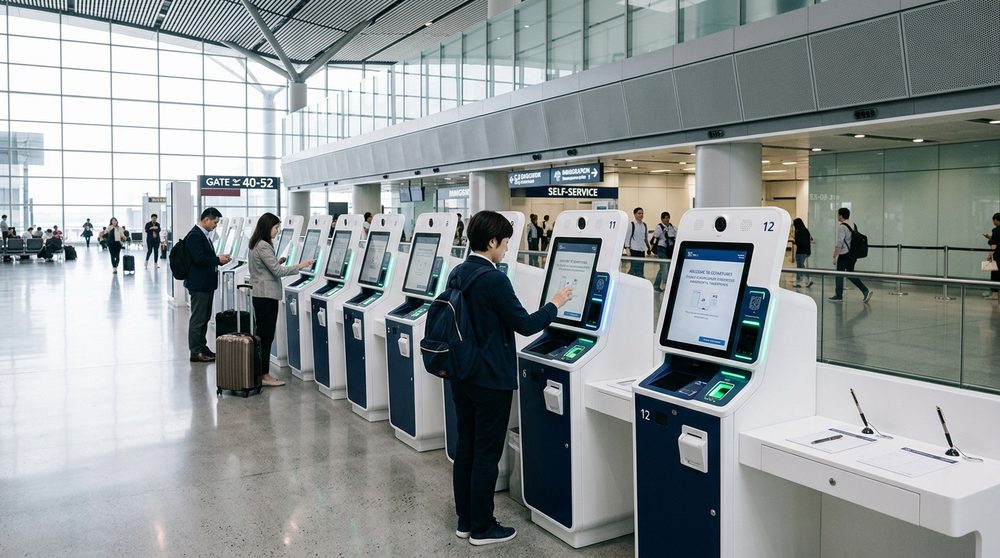
Stepping off the jet bridge leads into a modern, climate-controlled corridor directing all arriving passengers toward the international arrivals hall. Before joining the physical immigration queues, foreign travelers aged 14 to 70 must stop at the automated Foreigner Fingerprint Self-Collection Kiosks (外国人指纹自助采集机).
These kiosks feature multi-lingual touchscreens. Select English, place your passport biographical page face-down on the glass scanner, and follow the animated prompts to scan four left fingers, four right fingers, and both thumbs. The machine completes the scan in thirty seconds and dispenses a small white paper receipt marked “OK”. Tuck this receipt inside your passport page alongside your completed paper Arrival Card.
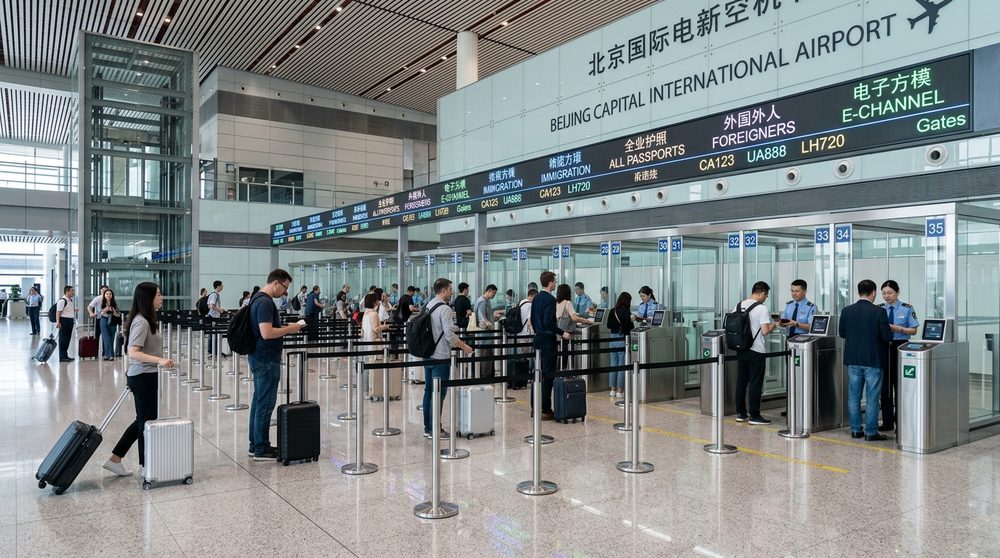
Next, proceed to the immigration inspection gates. Follow the overhead digital signs labeled “Foreign Passengers” (外国人通道). If you are processing a 144-hour or 240-hour visa exemption, look for the dedicated counter labeled “144-Hour Transit Without Visa” (临时入境许可申请通道), where officers check your onward international flight ticket before endorsing your passport.
Hand the officer your passport, inbound boarding pass, completed Arrival Card, and fingerprint receipt. The officer inspects your documents, captures a digital facial photo via the desk camera, stamps your passport, and retains the Arrival Card. Once through the gate, follow the baggage carousel monitors down to the luggage hall and pass through customs inspection.