
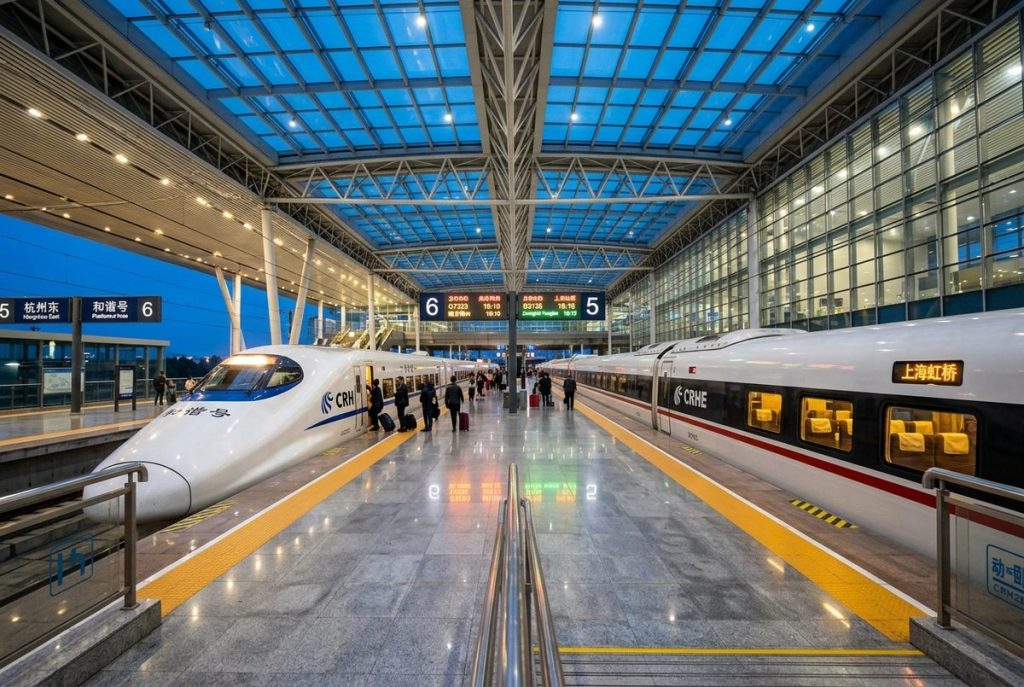
When planning intercity journeys across China, travelers have two premier rail options: daytime High-Speed Bullet Trains (G & D Trains) running at up to 350 km/h, and Overnight Sleeper Trains (D Sleeper & Traditional Z/T Sleeper Trains) that cover long distances while you rest. Choosing between a daytime bullet train and an overnight sleeper depends on your travel distance, daytime sightseeing schedule, and accommodation preferences.
- Under 5–6 Hours: Choose a daytime High-Speed Bullet Train (G-Train / D-Train). Faster, frequent departures every 15–30 minutes, and scenic daytime views.
- Over 1,000–1,500 km: Consider an overnight High-Speed Sleeper (D-Sleeper) or Classic Soft Sleeper. Saves a night of hotel costs and arrives right at breakfast time.
- Best Sleeper Class for Foreigners: Soft Sleeper (软卧) or Deluxe Soft Sleeper (高级软卧) for enclosed 4-berth/2-berth lockable cabins.
- Booking: Reserve seats 14 days in advance on Trip.com Trains with passport verification.
1. High-Speed Bullet Trains (G/D Series): Speed, Seating & Daytime Travel
China’s High-Speed Rail network is the largest in the world. Modern G-trains (Gaotie) connect megacities like Beijing and Shanghai (1,318 km) in just 4.5 hours with airline-style comfort.
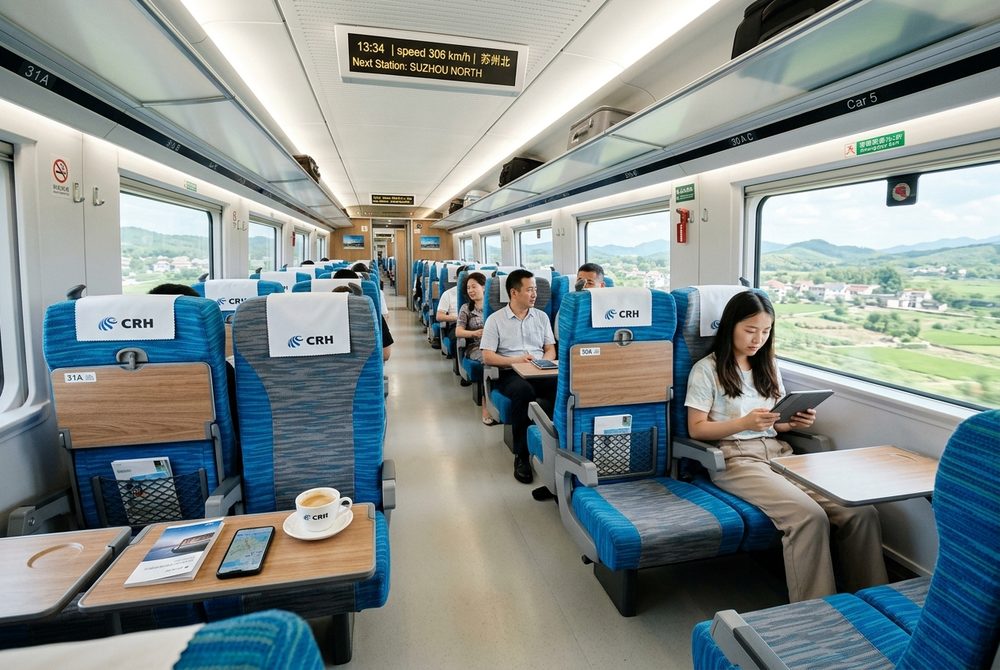
- Second Class (二等座): 3+2 seat configuration. Spacious legroom, adjustable recline, individual power/USB sockets beneath seats, and fold-down meal trays. Excellent value and extremely popular.
- First Class (一等座): 2+2 seat configuration. Wider plush seats, greater recline angle, footrests, and quieter carriage environment.
- Business Class (商务座): 1+2 or 1+1 luxury pod configuration. Fully flat 180-degree lie-flat beds, dedicated attendant service, complimentary gourmet meals, and access to VIP station lounges.
2. China Sleeper Trains: Berths, Cabins & Amenities
Overnight sleeper trains are a classic and romantic way to travel long distances in China. There are two distinct types of sleeper trains running today:
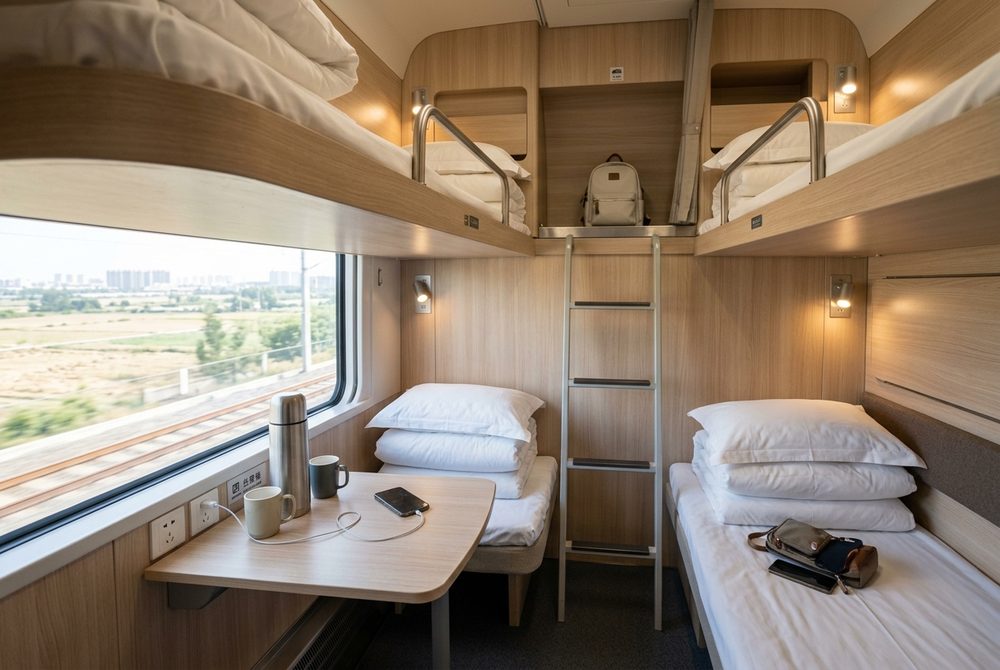
- High-Speed D-Sleepers (动卧): Modern aerodynamic bullet trains running at 250 km/h overnight (popular on routes like Beijing–Hong Kong, Shanghai–Shenzhen, and Beijing–Xi’an). Very quiet, air-conditioned, with smooth suspension and spotless Western/squat toilets.
- Soft Sleeper (软卧 – Recommended): 4-berth enclosed compartment with a sliding lockable door. Thick mattresses, clean duvets, personal reading lights, luggage space, and power outlets.
- Hard Sleeper (硬卧): Open-plan compartment without doors, featuring 6 berths (Upper, Middle, Lower). Cheaper, but lacks privacy and has narrower head clearance on upper bunks.
- Deluxe Soft Sleeper (高级软卧): 2-berth private cabin with private sofa, closet, and ensuite washroom/toilet, available on select premier routes.
3. Practical Tips for an Overnight Sleeper Journey
Taking a sleeper train in China is straightforward when you pack smartly:
- Luggage Space: In Soft Sleeper cabins, large suitcases slide beneath lower bunks or into the spacious overhead alcove above the corridor door.
- Free Boiling Water: Every carriage has an automatic hot water dispenser at the end of the aisle. Bring tea bags, instant coffee, or cup noodles.
- Ticket Booking Tip: Popular sleeper routes sell out quickly. You can compare real-time seat availability and secure e-tickets directly via Trip.com Trains.