
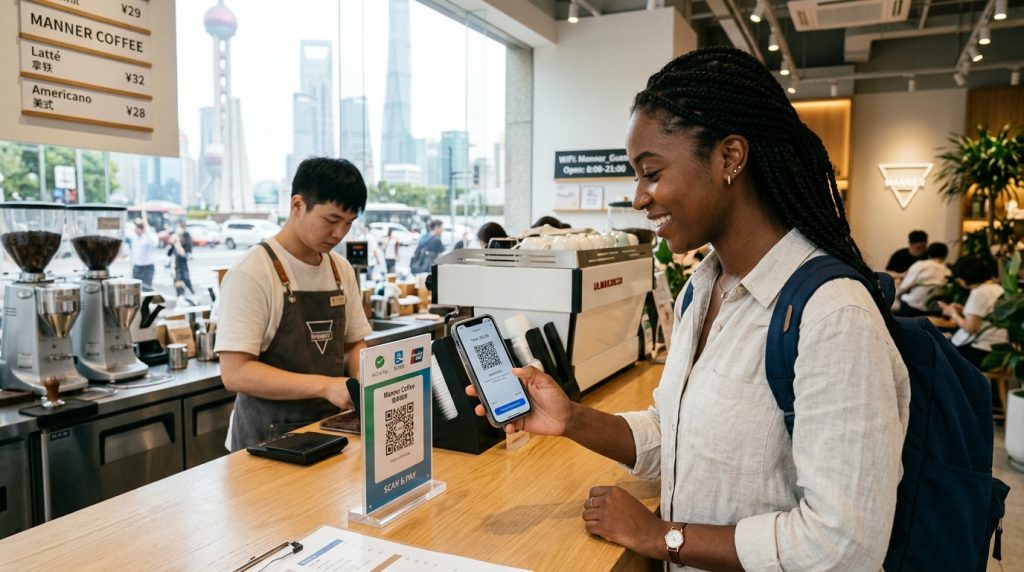
China is virtually a cashless society. From major department stores and high-speed railway stations to street food stalls and metered taxis, over 95% of daily retail transactions are completed via mobile QR codes. For international visitors arriving in China, relying solely on cash or traditional physical credit cards is no longer practical—most small vendors do not have cash change on hand, and international card swipe terminals are largely confined to four-star and five-star international hotels.
Fortunately, international travelers can now directly link overseas credit cards—including Visa, Mastercard, JCB, and Diners Club—to Alipay and WeChat Pay without needing a local Chinese bank account or a Chinese phone number. This comprehensive 2026 guide covers the exact setup process, verification requirements, transaction fee thresholds, and real-world spending strategies.
Quick Summary: Mobile Payments in China (2026)
1. Why You Need Both Alipay and WeChat Pay
While Alipay and WeChat Pay share near-identical market coverage across China, setting up both before departure ensures complete coverage:
- Alipay (支付宝): Generally the easiest and most reliable app for international tourists. It features a dedicated English interface (International Version), built-in mini-programs for subway QR codes across major cities, and an integrated English DiDi ride-hailing portal.
- WeChat Pay (微信支付): Integrated directly within WeChat, China’s primary messaging app. It is indispensable for scanning restaurant table QR codes to order food and paying smaller community vendors.
2. Step-by-Step: How to Set Up Alipay with a Foreign Credit Card
Setting up Alipay takes approximately 5 to 10 minutes. It is best completed prior to your flight to ensure your home bank does not block initial verification security prompts.
- Download the App: Install Alipay from the Apple App Store or Google Play Store.
- Sign Up with Your International Number: Select your country code (e.g., +1 for USA, +44 for UK, +61 for Australia) and register via SMS verification code.
- Switch to International Version: When prompted, select the “International” mode to activate the clean, English-language dashboard designed for global travelers.
- Add Your Bank Card: Tap Account (Me) → Bank Cards → Add Card. Enter your card number, expiration date, and CVV.
- Complete Identity Verification: Upload a clear photo of your passport information page. Verification is processed automatically within minutes.
3. Step-by-Step: How to Set Up WeChat Pay
If you already have a WeChat account, activating WeChat Pay follows a similar procedure:
- Open WeChat and navigate to Me → Services → Wallet.
- Select Cards → Add a Card.
- Enter your international Visa or Mastercard details and your billing address.
- Authenticate the card via your bank’s 3D Secure SMS code or banking app approval prompt.
4. How to Pay in Real-World Situations: Scan vs. Show
When making a purchase in China, you will encounter two primary payment mechanisms:

Method A: You Scan the Vendor (Scan / 扫一扫)
Common at street food stalls, small grocery shops, and sit-down restaurant tables. Tap Scan in Alipay or WeChat, scan the printed acrylic QR stand, enter the exact RMB amount, and confirm payment.
Method B: The Vendor Scans You (Pay / 收付款)
Common at supermarkets, chain coffee shops (like Starbucks/Luckin), ticket booths, and convenience stores. Tap Pay to generate your dynamic barcode, hold your phone toward their scanner, and the payment deducts instantly.
5. The 200 RMB Fee Rule and How to Save Money
Both Alipay and WeChat Pay enforce an official fee threshold for international credit cards:
- Transactions ≤ 200 RMB (approx. $28 USD): 0% fee. Neither Alipay nor WeChat charges any service fee. You pay only the standard interbank exchange rate applied by your credit card issuer.
- Transactions > 200 RMB: A 3% processing fee applies to the total transaction amount.
Practical Tip: If you are shopping at a store or dining with a companion and the total bill comes to 350 RMB, you can ask the cashier if you can split the payment into two separate transactions under 200 RMB (e.g., 180 RMB and 170 RMB) to completely avoid the 3% charge.
6. Beyond Payments: Built-In Transit & Ride-Hailing
One of the most significant advantages of Alipay is its integrated transportation ecosystem:
Related Guide: Check our in-depth practical advice on step-by-step guide to using WeChat Pay with foreign credit cards.

- Subway & City Bus QR Codes (Transport): Tap Transport in Alipay, select your city (Beijing, Shanghai, Guangzhou, Shenzhen, Chengdu, etc.), and generate a dedicated public transit QR code. Simply tap your screen at subway entry and exit turnstiles without purchasing single-journey tokens.
- English DiDi Ride-Hailing: Search “DiDi” inside Alipay to access ride-hailing. The interface features automatic two-way translation, allowing you to chat with drivers in English while they read your messages in Chinese.
7. Essential Troubleshooting & Tips
- Notify Your Bank Before Traveling: Foreign transactions originating through Chinese merchant aggregators may trigger bank anti-fraud flags. Inform your bank of your travel dates to China.
- Carry a Backup Credit Card: Link at least two different cards (e.g., one Visa and one Mastercard from different issuers) to avoid disruptions if one institution flags a charge.
- Keep a Small Cash Reserve: While rare, having 200–500 RMB in physical cash serves as an emergency fallback in remote mountainous areas or during phone battery depletion.