
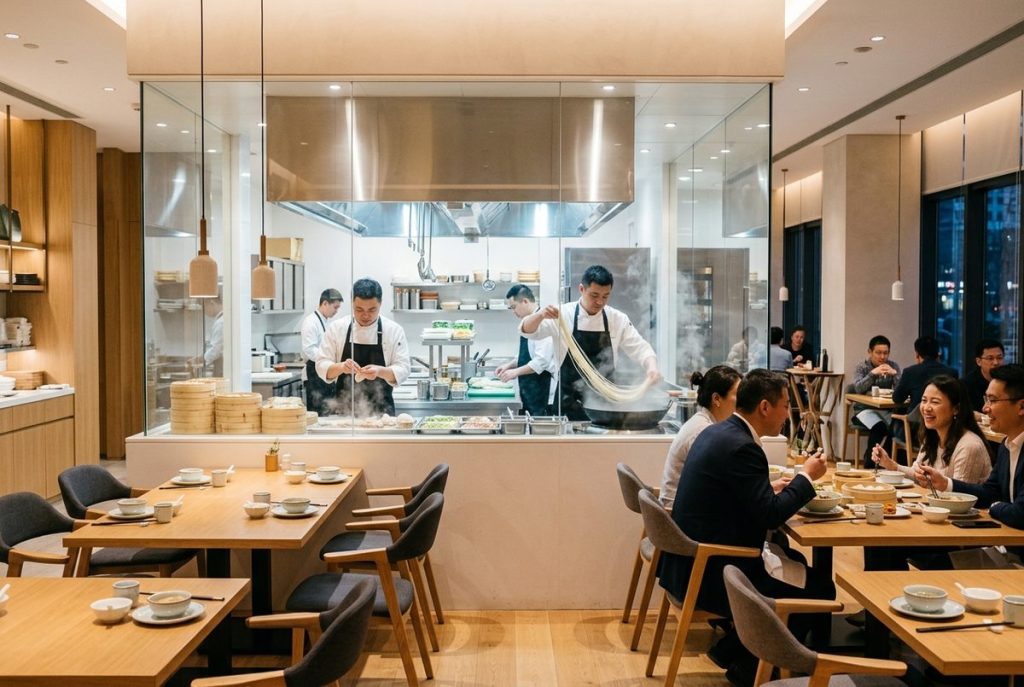
China is one of the world’s great culinary destinations, where regional cuisines—from spicy Sichuan hotpot and delicate Cantonese dim sum to savory Xi’an hand-pulled noodles—form the highlight of any trip. For international visitors, navigating food hygiene and drinking water is straightforward once you understand a few foundational rules regarding tap water, boiling culture, restaurant hygiene ratings, and street food dining.
- Never Drink Direct Tap Water: Tap water across China is not meant for direct unboiled consumption; always drink bottled, filtered, or boiled water.
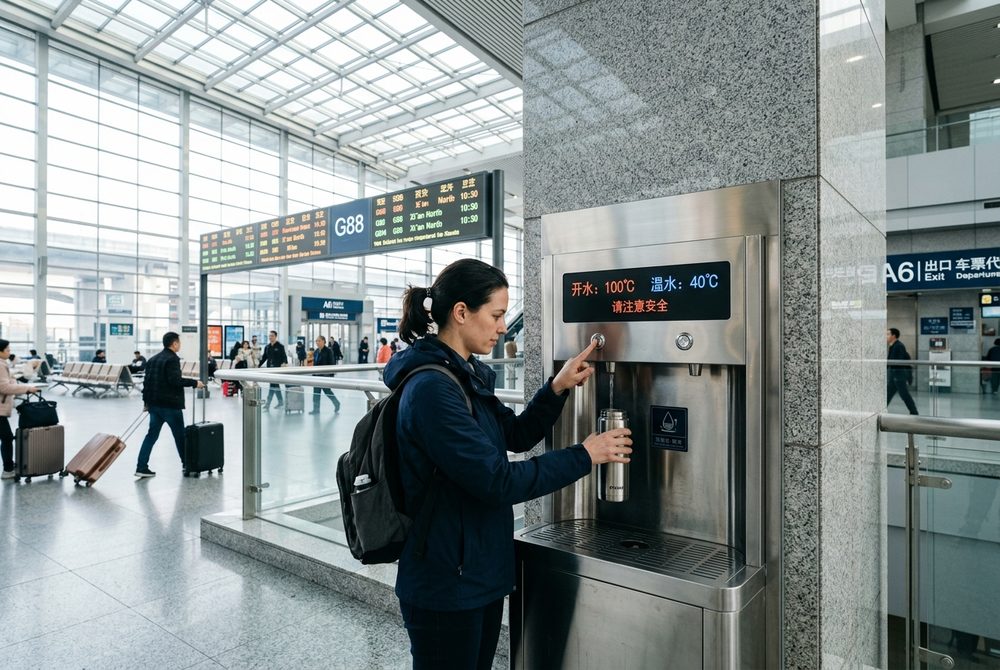
- Hot Water Culture: Free dispensers offering boiling (100°C) and warm (40°C) purified water are universal at train stations, airports, and hotels.
- Government Face Ratings: Look for the green smiling face (Grade A) or yellow face (Grade B) food hygiene inspection certificate displayed at restaurant cashiers.
- Ice Cubes & Bubble Tea: Modern tea and coffee chains (Heytea, Luckin, Starbucks) use commercial filtered ice machines that are completely safe.
1. Drinking Water Safety: Tap Water, Bottled Brands & Boiled Water Stations
While municipal tap water in major Chinese cities is treated at treatment plants, legacy building pipes and storage cisterns mean tap water should never be drunk straight from the faucet. However, access to clean drinking water is never an issue:
- Bottled Water Everywhere: Inexpensive bottled mineral water (2–4 RMB / $0.30–$0.55 USD for 550ml) is sold on every street corner, convenience store (FamilyMart, 7-Eleven, Lawson), and subway kiosk. Reliable brands include Nongfu Spring (农夫山泉 – red cap), C’estbon (怡宝 – green label), and Ganten (百岁山 – blue bottle).
- Hotel In-Room Amenities: Almost every hotel room in China provides 2 to 4 complimentary sealed bottles of mineral water replenished daily, alongside a clean electric kettle for boiling water or brewing complimentary green/black tea.
- Public Boiling Water Dispensers: High-speed rail carriages, train station concourses, and airport waiting lounges feature free multi-temperature water dispensers. Carrying an insulated travel tumbler allows you to fill up with hot or warm filtered drinking water anytime.
2. Dining Out: Restaurant Hygiene Standards, Ratings & Tableware
Commercial restaurant cleanliness in China has improved dramatically over the past decade under stringent food safety inspection regimes enforced by the State Administration for Market Regulation (SAMR):
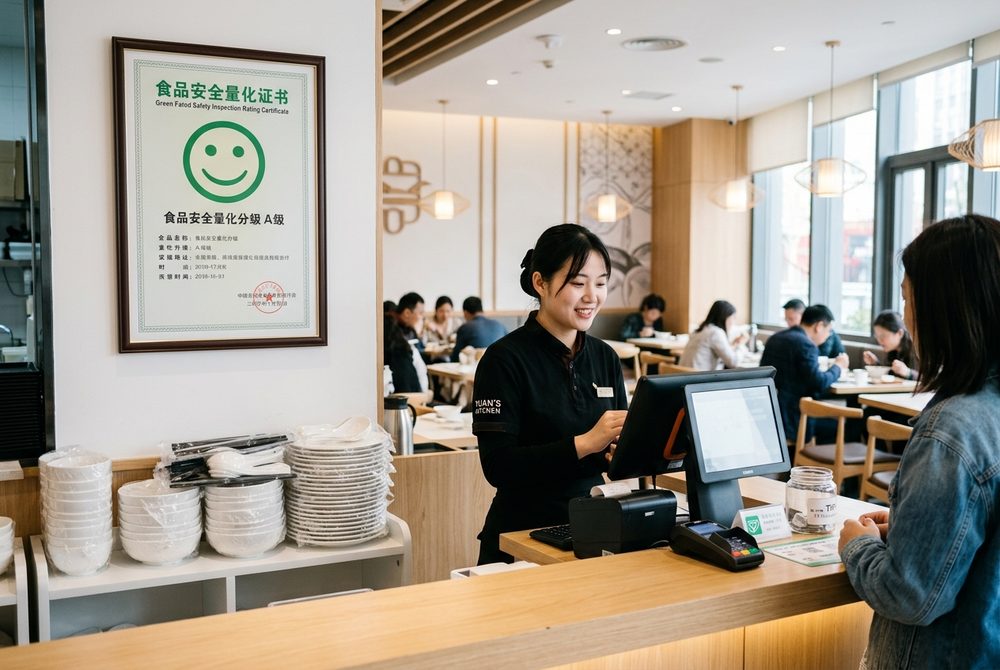
- The “Smiley Face” Food Safety Rating: Chinese restaurants are required by law to publicly display their local health inspection grade near the front entrance or payment counter:
- Green Smiling Face (Grade A): Excellent food hygiene, commercial-grade refrigeration, and modern kitchen equipment.
- Yellow Neutral Face (Grade B): Good standard hygiene compliance (most casual dining restaurants fall into this category).
- Red Frowning Face (Grade C): Basic compliance under closer regulatory supervision.
- Plastic-Wrapped Sanitized Tableware (消毒餐具): In many casual and mid-range restaurants, sets of bowls, chopsticks, and cups arrive sealed in tight plastic wrap, sterilized by commercial dishwashing centers. While an older habit involved rinsing them with hot tea before eating, modern sealed tableware is pre-sanitized and ready for use.
- Digital Ordering & Ingredients: Most restaurants feature QR codes on tables to browse menus, see ingredient pictures, and pay via Alipay or WeChat Pay.
3. Street Food & Night Markets: How to Eat Authentically Without Getting Sick
Exploring pedestrian night markets—such as Chengdu’s Jinli, Xi’an’s Muslim Quarter, or Guangzhou’s Shangxiajiu—is an essential China travel experience. You can enjoy regional street snacks with complete confidence by observing basic common-sense rules:
Related Guide: Check our in-depth practical advice on can you drink tap water in China guide.
- Follow the Busy Stalls: High customer turnover guarantees food is freshly cooked at piping hot temperatures rather than sitting lukewarm in holding trays.
- Freshly Cooked & Steamed: Opt for foods that are fried, boiled, or steamed right in front of you—such as freshly folded soup dumplings (Xiaolongbao), sizzling pan-fried buns (Shengjianbao), and hot grilled skewers (Chuan’r).
- Handling Spice Levels: If traveling through Sichuan, Hunan, or Guizhou, dishes can be intensely spicy and numbing (Sichuan peppercorn Mala). When ordering, specify “Wei La” (微辣 – mild spice) or “Bu La” (不辣 – zero chili) if you have a sensitive stomach.