
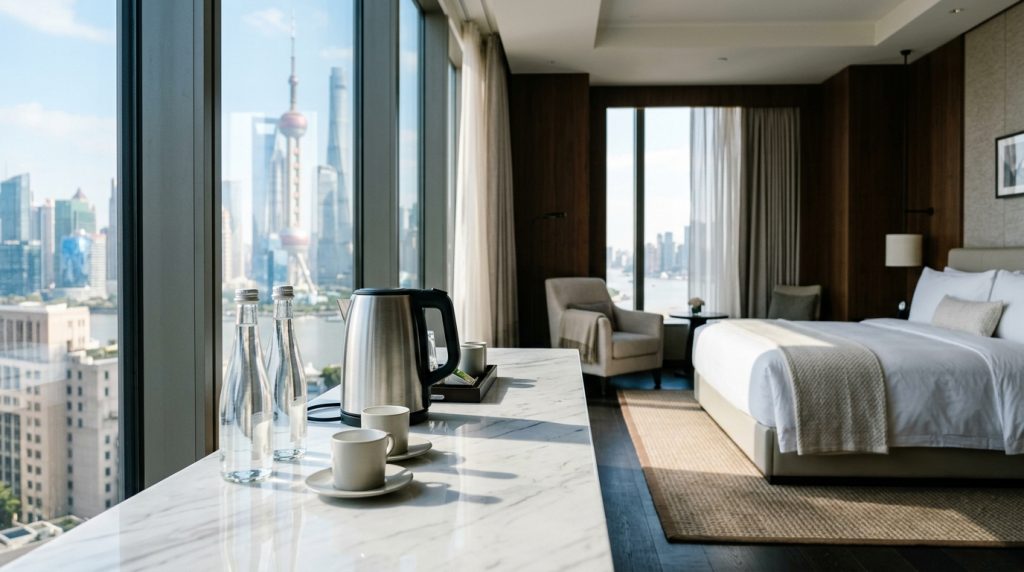
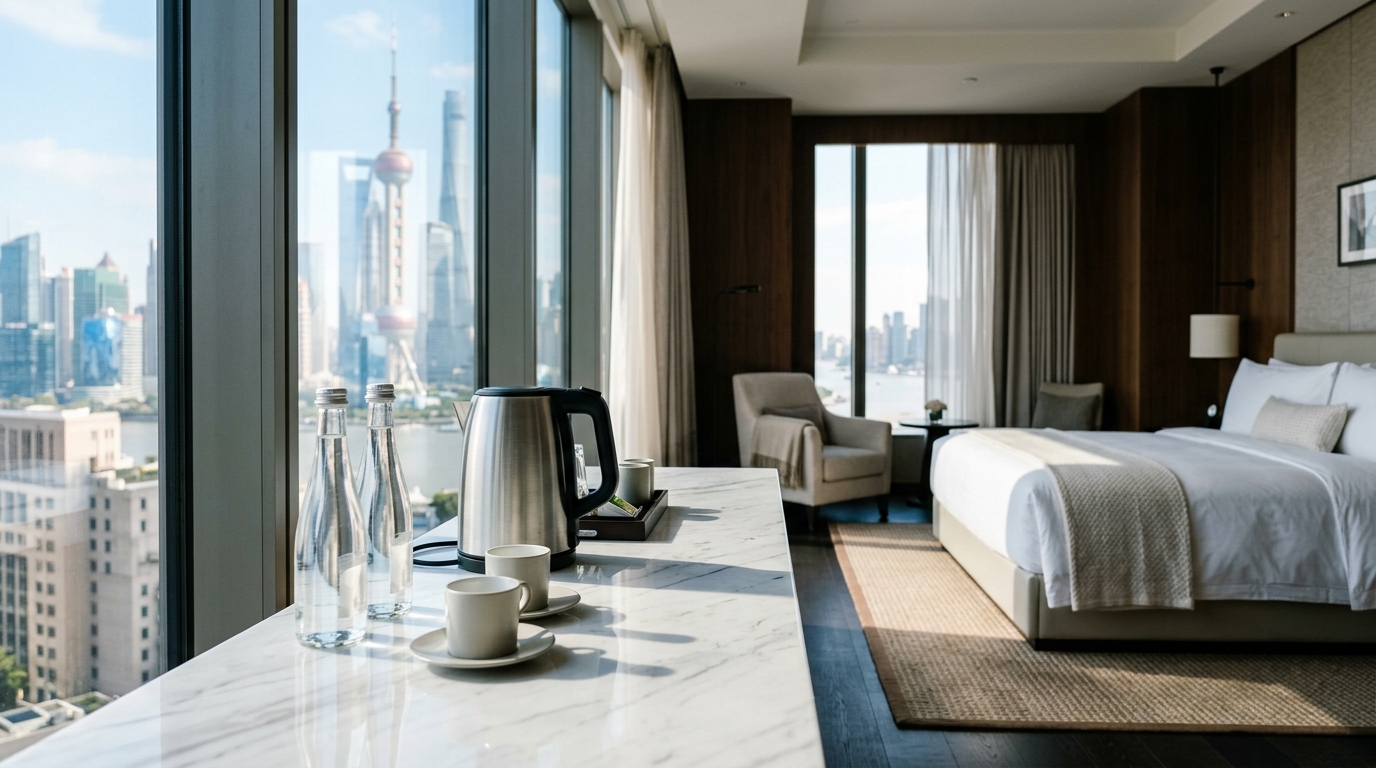
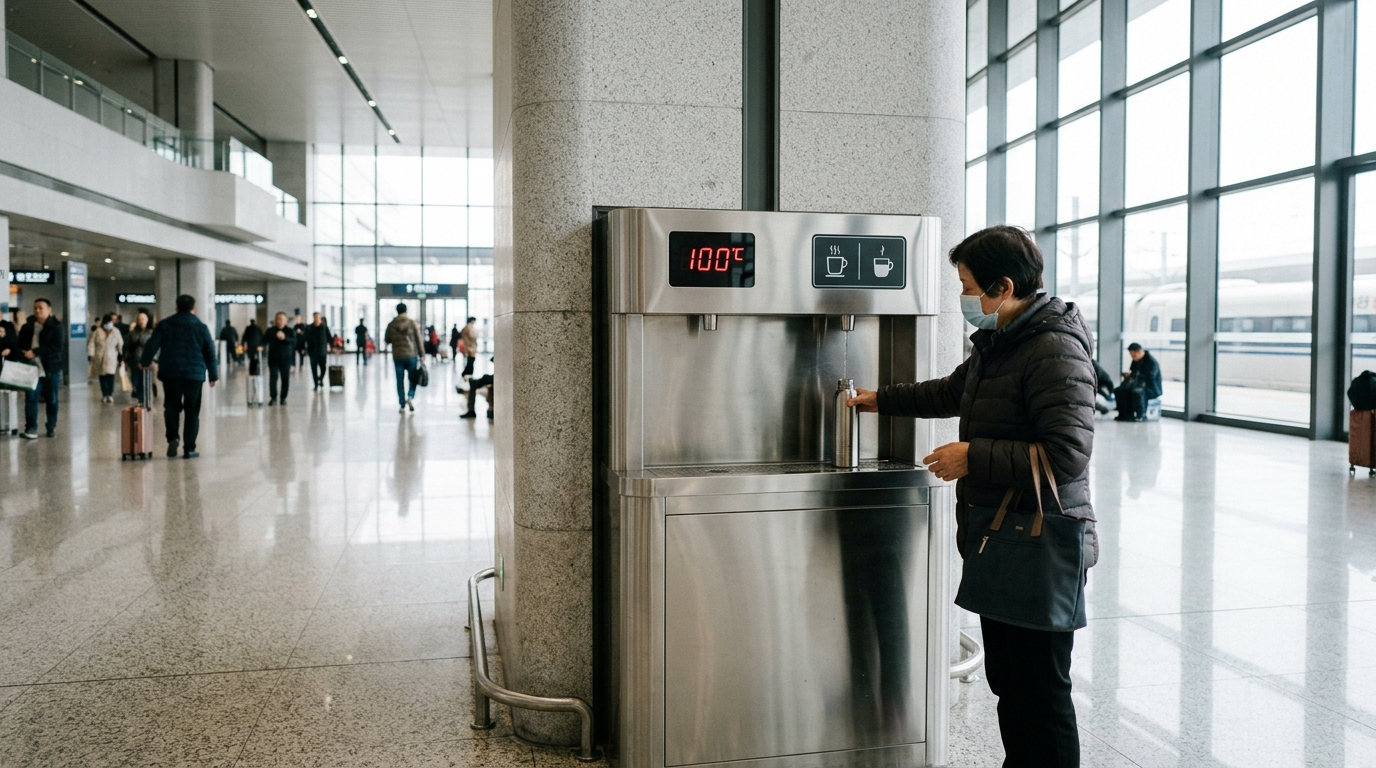
You cannot drink unboiled tap water directly from the faucet anywhere in mainland China, but staying hydrated and healthy is effortless once you know the local system. Bottled water is cheap and universally available, every hotel room features a clean electric kettle, and China’s airports and high-speed rail stations provide complimentary filtered boiling and chilled water dispensers.
China Drinking Water Rules at a Glance
- Direct Tap Water: Not safe for direct drinking. Municipal water is treated at modern plants, but older building pipes and secondary storage tanks mean tap water must be boiled or filtered.
- Brushed Teeth / Showering: Perfectly safe to brush teeth, wash face, and shower with tap water in all city hotels.
- Bottled Water: Costs 2 to 4 RMB ($0.30–$0.60 USD) for a 550ml bottle (brands like Nongfu Spring 农夫山泉, C’estbon 怡宝, or Wahaha 娃哈哈) at any convenience store.
- Hotel Rooms: 2 to 4 complimentary bottles of sealed water provided daily; clean electric kettle available in every room.
- Public Water Stations: Free multi-temperature filtered water dispensers (chilled, warm, boiling 100°C) available at all high-speed rail stations, airports, and tourist visitor centers.
1. Why Faucet Water Requires Boiling in Chinese Cities
Municipal water leaves treatment plants in major metropolitan areas like Beijing, Shanghai, Shenzhen, and Chengdu meeting strict national safety standards. However, the distribution network across residential complexes, high-rise hotels, and historic neighborhoods relies on municipal piping systems and rooftop pressure tanks that can introduce mineral sediments and microbial elements into tap water.
For this reason, residents throughout China never drink water straight from the tap. Instead, everyone drinks boiled water, uses reverse-osmosis kitchen filtration systems, or purchases bottled spring water. As a visitor, adopting this simple habit prevents gastrointestinal discomfort and lets you enjoy your trip with complete peace of mind.
2. Bottled Water Brands and Convenience Store Buying Guide
Sealed bottled water is ubiquitous across China, available 24 hours a day in convenience stores, subway station kiosks, supermarkets, and corner shops. Expect to pay between 2 RMB and 5 RMB for premium spring water, payable instantly with Alipay or WeChat Pay.
Look for trusted nationwide brand names on store shelves:
- Nongfu Spring (农夫山泉 – Red Label): Natural mineral water sourced from pristine mountain springs and lakes. The most popular bottled water in China (typically 2 RMB).
- C’estbon (怡宝 – Green Label): Purified distilled drinking water with a crisp, neutral taste (typically 2 RMB).
- Ganten (百岁山 – Elegant Clear Ribbed Bottle): High-end natural mineral spring water (typically 3–4 RMB).
- International Brands: Evian, Perrier, and San Pellegrino are widely stocked in upscale supermarkets (Ole’, Citysuper) and 7-Eleven/FamilyMart stores for 10–25 RMB.
3. Using Hotel Electric Kettles and Brushing Teeth
Practically every hotel room in China, from international luxury chains to local boutique hotels, supplies an electric stainless steel kettle alongside complimentary tea bags and sealed water bottles. Boiling tap water for 2 to 3 minutes kills bacteria and makes it 100% safe for making morning coffee, hot tea, or filling a travel thermos.
If you prefer extra caution, you can use one of your complimentary bottled waters inside the kettle. For brushing your teeth and rinsing your mouth, tap water in urban hotels is completely harmless to use without boiling.
4. Free Hot and Cold Water Dispensers at High-Speed Rail Stations and Airports
China’s modern transportation hubs feature state-of-the-art public drinking water stations. High-speed rail concourses (such as Beijing South, Shanghai Hongqiao, and Guangzhou South) and international airport terminals provide sparkling clean, multi-stage filtered dispensers with electronic temperature readouts.
These dispensers feature distinct push-buttons for:
- Boiling Water (开水 – 100°C): Designed for brewing loose-leaf tea or preparing instant noodle bowls during train journeys. Always use caution and child-safety locks when dispensing.
- Warm Water (温水 – 40°C–50°C): Comfortable drinking temperature favored by local travelers.
- Chilled Water (冷水 / 常温 – 15°C–20°C): Filtered ambient temperature water for refilling your reusable stainless steel water bottle.
5. Ice Cubes in Restaurants and Milk Tea Shops
Ice in established restaurants, cafes, and popular modern milk tea chains (like Heytea 喜茶, Nayuki 奈雪的茶, and ChaPanda 茶百道) is produced using commercial-grade water filtration machines and is completely safe to consume. Street food stalls and small rustic eateries generally serve warm tea or room-temperature beverages rather than ice.
When ordering iced beverages at bubble tea shops, you can customize your ice level on the English touch screen or Alipay mini-program: Regular Ice (正常冰), Less Ice (少冰), or No Ice (去冰).