
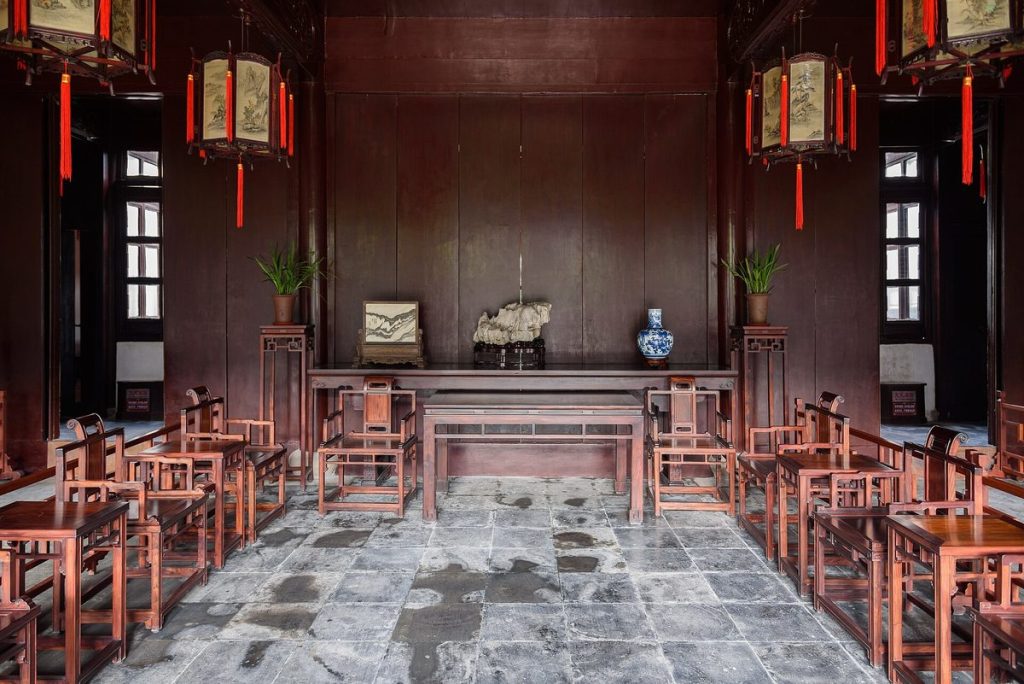
There is a celebrated Chinese proverb dating back to the Song Dynasty: “Above there is heaven, below there are Suzhou and Hangzhou” (Shàng yǒu tiāntáng, xià yǒu Sū-Háng, 上有天堂,下有苏杭). Located just eighty kilometers west of Shanghai’s futuristic skyscrapers, Suzhou is the historic cultural capital of the Jiangnan water region. For over two millennia, this legendary canal city has captured the poetic imagination of China through its UNESCO-listed classical scholar gardens, arched stone bridges, whitewashed riverside homes, and world-renowned Mulberry silk.
Thanks to the high-density Beijing-Shanghai high-speed rail corridor, bullet trains depart Shanghai every ten minutes, gliding into downtown Suzhou in a swift twenty-five minutes. This seamless connectivity makes Suzhou the quintessential day trip from Shanghai. Following this curated one-day itinerary allows you to explore imperial gardens, world-class modern architecture, and tranquil water alleys without rushing.
Quick Takeaways: 1 Day in Suzhou from Shanghai
1. High-Speed Train Transit: Shanghai to Suzhou in 25 Minutes
Traveling between Shanghai and Suzhou is faster and more frequent than commuter subways in many world capitals. Bullet trains run continuously from 6:00 AM until 23:00 PM.
Pay close attention to station selection when booking:
Departure from Shanghai: You can depart from either Shanghai Railway Station (上海站) in central Jing’an District or Shanghai Hongqiao Railway Station (上海虹桥站) in the western transport hub. Choose the station closest to your hotel.
Arrival in Suzhou: Always choose Suzhou Railway Station (苏州站) as your destination terminal. Suzhou Station is located directly on the northern edge of the historic old town, connected to Metro Line 2 and Line 4. Do not mistakenly book tickets to “Suzhou North” (Sūzhōu Běi), which is located 15 kilometers out in the northern suburbs.
Tickets cost between 35 and 42 RMB ($5.00–$6.00 USD) each way for Second Class. Book round-trip tickets in advance on 12306 or Trip.com, booking a morning departure around 8:00 AM and an evening return around 19:30 PM.
2. Morning: The Humble Administrator’s Garden (拙政园)
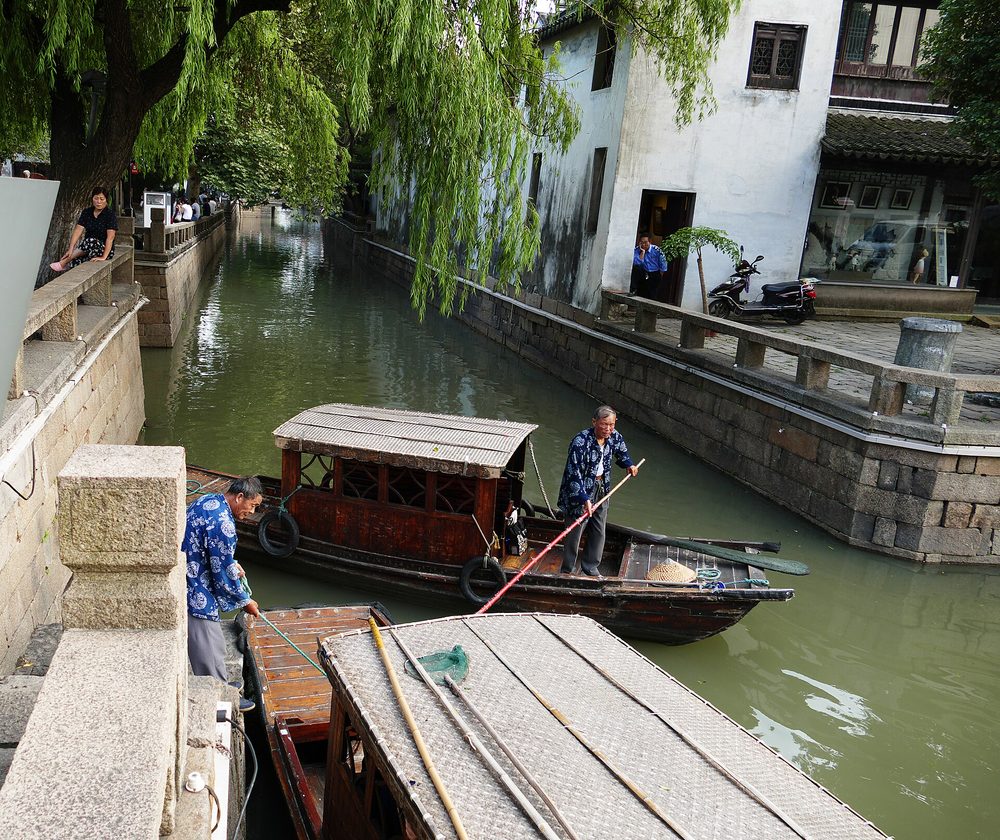
From Suzhou Railway Station, take Metro Line 4 south two stops to Beisita Station, or take a quick ten-minute taxi ride directly to the Humble Administrator’s Garden (Zhuōzhèng Yuán, 拙政园). Built during the Ming Dynasty in 1509 by retired imperial censor Wang Xianchen, this twelve-acre compound is celebrated as the grandest classical scholar garden in all of China.
Classical Chinese landscape gardens are not mere botanical displays; they are three-dimensional Taoist landscape paintings designed to evoke nature in miniature. The Humble Administrator’s Garden is divided into Eastern, Central, and Western sections, interconnected by delicate waterscapes:
• The Art of “Borrowed Scenery” (借景, Jièjǐng): Look west across the central lotus pond toward the distant Pagoda of the North Temple. The ancient garden designers positioned moon pavilions and open lattice windows so that the 800-year-old brick pagoda located a mile outside the garden walls appears perfectly framed as an organic part of the garden’s own interior vista.
• Zigzag Bridges and Moon Gates: Bridges zigzag across lotus ponds to slow your walking pace and reveal shifting visual perspectives with every step. Round moon gates (Yuèliàngmén) and ornamental vase doorways frame intimate stone courtyards filled with bamboo and miniature penjing (bonsai) trees.
Booking Tip: Daily admissions are capped by the municipal cultural bureau. You must reserve your 80 RMB real-name ticket online 7 days in advance via Trip.com or the official Suzhou garden booking platform using your passport number.
3. Midday: Suzhou Museum and I.M. Pei’s Modern Masterpiece
Directly adjacent to the exit of the Humble Administrator’s Garden stands the Suzhou Museum (苏州博物馆), designed by the Pritzker Prize-winning Chinese-American architect I.M. Pei (famed for the Louvre Pyramid in Paris).
Completed in 2006 as a personal love letter to his ancestral hometown, Pei’s design harmoniously synthesizes traditional Jiangnan courtyard aesthetics with modern geometric modernist architecture:
• Monochrome Geometric Harmony: Crisp white plaster walls, dark grey granite rooflines, and octagonal glass skylights flood subterranean galleries with natural light while honoring Suzhou’s traditional “black tiles and white walls” (Dǎiwǎ Bǎiqiáng) color palette.
• The Sliced-Stone Lotus Pond: In the central garden courtyard, Pei layered razor-cut, dark grey Shandong stones against a whitewashed wall across a tranquil lotus pond, creating an unforgettable three-dimensional stone sculpture that mimics classical Song Dynasty ink-wash mountain paintings.
• Treasures Within: The museum houses thousands of exquisite regional relics, including delicate Song Dynasty celadon lotus bowls, fine Ming Dynasty silk embroideries, and intricately carved ivory balls. Admission is 100% free, but mandatory real-name passport reservations open exactly 7 days in advance at 8:00 AM.
4. Afternoon: Pingjiang Road Canal Walk & Gondola Cruise
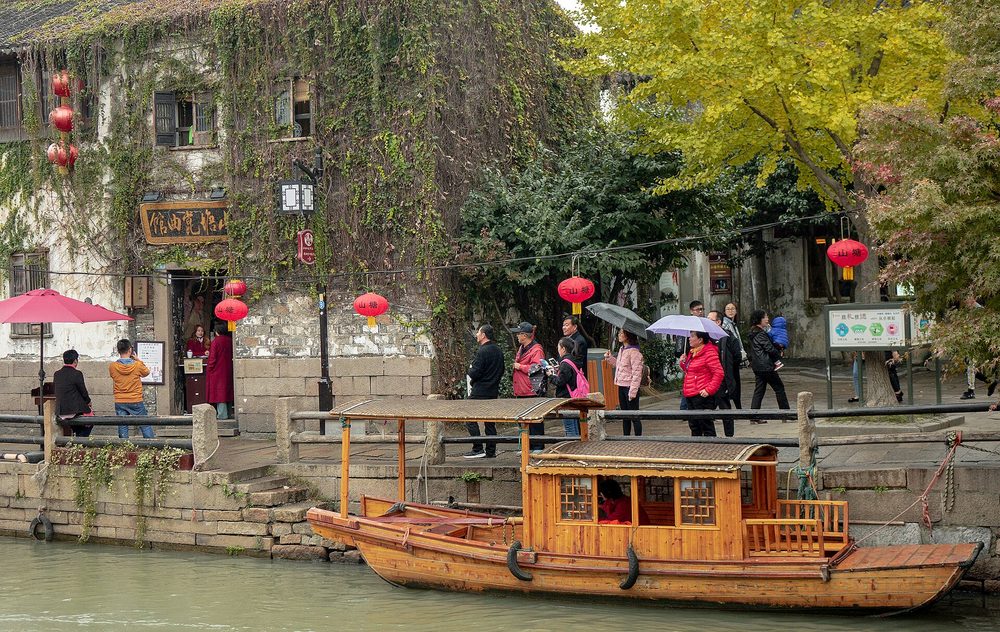
A short five-minute walk south from the museum brings you onto Pingjiang Road (Píngjiāng Lù, 平江路), an 800-year-old preserved stone-paved canal street that follows the urban layout depicted on the famous 1229 AD Song Dynasty stone map of Suzhou.
Spend two to three hours wandering this romantic waterway:
Hand-Rowed Wooden Gondola Cruise (手摇船, Shǒuyáochuán): Step onto one of the small wooden sculling boats tied at the Pingjiang dock. A ticket costs approximately 40 RMB ($5.50 USD) for a shared 30-minute cruise. As the boatman gently works the single wooden stern scull (Yáoqiào), you float beneath arched Ming and Qing dynasty stone bridges, past whitewashed homes with stone laundry steps leading into the water, while the boatman sings hauntingly beautiful local Wu-dialect folk melodies.
Listen to Traditional Pingtan Ballads (苏州评弹): Stop at a traditional canal-side tea house (such as Pingshengtang). Order a porcelain bowl of fresh Biluochun green tea (Bìluóchūn, 碧螺春, Suzhou’s premier mountain tea) and listen to a live thirty-minute Pingtan performance. A male and female musical duo in silk cheongsams play the pipa and sanxian lute, singing narrative lyrical ballads with enchanting delicacy.
5. Evening Feast: Suzhou Culinary Specialties
Before heading back to the railway station, celebrate your day trip with a classic feast of authentic Su-style cuisine (Sūbāng Cài, 苏帮菜), celebrated for its natural freshness, delicate sweetness, and exquisite seasonal presentation:
Squirrel-Shaped Mandarin Fish (松鼠鳜鱼, Sōngshǔ Guìyú): Suzhou’s undisputed culinary showstopper. A fresh freshwater Mandarin fish is skillfully deboned, cross-hatched with diamond incisions, fried until golden and crisp so the meat puffs outward resembling a fluffy squirrel tail, and drenched in a glossy, sweet-and-sour orange sauce topped with toasted pine nuts.
Pan-Fried Soup Dumplings (生煎包, Shēngjiān Bāo): Crispy, golden-bottomed pan-fried yeast buns stuffed with savory spiced pork and scalding rich broth, sprinkled with toasted sesame seeds and chopped scallions.
Su-Style Noodles (苏式汤面): Thin, springy wheat noodles served in a crystal-clear, intensely flavorful broth brewed from pork bones, river eel, and dried shrimp, topped with seasonal river shrimp (Xiārén) or tender braised duck.
After dinner, hail a 10-minute Didi back to Suzhou Railway Station, clear the ticket turnstiles with your passport, and board your bullet train. Within twenty-five minutes, you will step back out onto the dazzling neon-lit streets of central Shanghai, having experienced one of the most culturally rich day trips in Asia.