
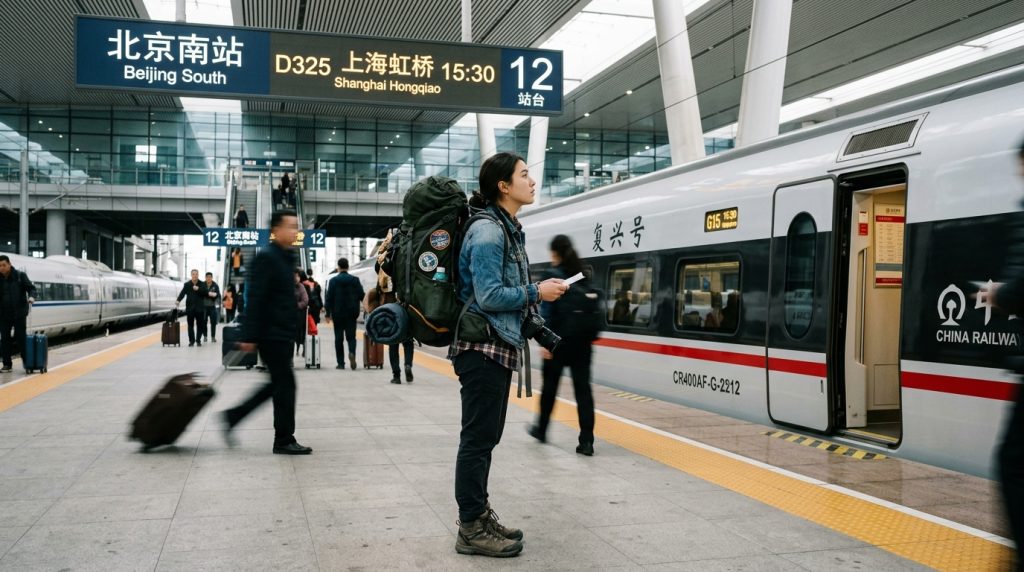
China operates the world’s most extensive high-speed railway (HSR) network, spanning over 45,000 kilometers and connecting virtually every major city, provincial capital, and scenic mountain region. Cruising at speeds up to 350 km/h (217 mph) on cutting-edge Fuxing Hao bullet trains, high-speed rail has largely replaced domestic flights as the fastest, most punctual, and most scenic way to travel between hubs like Beijing, Shanghai, Xi’an, and Chengdu.
In the past, foreign tourists had to pay third-party agency booking markups or wait in long queues at railway station ticket windows. Today, China Railway offers an official, fully bilingual English app (Railway 12306) that allows international travelers to search schedules, book tickets at exact face value with zero service fees, and enter stations using 100% paperless passport scanning. This 2026 step-by-step guide covers how to set up the app, verify your passport online, choose seat classes, and navigate major Chinese railway hubs seamlessly.
Quick Facts: Booking China High-Speed Rail (2026)
1. Understanding Train Categories in China
When searching for rail journeys in China, train numbers always begin with a letter code indicating the train’s speed category:
- G-Trains (Gaotie / 高铁): The flagship high-speed trains running up to 350 km/h. They connect major metropolitan centers on dedicated ballastless tracks (e.g., Beijing to Shanghai in 4 hours 18 minutes).
- D-Trains (Dongche / 动车): High-speed electric multiple units running at 200–250 km/h, frequently used for regional intercity routes and overnight bullet sleeper trains.
- C-Trains (Chengji / 城际): Short-distance intercity commuter bullet trains (e.g., Beijing to Tianjin in 30 minutes, or Chengdu to Mount Emei).
- K, T, and Z Trains: Traditional slower sleeper trains (120–160 km/h). Generally not recommended unless traveling on scenic remote expeditions like the Qinghai-Tibet Railway.
2. Step-by-Step: Registering & Verifying Passport on 12306
The official 12306 English app allows international tourists to complete real-name passport identity verification directly from a smartphone:
- Download the App: Install Railway 12306 from the Apple App Store or Google Play Store. On first launch, select English as the system language.
- Create an Account: Register using your email address and an active mobile number (international numbers with country codes like +1, +44, or +61 are supported).
- Fill in Passenger Information: Navigate to My → Passenger Management → Add Passenger. Enter your full name exactly as it appears in the machine-readable zone of your passport (Surname first, followed by given names).
- Real-Name Online Verification: Upload a clear, glare-free photo of your passport’s bio-data page. Identity verification is processed automatically by the system, typically within 5 to 30 minutes. Once marked as “Verified,” you can book tickets immediately.
3. Seat Classes: Second Class vs. First Class vs. Business Class
Modern Chinese high-speed trains offer three primary comfort tiers:

Second Class (二等座)
Layout: 3+2 configuration across the aisle.
Amenities: Generous legroom (far exceeding economy airline seats), 220V/USB power sockets beneath every seat, fold-down tray table, and overhead luggage racks. The best value for money for 90% of travelers.
First Class (一等座)
Layout: 2+2 spacious seating configuration.
Amenities: Wider plush seats, adjustable footrests, quieter carriage atmosphere, and individual power outlets. Typically priced around 50–60% higher than Second Class.
Business Class (商务座): The ultimate luxury option (1+2 or 1+1 layout). Features 180-degree lie-flat leather pods, complimentary hot meals, slippers, and access to VIP station lounges with dedicated priority boarding.
4. How to Navigate Chinese Railway Stations & Boarding
Chinese high-speed railway stations (like Beijing South, Shanghai Hongqiao, or Xi’an North) are massive, modern transit complexes organized similarly to international airport terminals.
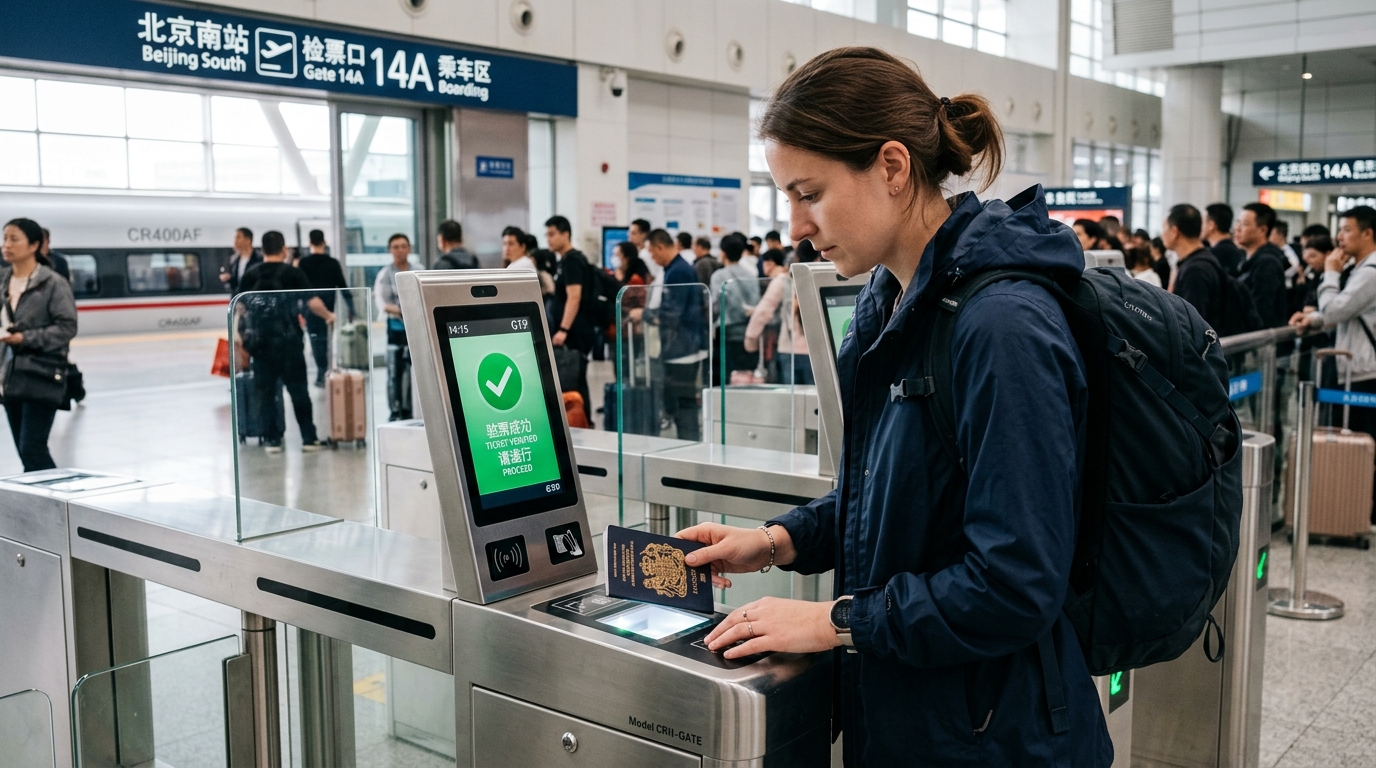
- Station Entry & Security: Present your physical passport at the manual entrance lane (人工通道) where staff scan your passport chip. Place all luggage through the X-ray scanner.
- Locate Your Departure Gate: Look at the central electronic overhead display boards. Find your train number (e.g., G15) to identify your departure gate (检票口, e.g., Gate 14A).
- Boarding via Passport Gate: Boarding typically opens 15–20 minutes before departure and closes strictly 5 minutes prior to leave. Place your open passport photo page face-down onto the glass scanner of the automated turnstile. The barrier opens automatically when verified.
- Find Your Car & Seat: Your booking confirmation indicates your carriage number (车厢) and seat number (座位号, e.g., 07A = Car 7, Seat A window).
5. Luggage Rules & Practical Travel Tips
- Luggage Allowances: Adult passengers are permitted up to 20 kg of carry-on baggage. Standard large suitcases (up to 28 inches) fit comfortably in the dedicated luggage storage closets located at the end of each carriage or in overhead racks.
- Hot Water & Dining: Every high-speed train car features a complimentary boiling water dispenser for tea or instant noodles. A dining car (餐车) located in Car 5 or Car 9 serves hot pre-packaged boxed meals, coffee, and snacks.
- Punctuality: Chinese high-speed trains operate with near 99% on-time reliability. Ensure you are at the platform well before doors close.