
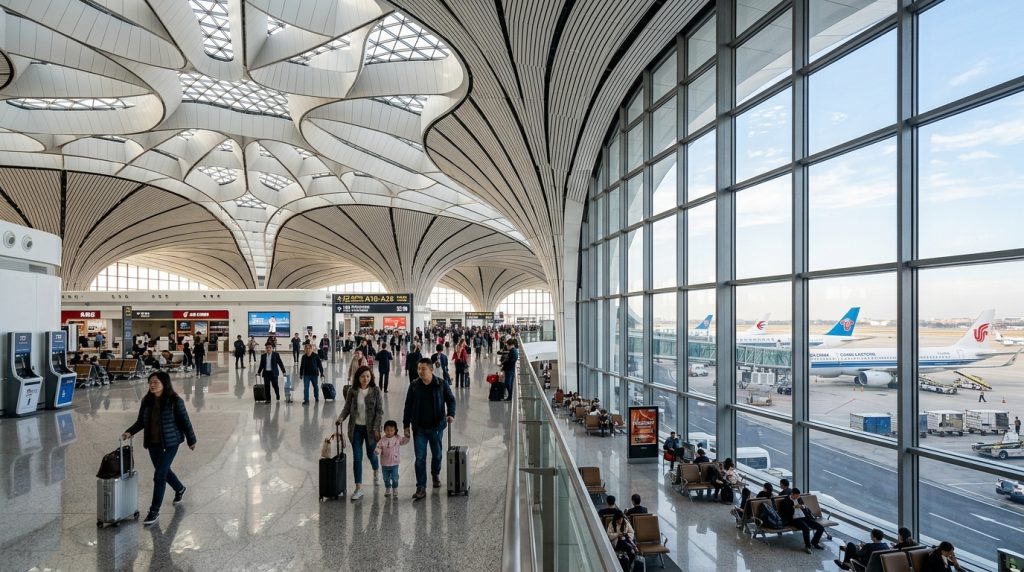
While China’s world-renowned high-speed rail network handles journeys under four to five hours with unrivaled convenience, domestic flights remain the fastest and most practical way to cross continental distances. Traversing routes like Shanghai to Chengdu, Beijing to Guangzhou, or coastal hubs to the silk roads of Xinjiang and Yunnan can take 10 to 30 hours by train, but only two to four hours by air. Operating one of the youngest commercial fleets and most modern airport infrastructures on the planet, flying in China is efficient, safe, and straightforward for international travelers once you understand the core booking nuances, security protocols, and airport procedures.
From booking your ticket without a local identity card to clearing biometric security screening and claiming your luggage, this comprehensive walkthrough covers every practical step of domestic air travel across China.
1. Booking Domestic Flights: Platforms & Passport Matching
China’s domestic airline ecosystem is dominated by the “Big Three” state-owned carriers—Air China (Star Alliance, primary northern hub in Beijing), China Eastern (SkyTeam, primary eastern hub in Shanghai), and China Southern (Guangzhou and Beijing Daxing hubs). Alongside these giants operate excellent full-service airlines such as Hainan Airlines, XiamenAir, and Shenzhen Airlines, as well as dependable budget carriers like Spring Airlines and Lucky Air.
For international visitors, booking directly through domestic airline Chinese websites can be frustrating due to Chinese ID card (Shenfenzheng) prompts and local SMS verifications. The most reliable booking route is using Trip.com Flights, which provides full English ticketing, accepts international Visa, Mastercard, and American Express cards, and issues instant electronic flight confirmations linked to your passport.
Enter your full legal name exactly as printed in your passport’s Machine Readable Zone (MRZ). In China, airport security cross-references your ticket directly against your physical passport. If your passport includes middle names, do not omit them. Format: SURNAME / GIVENNAME MIDDLENAME. Never include punctuation such as hyphens or commas.
Full-service carriers include complimentary meals, hot Chinese tea, and 20kg of checked baggage in standard economy tickets. If you book low-cost carriers like Spring Airlines, be mindful that base fares only permit a strict 7kg cabin bag, and all checked luggage must be purchased separately prior to arrival.
2. Luggage Allowances, Power Bank Limits & Liquid Rules
Chinese civil aviation authorities enforce some of the strictest battery and liquid regulations in the world. Knowing these rules in advance prevents stressful confiscations at the security checkpoint.
The Golden Power Bank Rule: Under Civil Aviation Administration of China (CAAC) mandates, lithium battery power banks must NEVER be packed in checked suitcases—they must travel in your carry-on bag. Furthermore:
- Power banks up to 100Wh (approx. 27,000mAh at 3.7V) are permitted without airline approval.
- Power banks between 100Wh and 160Wh require airline approval at the check-in desk before security.
- Power banks exceeding 160Wh or lacking clear factory capacity markings are strictly forbidden on flights. If the printed specifications have worn off, security officers will confiscate the device.
Liquids and Toiletries: All liquids, gels, and aerosols in carry-on baggage must be stored in individual containers of 100ml or less, and all containers must comfortably fit inside a single, transparent, resealable 1-liter plastic bag. Note that the 100ml limitation refers to the capacity of the bottle, not the remaining amount inside; a half-empty 200ml sunscreen bottle will be rejected. Any larger toiletries must be stowed in checked baggage.
Lighters and Matches: Lighters, matches, and e-cigarette heating units with built-in igniters are completely prohibited anywhere on commercial aircraft in China—neither in checked luggage nor in carry-on bags. You will be asked to dispose of them before passing security.
3. Arriving at the Terminal: Timing & Check-In
For domestic flights, aim to reach the airport terminal at least two hours prior to departure (or 2.5 hours during major holiday peaks like Golden Week or Spring Festival). Check-in counters and baggage drop desks strictly close 45 minutes before departure, and boarding gates close 15 minutes before takeoff.
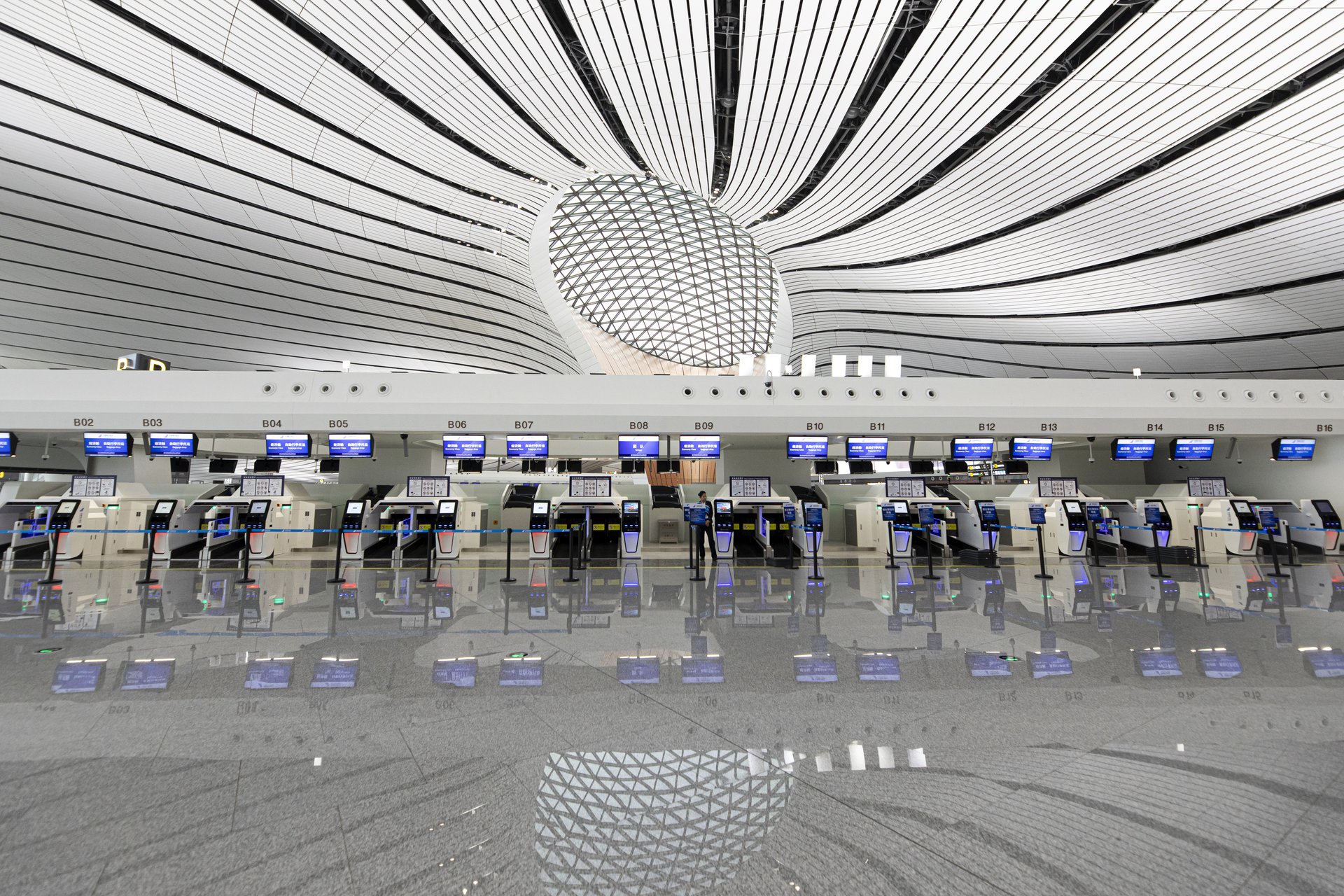
Mega-airports such as Beijing Capital (PEK), Beijing Daxing (PKX), Shanghai Pudong (PVG), and Chengdu Tianfu (TFU) are architectural marvels, but their vast scales mean considerable walking distances between security checkpoints and remote departure gates. Check your terminal number carefully before heading to the airport; cities like Shanghai, Beijing, and Chengdu operate multiple international-scale airports miles apart.
How Foreign Travelers Check In: While Chinese citizens scan national ID cards at automated kiosks, international passport holders should head directly to the Manual Check-In Counters (人工柜台). Present your physical passport; the agent will retrieve your e-ticket, print your boarding pass, verify your visa status if required, and weigh your checked baggage.
If you encounter any language barriers, airport staff and airline ground agents at information desks (问询处) are trained to assist in English, and modern terminals feature bilingual digital flight screens throughout every concourse.
4. Navigating Airport Security Screening
Security checkpoints at Chinese airports (安检) are meticulous, technologically advanced, and remarkably efficient. Keep your passport and boarding pass in your hand as you approach the initial credential check, where your photo will be taken and matched against airport databases.
Once you reach the conveyor belts, prepare your belongings systematically to ensure a swift transit through the X-ray scanners:
- Remove all electronics larger than a smartphone: Laptops, iPads, cameras, power banks, and portable chargers must come out of your daypack and be placed into separate plastic trays.
- Remove outer layers: Heavy winter jackets, coats, hats, and belts must be placed in trays. In most airports, you do not need to remove shoes unless specifically requested or wearing bulky boots.
- Empty pockets: Place keys, coins, and loose items in small tray compartments.
- Personal scan: After passing through the millimeter-wave body scanner, an officer will perform a brief, courteous wand scan.
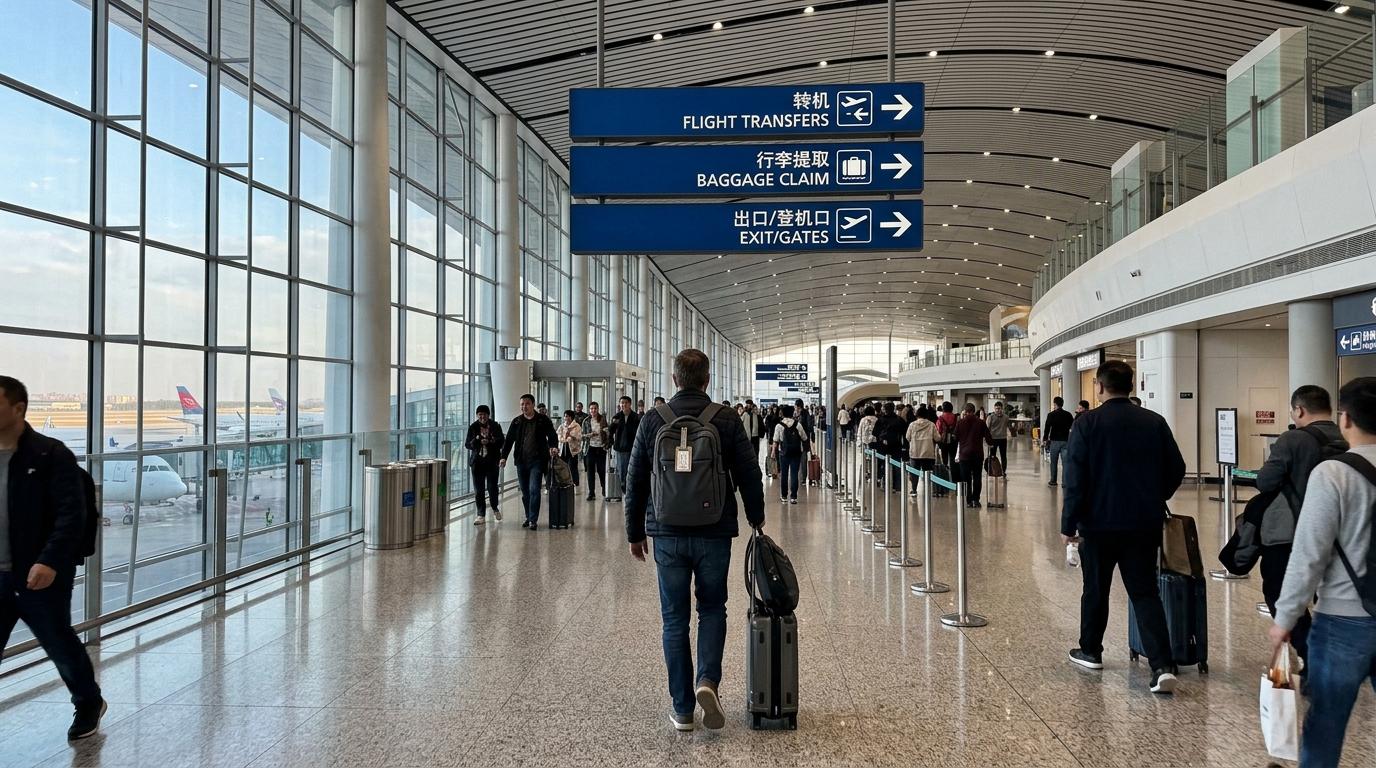
Once through security, double-check your boarding pass against overhead flight monitors (航班信息显示屏). Gate reassignments are common in busy hubs, so verify your gate number before settling in.
5. Onboard Experience & Managing Weather Delays
China’s commercial airliners feature clean, modern interiors with attentive cabin crew. Even on short two-hour domestic flights, major full-service carriers typically serve a complimentary hot meal box with rice or noodles, bottled water, and hot Chinese jasmine or black tea.
Electronic Devices Policy: Smartphones are permitted throughout the flight, provided they remain set to Airplane Mode. Note that while in-flight Wi-Fi is expanding rapidly across newer Airbus A350, Boeing 787, and COMAC C919 fleets, connection speeds can be variable, so download offline reading materials or shows in advance.
Handling Flight Delays: Summer convective thunderstorms in southern China and dense winter fog in the north can occasionally cause air traffic control holds. Download flight-tracking apps such as VariFlight (飞常准) or check Trip.com for real-time inbound aircraft updates.
If your flight suffers a substantial delay attributable to the airline (such as mechanical issues or operational scheduling), Chinese regulations mandate that carriers provide complimentary meals, drinking water, and hotel lodging if the delay extends overnight. For weather-related delays, airlines are obligated to help passengers rebook the next available flight without change fees.
6. Arrival, Baggage Reclaim & Onward Transportation
Upon landing at your destination airport, follow the high-visibility overhead signs marked Baggage Claim (行李提取). Digital displays above each carousel show flight numbers and estimated baggage delivery times. Delivery is generally prompt, taking between 15 and 25 minutes after aircraft docking.
After collecting your luggage, Chinese airports offer some of the best ground transport connectivity in the world:
- Direct Metro & Express Trains: Nearly all major Chinese airports connect directly to municipal subway lines or high-speed airport express trains (such as the Shanghai Maglev, Beijing Capital Express, or Daxing Airport Express), taking you straight into downtown city centers without traffic jams.
- Official Metered Taxis: Follow terminal signs directly to the Taxi Queue (出租车乘车区). Avoid unlicensed drivers soliciting passengers inside arrival halls; always take official metered cabs from the dispatch line.
- DiDi Ride-Hailing: If you use DiDi via Alipay or the standalone DiDi English app, head to designated Ride-Hailing Pickup Zones (网约车上客点), usually located in specific parking structures or terminal outer lanes.
Plan Your Domestic China Flights with Confidence
Reserve domestic China flight tickets with passport matching, English customer assistance, and zero foreign transaction fees via the official portal:
Related Guide: Check our in-depth practical advice on China domestic airlines and terminal transfer guide.