

The Avatar Mountains in China, located within Zhangjiajie National Forest Park (张家界国家森林公园) in Hunan Province, are world-renowned for their dramatic quartzite sandstone pillars that inspired the floating ‘Hallelujah Mountains’ in James Cameron’s blockbuster film Avatar. Recognized as China’s first national forest park and a UNESCO World Heritage site, the park features over 3,000 towering stone spires rising out of dense misty gorges.
Avatar Mountains (Zhangjiajie): Essential Visitor Facts
Zhangjiajie:A Bit About Its Geography and History
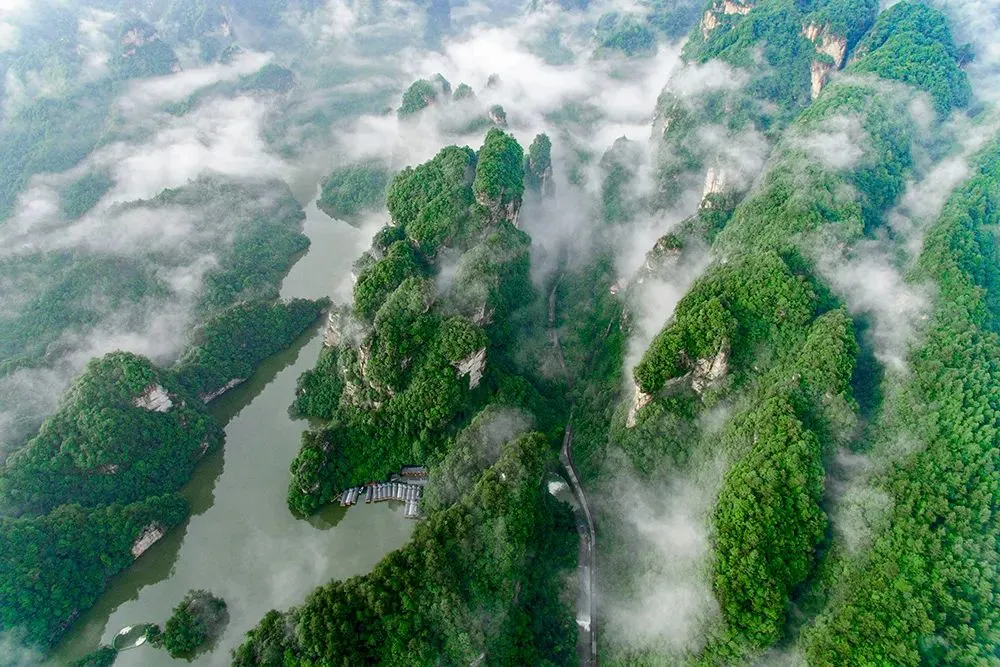
Zhangjiajie sits right in the heart of the Wuling Mountains, covering a massive area of about 9,516 square kilometers. The city used to be called Dayong City but got its current name, Zhangjiajie, in 1994. It’s made up of Yongding District, Wulingyuan District, Cili County, and Sangzhi County, with a total population of around 1.685 million. Zhangjiajie isn’t just a major tourist hotspot in China; it’s also a national-level ecological protection zone, super important for the ecological balance of the middle and lower reaches of the Yangtze River. Many consider Zhangjiajie National Park a must-see.
Zhangjiajie National Forest Park: Where Natural Wonders Come Together
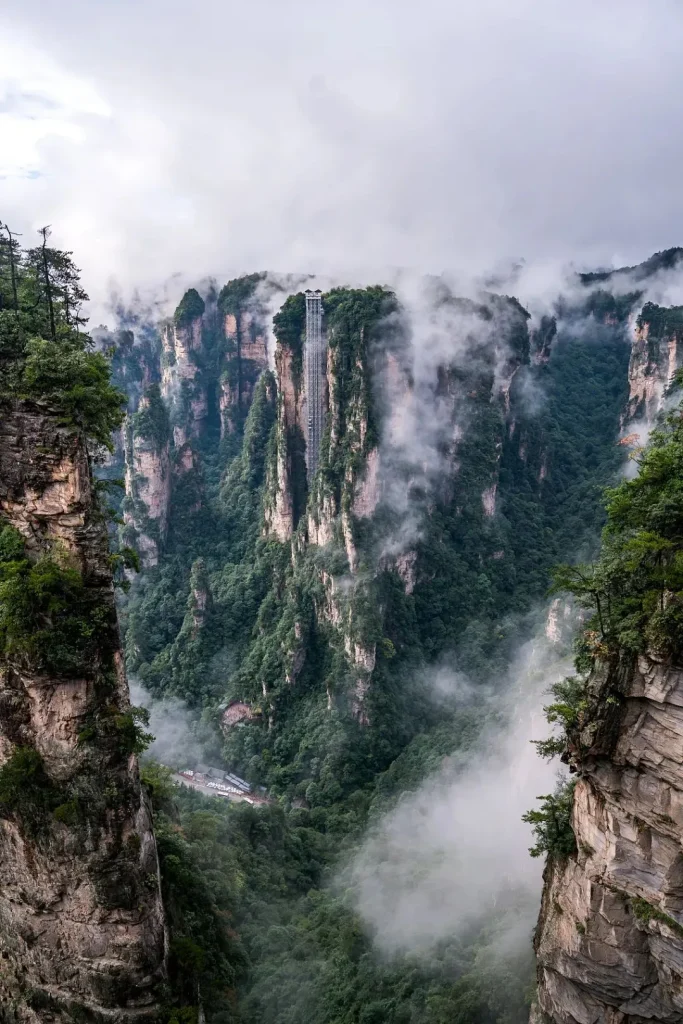
Zhangjiajie National Forest Park was China’s very first national forest park and is a UNESCO World Heritage site. The park’s bizarre peaks, unique rock formations, and stunning scenery are famous worldwide. It’s not just the filming location for Avatar; it has also appeared in classic Chinese literary works like Dream of the Red Chamber (红楼梦) and Journey to the West (西游记), as well as movies and TV shows like Zhong Kui: Snow Girl and the Dark Crystal (钟馗伏魔) and Monster Hunt (捉妖记). UNESCO has officially listed it as a World Natural Heritage site, making it one of the key China tourist places.
Famous Spots in Zhangjiajie National Forest Park
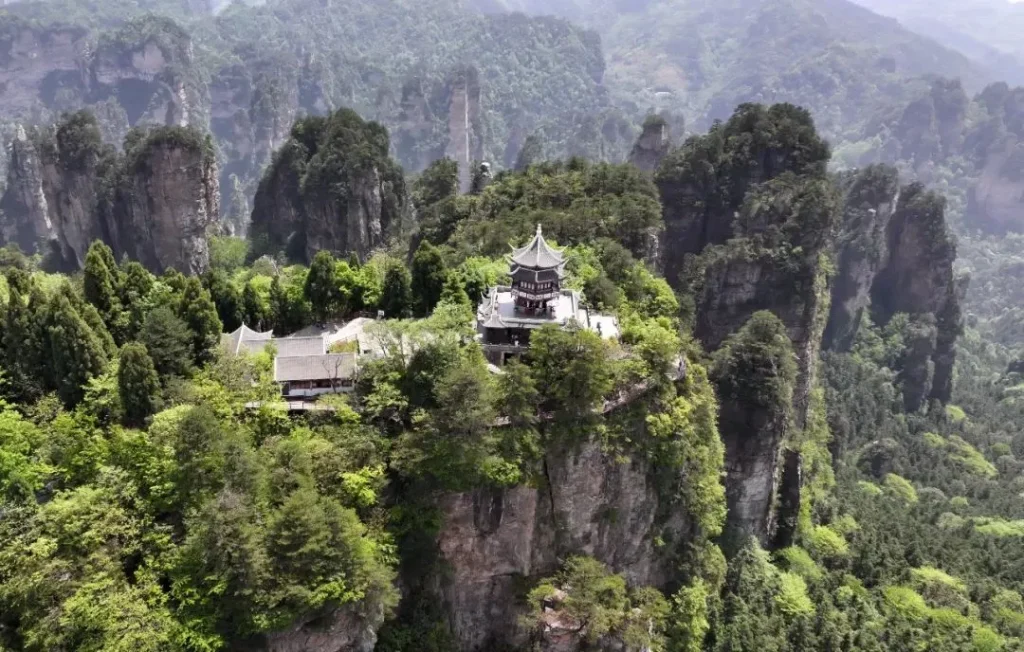
- Huangshi Village (黄石寨): There’s a saying: “If you haven’t been to Huangshi Village, you haven’t really been to Zhangjiajie.” Located in the middle of the park, Huangshi Village is a huge, square mountain platform, 1080 meters above sea level. The mountaintop covers 16.5 square kilometers and is the best spot to get a panoramic view of Zhangjiajie.
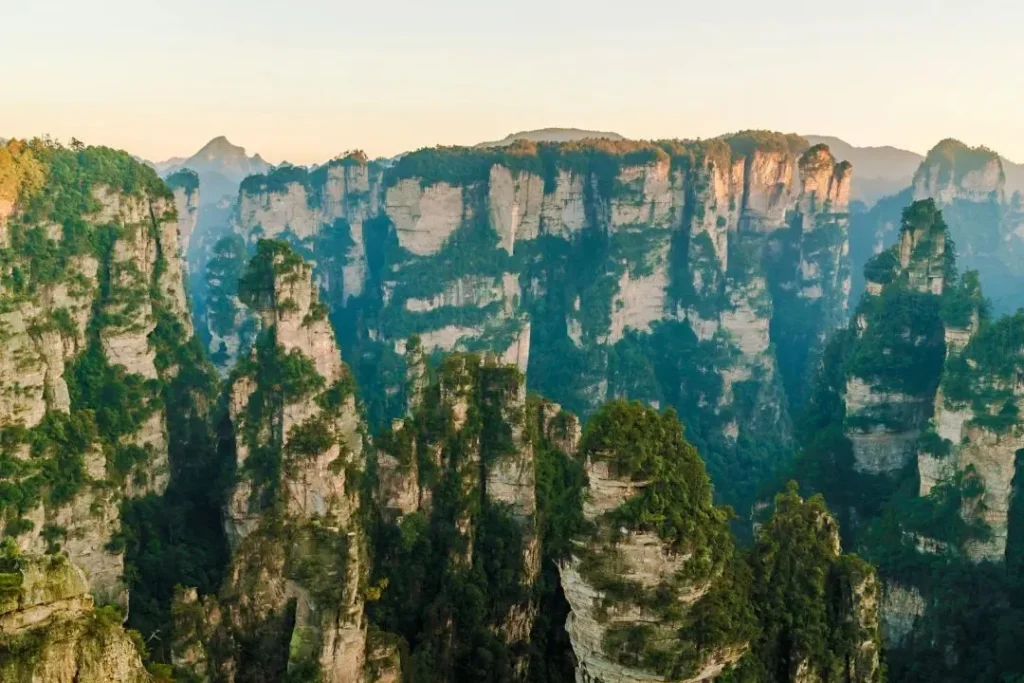
- Yuanjiajie (袁家界): Found in the northern part of the park, Yuanjiajie is a shining star in the Wulingyuan core scenic area. This is where you’ll find the famous Qiankun Pillar (乾坤柱) – the inspiration for the Hallelujah Mountains in Avatar – as well as the First Bridge Under Heaven (天下第一桥), Mihun Stage (迷魂台), and the impressive Bailong Elevator (百龙天梯). The “First Bridge Under Heaven” is one of Zhangjiajie’s top ten sights and a landmark of Yuanjiajie.
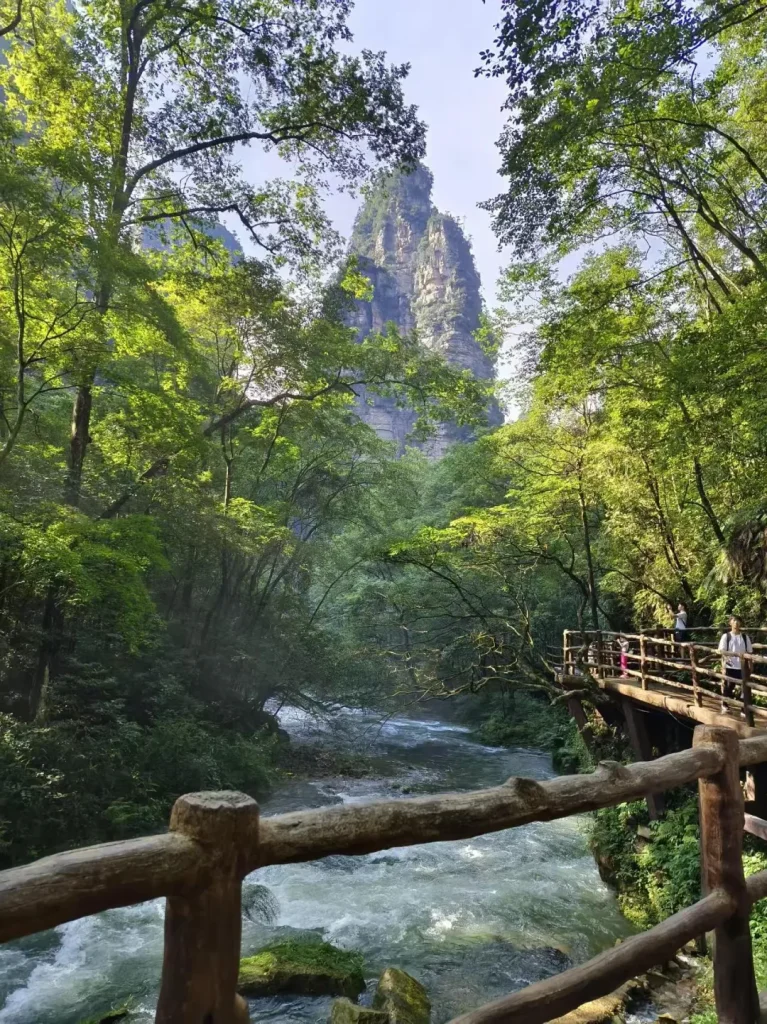
- Golden Whip Stream (金鞭溪): This is a beautiful stream, about 6 kilometers long. The peaks along the way are incredible, and the water is crystal clear. It’s often called “one of the most beautiful canyons in the world.” The water quality in Golden Whip Stream is so good you can drink it directly! It’s a must-see for visitors exploring Zhangjiajie China.
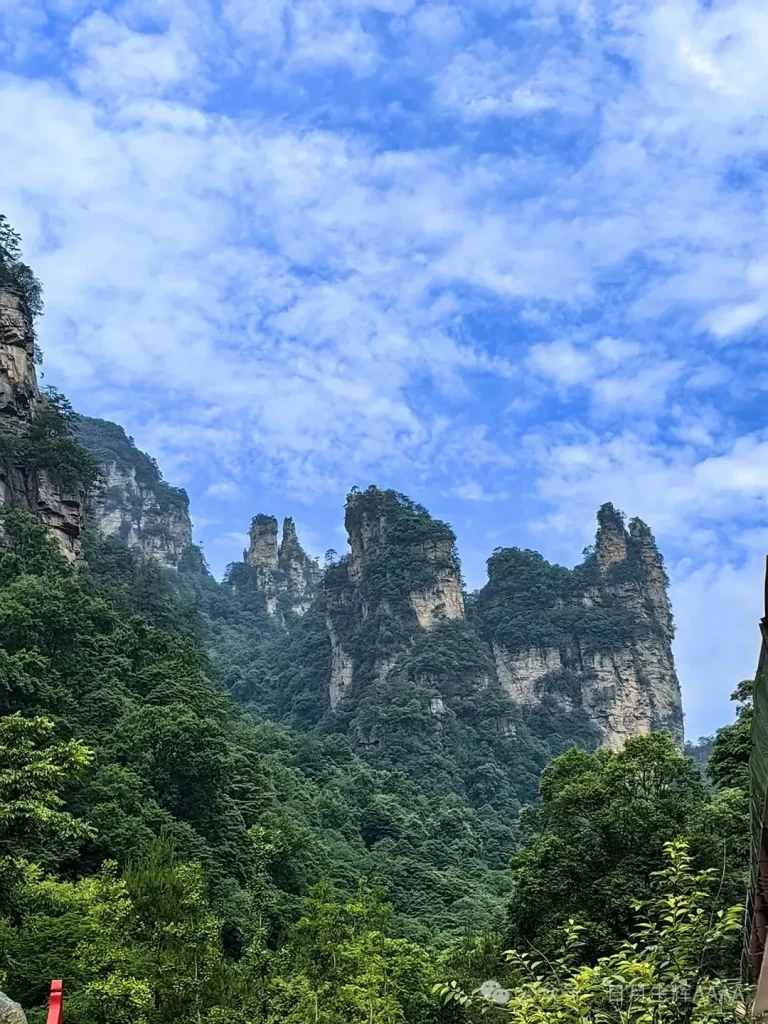
- Ten-Mile Gallery (十里画廊): This is a canyon stretching about 10 kilometers, with picturesque peak forests on both sides – hence the name “Ten-Mile Gallery.” It’s a paradise for photographers; no matter when you visit, you’re sure to capture some sweeping views of the China mountains.
Zhangjiajie National Forest Park: Climate and Best Times to Visit
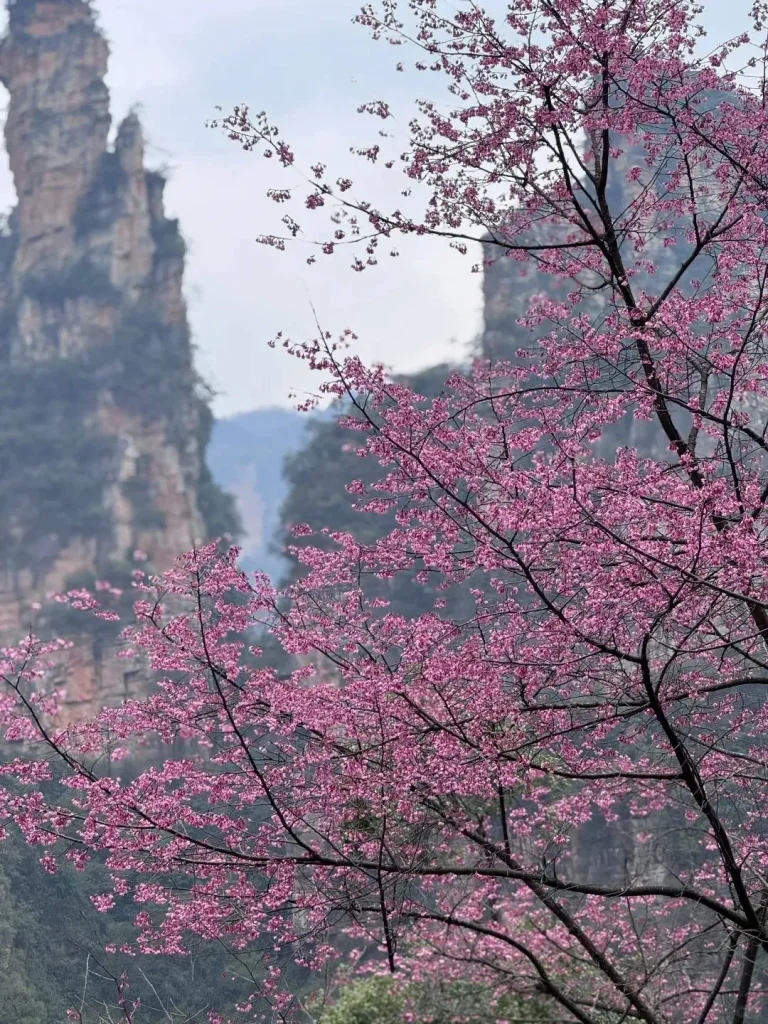
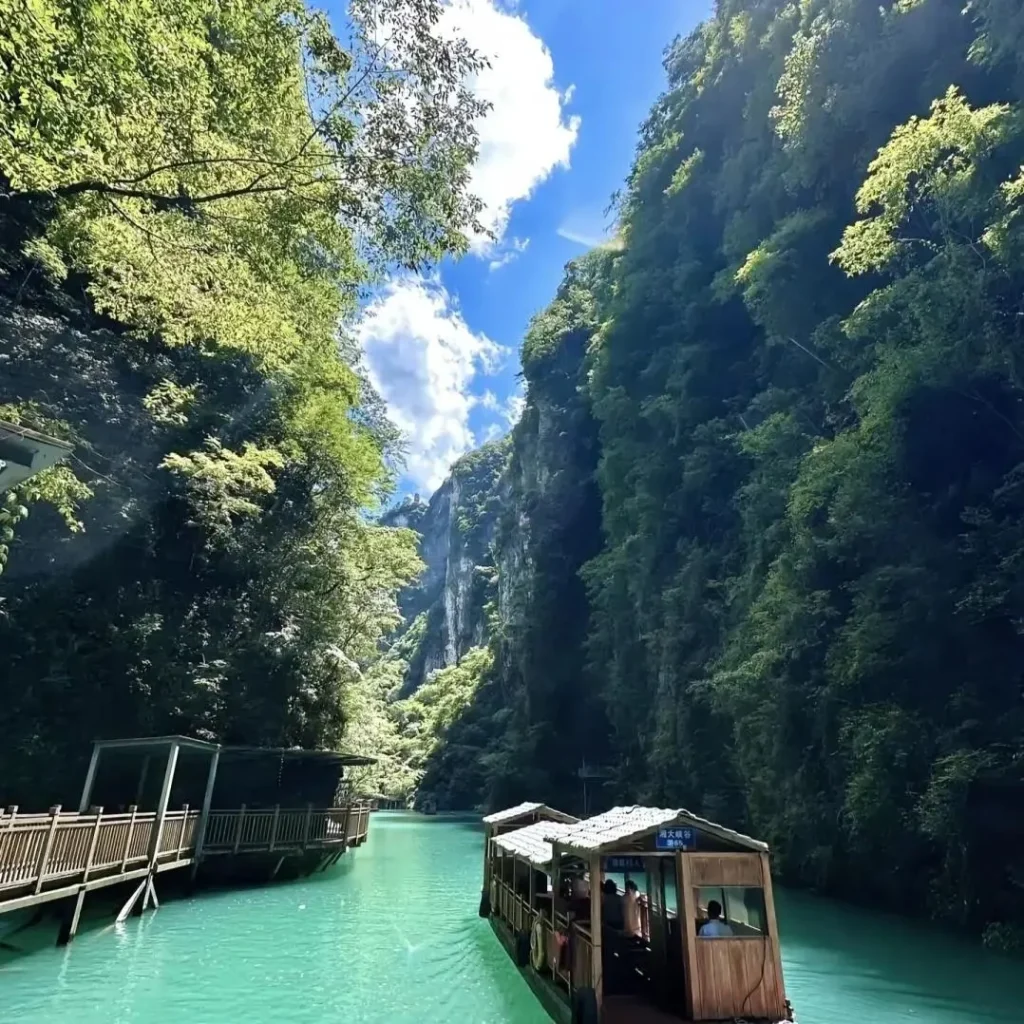
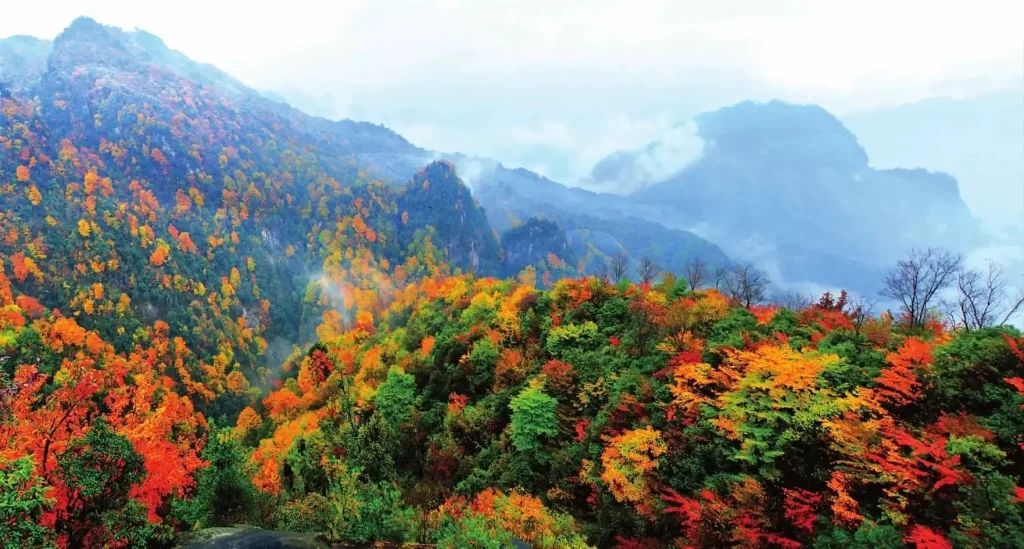
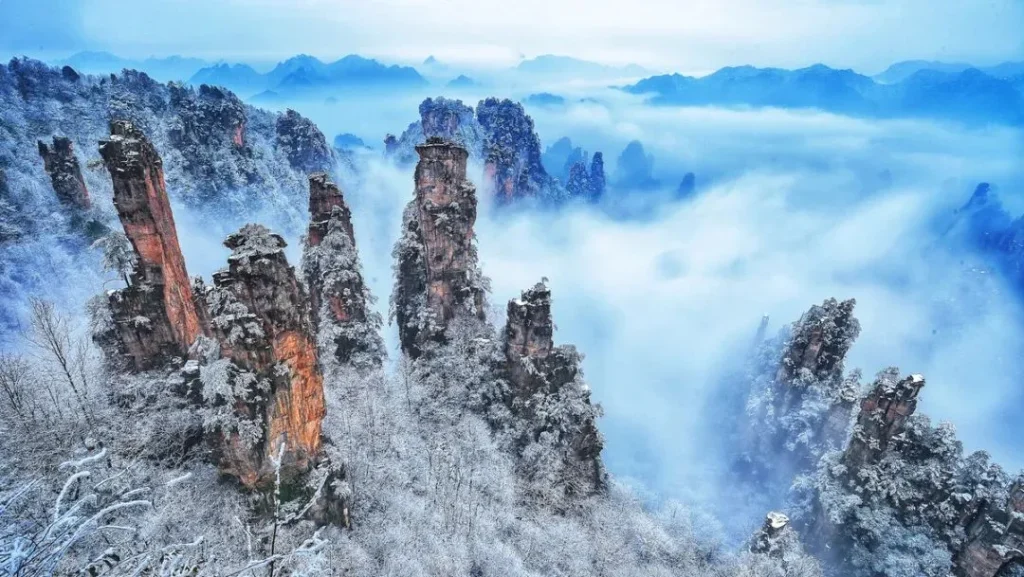
Zhangjiajie has a mid-subtropical mountainous monsoon humid climate. This means plenty of sunshine, lots of rain, and four distinct seasons. It’s not freezing in winter and not scorching in summer. The average annual sunshine is 1440 hours, and the average annual rainfall is 1400 millimeters. The best time to visit China for Zhangjiajie is from April to October, especially in April and October when the natural scenery is at its most stunning. Keep an eye on the Zhangjiajie weather forecast before your trip.
Spring and autumn are the golden seasons for tourism in Zhangjiajie. In spring, Zhangjiajie is a riot of colorful flowers. You can stroll along Golden Whip Stream, explore the Ten-Mile Gallery, and discover the secrets of Yellow Dragon Cave (黄龙洞), feeling like the Wuling fisherman stumbling upon Peach Blossom Spring. In autumn, Zhangjiajie has clear skies and colorful forests. This is also when fruits like kiwi and mandarin oranges are ripe, so you can taste the freshest local produce.
Winter in Zhangjiajie has its own unique charm. The snowscapes on Tianzi Mountain (天子山) and Tianmen Mountain (天门山) are particularly spectacular. After a snowfall, Tianzi Mountain presents four wonders: peak forests, a sea of clouds, sunrise, and winter snow. The sight of everything covered in a blanket of white is truly enchanting. Usually, it snows on the mountaintops in Zhangjiajie from November to February, and the snowy views are definitely worth seeing, showcasing some incredible China nature.
Your Zhangjiajie Trip: Planning and Experiences
How Many Days Should You Plan For?
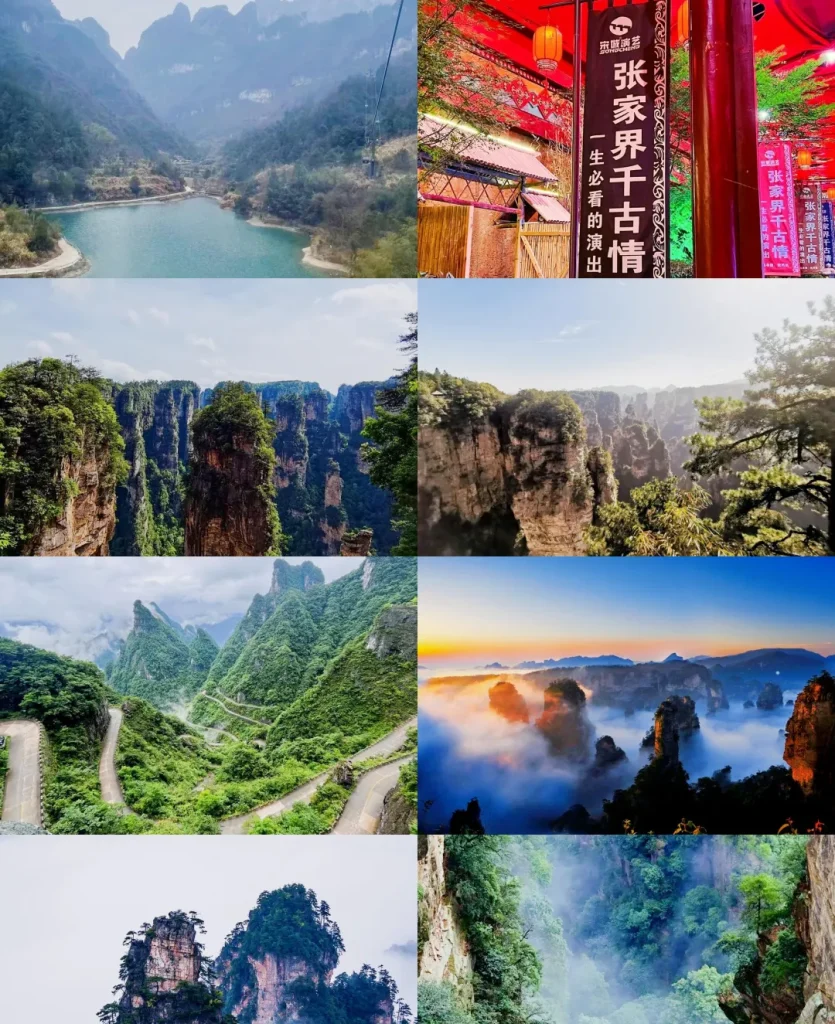
How long you stay in Zhangjiajie really depends on you. If you’re short on time, a three-day trip can give you a good taste of the main attractions like Tianmen Mountain (home to Heaven’s Gate China), Yellow Dragon Cave, and Golden Whip Stream. If you have more time and a bigger budget, consider planning a five to seven-day trip. This will let you explore the various sights more deeply and experience a wider range of activities. Generally, 4 to 5 days is enough to get a pretty comprehensive tour of Zhangjiajie’s main scenic areas and nearby attractions. Consider looking into China tour packages that include Zhangjiajie.
Recommended Activities in Zhangjiajie
Zhangjiajie offers a variety of outdoor activities for tourists, such as two-day mini-group tours that include the Avatar mountains and the Glass Bridge, as well as Tianmen Mountain ticket booking services. There are many things to do in Zhangjiajie.
Tianmen Mountain National Forest Park, Zhangjiajie National Forest Park, Wulingyuan, the Grand Canyon Glass Bridge, and Tianzi Mountain Cableway are all popular tourist spots in Zhangjiajie. These are some of the beautiful places in China.
Zhangjiajie Grand Canyon is famous for its magnificent natural scenery and thrilling adventure activities. It has the world’s longest and highest glass bridge China is known for, where you can look down into the canyon from high above and get your heart racing. Besides the glass bridge, there are also Grand Canyon adventures, rafting, and other activities waiting for you to try.
The Movie Avatar and Zhangjiajie
Zhangjiajie became world-famous thanks to the movie Avatar. In 2009, this Hollywood blockbuster directed by James Cameron put Zhangjiajie’s stunning scenery, the Zhangjiajie mountains, on the global map.
Zhangjiajie has launched several Avatar-themed tourist routes, like the “Avatar – Pandora Magical Tour” and “Avatar – Hallelujah Mountain Mystical Tour,” which take visitors to 15 filming locations from the movie, showcasing the Avatar forest inspiration.
The Hallelujah Mountain in Avatar was inspired by the “Qiankun Pillar” (乾坤柱), also known as the “Southern Sky Pillar” (南天一柱), in Zhangjiajie National Forest Park. It’s located along the Huangshi Village tourist route and is also part of the Yuanjiajie scenic area. This is a key part of the Zhangjiajie Avatar experience.
It’s understood that Avatar 2 also filmed scenes in Zhangjiajie. Some of the inspiration for Pandora’s ocean scenes in the film also came from here, the floating mountains China is now famous for. Director James Cameron even led his team to the Mariana Trench for deep-sea filming to ensure the visuals were authentic and impressive.
Zhangjiajie’s Food Culture
Must-Try Local Dishes in Zhangjiajie
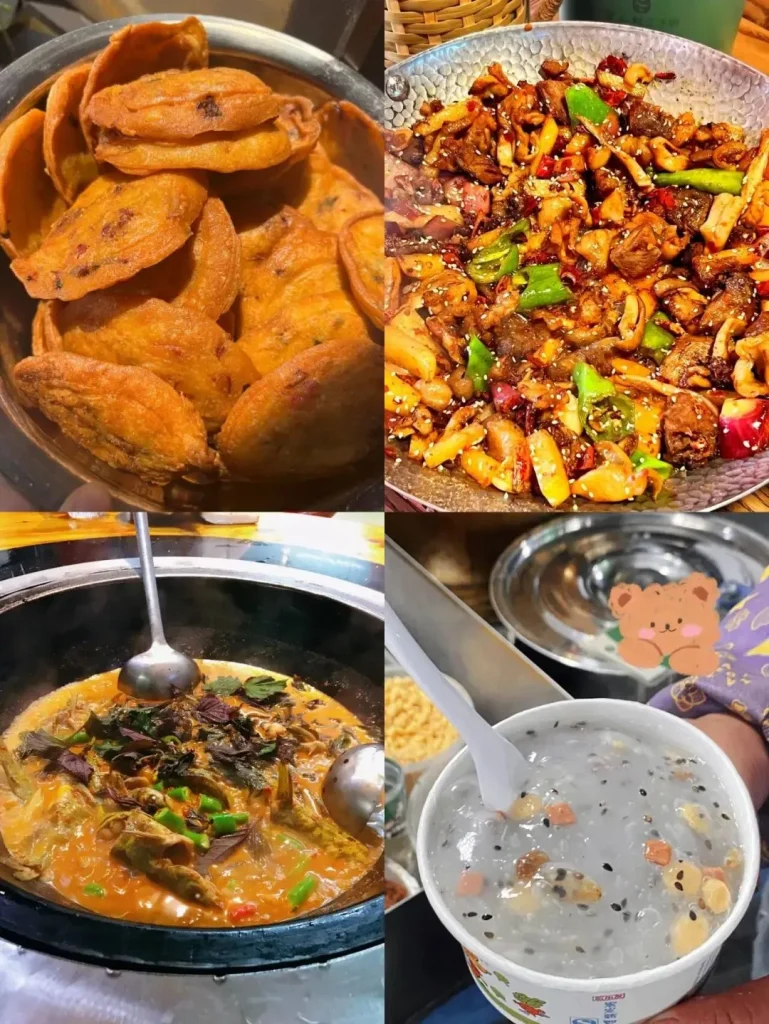
When you come to Zhangjiajie, you absolutely can’t miss the local specialties. “Sanxiaguo” (三下锅) is spicy and delicious, goes perfectly with rice, and is one of Zhangjiajie’s most iconic dishes. However, if you can’t handle much spice, you might find it a bit hot. “Suan Zayu” (酸酢鱼) is a famous dish that local ethnic minorities use to treat guests; usually, the hosts themselves are reluctant to eat it!
“Yehua Xiang · Special Dishes” (业华湘·特色菜) is a restaurant specializing in Hunan cuisine that’s popular with both locals and tourists. The restaurant’s signature dishes include Tujia Sanxiaguo (土家三下锅), Xiangxi Dagubao (湘西打鼓包), and Stone Pot Fish (石锅鱼), each one a feast for the eyes and taste buds.
Zhangjiajie’s “Top Ten Famous Dishes” include Tujia Sanxiaguo (土家三下锅), Zhangjiajie Dagupi (张家界打鼓皮), Loaches Drilling into Tofu (泥鳅钻豆腐), Farmer’s Stir-fried Pork (农家小炒肉), Tuannian Cai (团年菜 – a New Year’s Eve dish), and Sour Fish (酸鱼肉). They’re full of flavor and truly memorable.
“Xue Ba Ya” (血粑鸭 – Blood Cake Duck) is one of Zhangjiajie’s most representative specialty foods, a traditional dish of the Miao ethnic group in western Hunan. It’s made with fresh local duck, blood cake, chili peppers, green onions, ginger, and other seasonings, then stewed for a long time. The blood cake fully absorbs the essence of the duck meat, resulting in a rich flavor that tourists love.
Zhangjiajie’s Wildlife and Environment
Zhangjiajie is rich in wildlife resources, with over 513 known species of terrestrial wild vertebrates. These include 8 species of nationally first-class protected animals like the clouded leopard, leopard, forest musk deer, pangolin, Chinese merganser, golden eagle, white-necked long-tailed pheasant, and white crane, as well as 62 species of nationally second-class protected wild animals, such as the black bear.
In Zhangjiajie’s Wulingyuan scenic area, the nationally second-class protected animal, the “flying fox” – or red and white giant flying squirrel (红白鼯鼠) – has also been spotted. These squirrels mainly live in mountain slope forests or limestone caves at an altitude of about 1000 meters and feed on the leaves, tender branches, and seeds of pine, cypress, and fir trees, as well as oily nuts.
Zhangjiajie Travel Tips
Getting Around and Language
- Nearby Cities: The closest major city to Zhangjiajie is Changsha, about 398 kilometers away. Other relatively close cities are Changde and Jishou.
- Getting to Scenic Areas: The main bus station in Zhangjiajie city has direct buses to the three main entrances of the Wulingyuan scenic area: Forest Park Ticket Station, Wulingyuan Ticket Station, and Tianzi Mountain Ticket Station. Taking a direct tourist bus to the scenic area can save you the hassle of transfers. Check for flights to Zhangjiajie if coming from further away.
- High-Speed Rail: High-speed rail stations in and around Zhangjiajie city include Zhangjiajie West Station and Sangzhi Station. Zhangjiajie West Station is an important stop on the Zhangjiajie-Jishou-Huaihua high-speed railway and one of the most convenient high-speed rail stations for getting to Zhangjiajie.
- By Air: Zhangjiajie’s only airport is Zhangjiajie Hehua International Airport (张家界荷花国际机场), about 6 kilometers from the city center. It currently has flights to and from cities like Beijing, Shanghai Pudong, Taipei, Shenzhen, Chongqing, Hangzhou, and Changsha.
- Language: The main dialect in Zhangjiajie is Southwestern Mandarin, which is a branch of Standard Mandarin (Putonghua). The local dialect has a bit of an “er” sound (儿化音) and is quite similar to the dialects spoken in Guizhou, Chongqing, and Sichuan. However, in tourist areas, you’ll generally have no problem communicating in Putonghua. These are useful China tips for travelers.
Best Seasons and What to Wear
- Best Time to Go: The best time to visit Zhangjiajie is from April to October. During this period, the temperature is moderate, the weather is pleasant, and the sun is shining – perfect for enjoying Zhangjiajie’s beautiful scenery. This aligns with the best time to travel to China for many regions.
- Spring and Autumn Wear: Spring (April to May) and autumn (September to October) are the golden seasons for tourism in Zhangjiajie. It’s a good idea to wear a light jacket and comfortable shoes, as you’ll likely be doing a lot of walking and hiking.
- Summer Wear: Summer temperatures can be quite high, so pack light, breathable clothing and make sure to use sun protection.
- Winter Wear: In winter, you’ll need warm clothing, especially if you’re heading to the mountaintop areas where temperatures will be lower.
Wrapping Up Your Zhangjiajie Trip
Zhangjiajie is definitely a place worth visiting. It has world-class natural wonders, unique sandstone peak landscapes, beautiful scenery in all four seasons, and a rich cultural heritage. Whether you’re a nature lover, a history buff, or a movie fanatic, you’ll find something amazing to experience in Zhangjiajie, one of the best places to visit in China.
For those who love nature, the strange peaks and rocks, canyons and streams, sea of clouds, and sunrises in Zhangjiajie National Forest Park will leave you spellbound. For those who appreciate culture, Zhangjiajie’s rich Tujia culture, historical sites, and folk activities are equally fascinating. And for movie fans, visiting the filming locations of Avatar and other movies in person is a truly unique experience.
A Few Tips for Your Zhangjiajie Adventure:
- Plan Your Itinerary: Plan your trip to China and Zhangjiajie based on your time and interests. If you’re short on time, try to stay at least 3 days to see core attractions like Zhangjiajie National Forest Park and Tianmen Mountain. If you have more time, aim for 5-7 days to fully experience Zhangjiajie’s natural and cultural charm.
- Where to Stay: It’s best to choose a hotel or guesthouse in the Wulingyuan area or near Zhangjiajie National Forest Park for easy access to the main attractions.
- Best Time to Visit: The best times to go are spring (April-May) and autumn (September-October) when the weather is mild and the scenery is at its most beautiful.
- Getting There: You can get to Zhangjiajie by bus, train, or plane. If you opt for a self-drive tour, you’ll have more flexibility in planning your itinerary.
- What to Wear: Choose appropriate clothing for the season. Especially when going to mountaintop areas, the temperature difference can be significant, so be sure to dress in layers.
- Experience Local Culture: Besides enjoying the natural scenery, why not also experience the local Tujia culture, try the specialty foods, and soak in the unique ethnic atmosphere?
In short, Zhangjiajie is an amazing travel destination that combines natural beauty, history, culture, and recreation, just waiting for every traveler to come and explore this key China national park!