
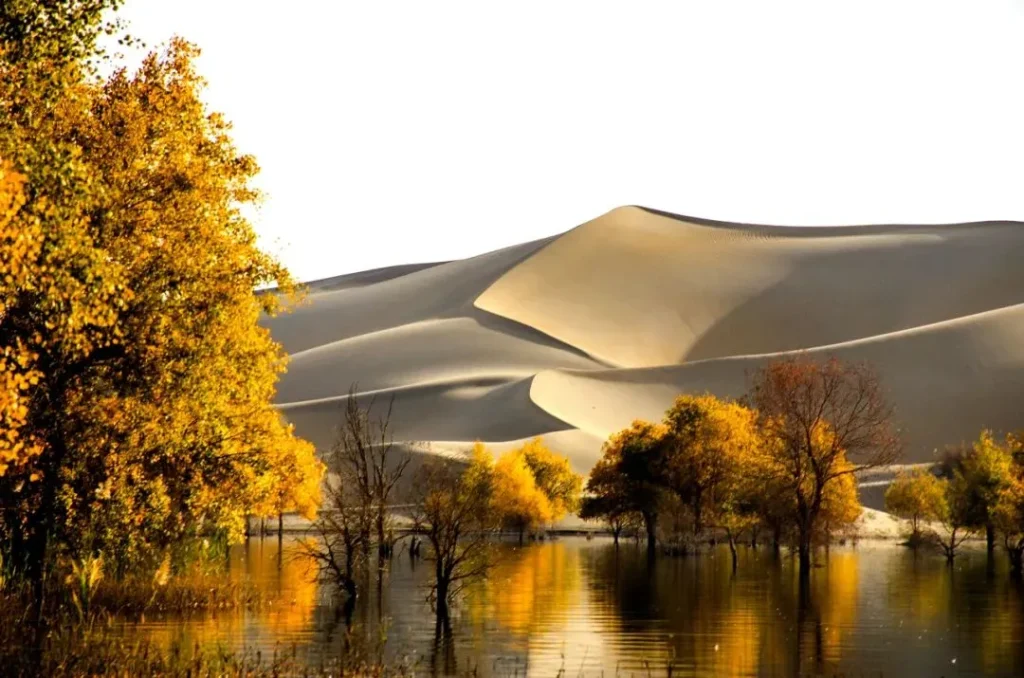
The Taklamakan Desert (塔克拉玛干沙漠), situated in the Tarim Basin of southern Xinjiang, is the world’s second-largest shifting sand desert and the largest desert in China. Known historically in Uighur as the ‘Sea of Death’ or ‘the place of no return’, this vast wilderness was a formidable crossing for ancient Silk Road caravans. Today, modern cross-desert highways and high-speed rail lines allow travelers to safely witness towering sand dunes, ancient oasis cities, and resilient Populus euphratica (poplar) forests.
Taklamakan Desert: Essential Visitor Facts
An Overview of the Taklamakan Desert


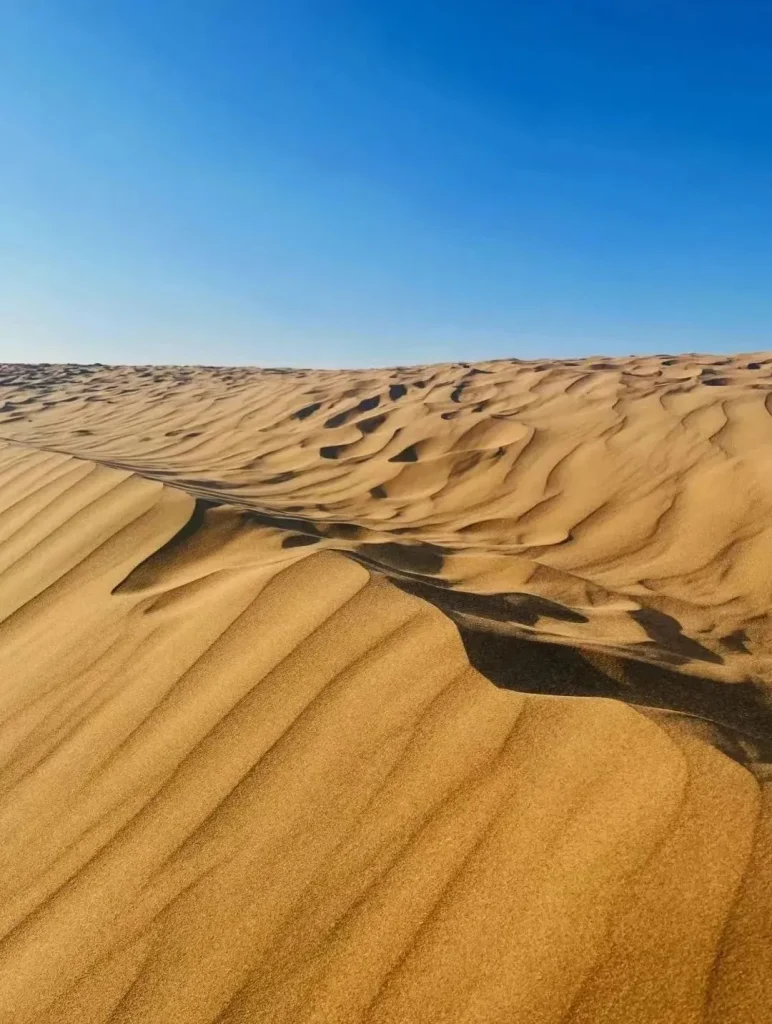
Located in the heart of the Tarim Basin in China’s Xinjiang Uyghur Autonomous Region, the Taklamakan stretches about 1,000 kilometers from east to west and 400 kilometers from north to south, covering an area of roughly 337,600 square kilometers. In the Uyghur language, “Taklamakan” means “go in and you won’t come out,” a fitting description of this vast and challenging shifting desert. The desert is a mix of sand dunes, sand mountains, sand valleys, and sand plains, with dunes reaching heights of 200 to 300 meters, and some even towering over 400 meters, creating spectacular “desert pyramid” scenes. For those interested in its specific layout, a Taklamakan Desert map can be very helpful.
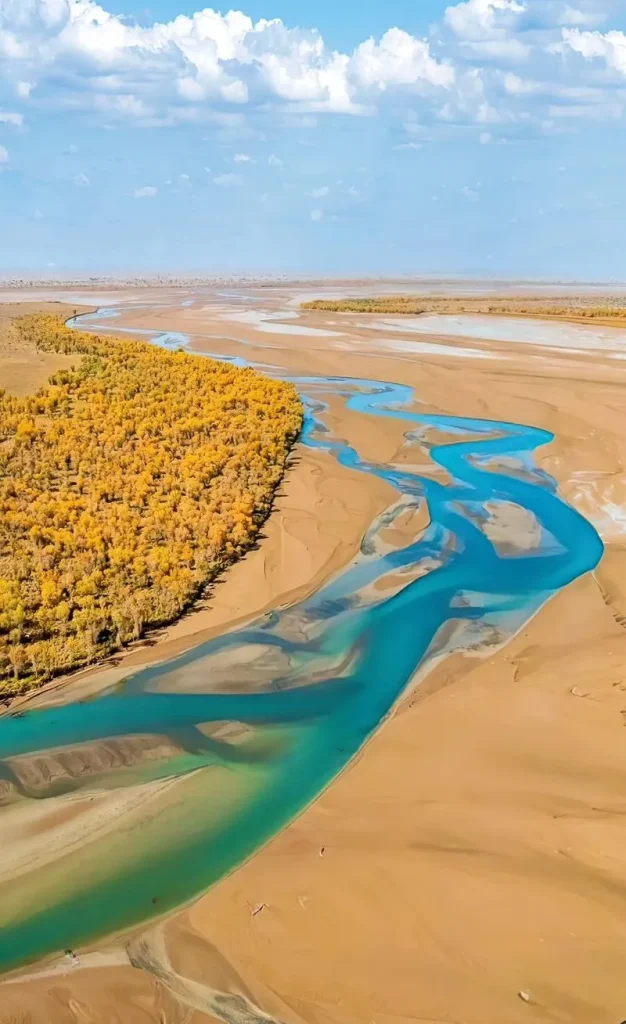
Scattered throughout the desert are oases, known as “islands,” which are vital sources of life and were important stops along the ancient Silk Road. Historically, the Taklamakan Desert was a crucial corridor connecting the East and West, with the southern, northern, and central routes of the Silk Road (visualize with a silk road map) all passing through it. Today, this mystical sea of sand continues to captivate travelers from around the globe. Learning some Taklamakan Desert facts can greatly enrich your visit.
Must-See Attractions in the Taklamakan Desert
The Taklamakan Desert has plenty of unique spots worth checking out. Here are some top recommendations for overseas visitors:
Natural Wonders
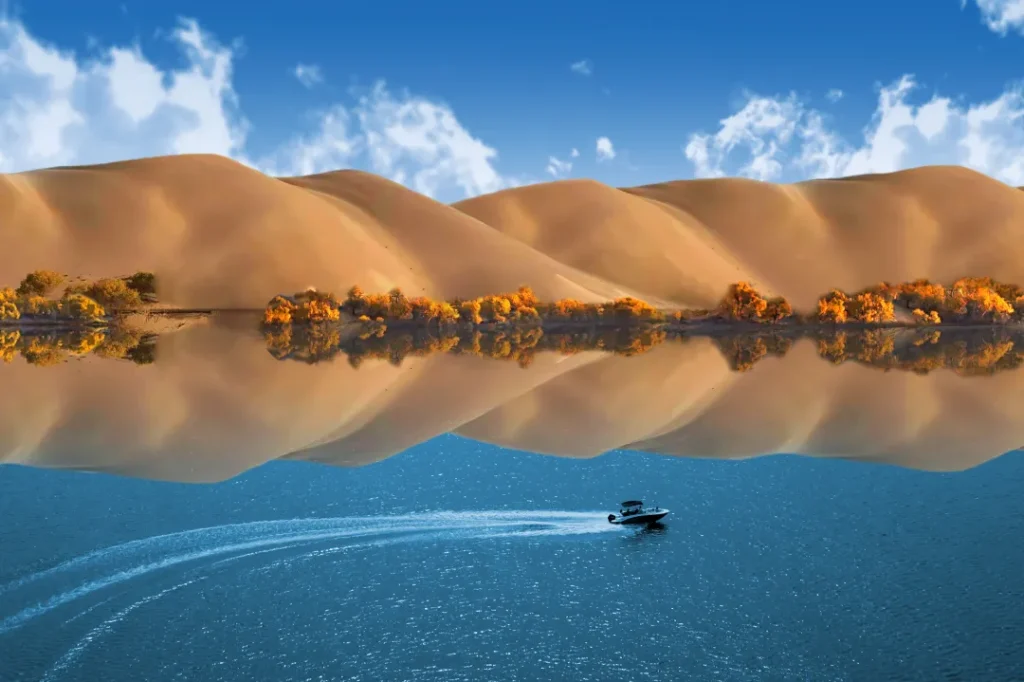

- Lop Nur (罗布泊) and Tata Secret Realm (塔塔秘境)Lop Nur, located in the eastern part of the Taklamakan Desert, is a seasonal lake whose size changes with the seasons. Surrounded by rolling dunes and the endless desert beyond, the scenery is truly spectacular. Under the sun, the lake shimmers a captivating blue, contrasting beautifully with the golden dunes. It’s also a great spot for birdwatching, as flocks often gather by the water.The Tata Secret Realm, in Yuli (尉犁) County, Bayingolin Mongol Autonomous Prefecture, Xinjiang, is a famous attraction in the eastern desert. Its unique landscape features a stunning interplay of sand dunes and lakes. The dunes here are tall and steep, and climbing them offers panoramic views of the desert. The lake sparkles in the sunlight, with an endless expanse of dunes in the distance, like a beautiful painting. It’s also an ideal spot for sunrise and sunset photography, as the sky and dunes are bathed in golden-red light – truly a magnificent sight.

- Sunrise and SunsetThe sunrises and sunsets in the Taklamakan Desert are a spectacular show put on by nature. As the sun rises or sets, the entire sky and the dunes are painted in shades of golden red – an absolutely stunning sight. Watching from the top of a dune, you can truly feel the immense power of nature. At sunrise, the first rays of light pierce through the morning mist, illuminating the dunes and seemingly lighting up the entire desert in an instant. At sunset, the lingering glow bathes the dunes in a sea of gold. These moments offer incredible photo opportunities.
Adventure Experiences

- Desert Off-RoadingThe Taklamakan Desert is a playground for off-roading enthusiasts. You can drive modified 4x4s across the dunes for a thrilling desert driving experience. With a professional guide, navigate the towering dunes and feel the rush of “flying sand and rolling stones (飞沙走石).” This activity tests not only your driving skills but also your physical and mental stamina. Local professional off-roading companies provide vehicles and guides to ensure your safety and enjoyment.

- Trekking AdventuresIf you enjoy hiking, consider joining an organized desert trek. These are usually run by professional outdoor adventure companies that provide full logistical and safety support. Trekking routes typically stick to the desert’s edge or areas with water sources, avoiding overly dangerous zones. During the trek, you’ll get up close with the desert’s natural beauty, feeling the fine sand and vastness of the dunes. It’s a test of endurance and willpower, and a chance to experience the desert’s mystery and beauty. Many China tours offer such specialized adventures.

- Desert CyclingCycling in the Taklamakan Desert is another unique experience. You can ride along desert highways or even on the sand itself, feeling the speed and excitement. Professional desert cycling companies offer bike and gear rentals, as well as route planning and safety support. As you ride, you’ll take in the magnificent desert landscapes and feel the wind rushing past. This activity is suitable for visitors with some cycling experience and good physical fitness, and requires thorough preparation and protection.
Historical and Cultural Sites

- Niya Ruins (尼雅遗址)Located deep within the Taklamakan Desert, the Niya Ruins are the remains of an important ancient city on the Silk Road. This was once the site of the Jingjue Kingdom (精绝国) in the Western Regions and has a rich historical and cultural heritage. The ruins contain numerous ancient buildings, Buddhist temples, and tombs. Precious artifacts like silk, coins, and documents have been unearthed here, providing valuable insights into the ancient Silk Road. A guided tour of the ruins will help you understand the history and culture of the ancient Western Regions and appreciate the splendor of Silk Road civilization. Archaeological work at Niya is ongoing, with new discoveries constantly being made.

- Yuansha Ancient City (圆沙古城)Yuansha Ancient City, also known as the Round Ancient City, is a 2,000-year-old ruin in the heart of the Taklamakan. The city is circular, about 300 meters in diameter, with walls around 5 meters high, serving as an important defensive structure in the ancient Western Regions. Inside, you can find remnants of streets, houses, and wells, reflecting the lifestyle of its ancient inhabitants. The craftsmanship of Yuansha Ancient City is remarkable; its sturdy walls have withstood centuries of wind and rain, showcasing ancient architectural prowess. Visiting the site offers a glimpse into ancient Western Region architecture and lifestyles, and a sense of history’s weight. Archaeological work here is also ongoing.
Local Cultural Experiences

- Dolan Culture in Makit (麦盖提) CountyMakit County, in the western Taklamakan, is the birthplace of Dolan culture. Dolan culture is a traditional Uyghur culture encompassing music, dance, clothing, and cuisine. Dolan artists in Makit County are highly skilled; their dances are powerful and energetic, and their music is rhythmic and infectious. You can enjoy Dolan song and dance performances, savor Dolan-style cuisine, and learn about the origins and development of this unique culture. Makit County also regularly hosts Dolan cultural festivals, attracting many visitors. The unique charm of Dolan culture offers a rich cultural experience, showcasing traditional Uyghur heritage.

- Lop Nur People’s Village (罗布人村寨) in Yuli (尉犁) CountyThe Lop Nur People’s Village in Yuli County is a settlement of the Lop Nur people, located on the edge of the Taklamakan Desert. The Lop Nur people are a minority ethnic group in Xinjiang with unique cultural traditions and ways of life. The village preserves traditional Lop Nur homes and customs. You can learn about their history and culture, and try local specialties like Lop Nur lamb and fish. The village is surrounded by desert, poplar forests (胡杨林), and rivers, creating a beautiful natural picture. The natural scenery and cultural atmosphere of the Lop Nur People’s Village offer a unique travel experience, highlighting the cultural charm of Xinjiang’s ethnic minorities.
Challenges of Traveling in the Taklamakan Desert
A trip to the Taklamakan Desert comes with challenges, mainly concerning transportation, travel conditions, and infrastructure. If you’re wondering where is the Taklamakan Desert, it’s in a remote part of China.


- TransportationThe Taklamakan Desert is in a relatively remote part of northwestern China. You’ll first need to get to the Xinjiang Uyghur Autonomous Region and then travel by road to the desert scenic areas. Urumqi, Xinjiang’s capital, is the main gateway. From Urumqi to major cities near the desert like Korla (库尔勒) or Kashgar, you can take a plane, train, or long-distance bus. From these cities, you’ll then take a private car or join a tour to reach the desert attractions. Many China travel packages can arrange this for you.Some scenic spots, like the N39 Desert Tourist Area in Makit County or the Tata Secret Realm in Yuli County, are relatively accessible by direct bus or private car. However, more remote desert locations like the Niya Ruins or Yuansha Ancient City require joining professional expedition tours led by experienced guides. These tours usually cover all transportation, accommodation, and safety arrangements.As an overseas tourist, you’ll need a Chinese tourist visa. This can usually be applied for through a travel agency or, for some nationalities, obtained on arrival at certain ports of entry. It’s best to check the visa policy in advance and prepare accordingly. Also, since the Taklamakan is a border region, some areas might have special security measures. You’ll need to follow the rules and cooperate with local authorities.
- Travel ConditionsTravel conditions in the Taklamakan Desert can be tough, so be prepared. The desert environment is extreme: hot in summer, cold in winter, with large temperature swings between day and night. Summer daytime temperatures can exceed 40°C (104°F), dropping to below 10°C (50°F) at night. Winter daytime temperatures might hover around 0°C (32°F), plummeting to -20°C (-4°F) or lower at night. So, pack appropriate clothing and gear for the season and weather.Sandstorms are a potential hazard, especially in spring and autumn. During a sandstorm, visibility is extremely low, and strong winds can pose a safety threat. Keep an eye on the weather forecast and avoid outdoor activities during sandstorms. If caught in one, find shelter immediately.The desert terrain is complex, with tall, steep dunes that are difficult to navigate and easy to get lost in. It’s not advisable for inexperienced individuals to venture deep into the desert alone. Water is scarce, so carry enough drinking water and food. Mobile phone signals can be weak or non-existent in some areas, so inform family or your guide of your itinerary in case of emergencies.
- InfrastructureInfrastructure in the Taklamakan Desert is limited, mostly concentrated in developed scenic areas and county towns. Developed spots like the N39 Desert Tourist Area in Makit County and the Tata Secret Realm in Yuli County have basic visitor facilities like parking lots, viewing platforms, and food stalls, which generally meet tourist needs. County towns like Makit and Yuli have hotels, restaurants, and supermarkets.However, infrastructure in the deep desert, such as near the Niya Ruins or Yuansha Ancient City, is virtually non-existent. You might need to bring tents, sleeping bags, and other camping gear. Professional expedition tours usually provide this equipment, along with cooks and cooking gear. Some scenic areas, like the N39 Desert Tourist Area, also offer unique accommodations like starry sky campsites.
Services and Facilities Around the Taklamakan Desert
Support services around the Taklamakan Desert are relatively well-developed, mainly in county towns and established scenic areas:
- AccommodationCounty towns near the desert, like Makit and Yuli, offer a range of hotels and guesthouses to suit different budgets and needs. These hotels provide standard rooms, restaurants, and other facilities; some higher-end ones might have pools or gyms. Service quality can vary, so it’s a good idea to choose well-reviewed options.Some scenic areas, like the N39 Desert Tourist Area in Makit County, have unique lodging like starry sky campsites. These offer tents where you can lie back and gaze at the star-filled sky. Campsites usually provide beds, lighting, and basic bathroom facilities, but conditions are relatively simple, suiting those who enjoy an outdoor experience.Accommodation in the deep desert, near remote sites like the Niya Ruins or Yuansha Ancient City, is extremely limited. You’ll likely camp in the desert as arranged by a professional expedition tour, which will provide high-quality camping gear and logistical support.
- DiningCounty towns and developed scenic areas around the desert have various restaurants and snack shops offering local specialties and regular meals. Dolan-style dishes in Makit County and Lop Nur specialties in Yuli County are local highlights worth trying. Restaurant hygiene and food quality can vary, so choose reputable places.Some scenic spots, like the N39 Desert Tourist Area, have simple food stalls offering basic meals at reasonable prices. Dining in the deep desert relies mainly on professional expedition tours, which usually include professional cooks and cooking equipment to provide tasty meals.If you have special dietary needs, like vegetarianism, inform your travel agency or guide in advance. Also, local eating habits and flavors might differ from what you’re used to, so keep an open mind and try the local cuisine.
- Transportation (Local)The transportation network around the desert is relatively developed, mainly in county towns and established scenic areas. From major cities like Urumqi, you can reach nearby cities like Korla or Kashgar by plane, train, or long-distance bus. From there, you’ll take a private car or join a tour to the desert attractions.Some scenic spots, like the N39 Desert Tourist Area and the Tata Secret Realm, have direct bus or private car services with relatively fixed schedules that you can check and book in advance. You can also opt to charter a car or rent one for more flexibility, but this requires some driving experience.Inside scenic areas, there are usually sightseeing buses or electric carts. Some places, like the N39 Desert Tourist Area, even offer unique transport like ostrich or donkey rides. In the deep desert, transportation relies mainly on professional off-road vehicles or camels, led by expert guides. Professional expedition tours will provide high-quality off-road vehicles and experienced guides.Additionally, Xinjiang has launched a tourist train circumnavigating the Taklamakan Desert (sometimes referred to as the Taklimakan Desert), stopping at major attractions, offering a convenient travel option. You can relax on the train and enjoy the desert views from your window. A Taklimakan Desert map can help visualize this route.
Practical Tips for Your Taklamakan Desert Trip
To ensure your Taklamakan Desert adventure is enjoyable and safe, here are some practical tips:
- Best Time to VisitThe best times to visit the Taklamakan Desert are spring (April-May) and autumn (September-October). In spring, the desert plants are growing, wildflowers bloom, and the scenery is beautiful. Autumn offers the richest colors, with poplar forests turning golden yellow, creating a stunning contrast with the desert. The weather during these seasons is also relatively mild and suitable for outdoor activities.Summer (June-August) is extremely hot, with daytime temperatures reaching over 40°C (104°F), making outdoor activities very strenuous. Winter (November-February) is very cold, with nighttime temperatures potentially dropping below -20°C (-4°F), also making outdoor activities difficult. Sandstorms mainly occur in spring and autumn, so check the weather forecast and avoid outdoor activities during these events.
- Pre-Trip PreparationsBefore your trip, prepare thoroughly. First, assess your health to ensure you can handle the desert environment. Second, pack appropriate clothing and gear based on the season and weather. For summer, you’ll need sunscreen, a sun hat, and light, breathable clothing. For winter, pack warm clothes, gloves, and a hat.Also, bring enough drinking water and food. Communication signals are weak in the desert, so consider bringing backup communication devices like a satellite phone. Pack necessary medications, such as for heatstroke, colds, and inflammation. Finally, learn about local customs and safety regulations beforehand, respect the local culture, and follow the rules.
- Safety PrecautionsTraveling in the Taklamakan Desert involves certain risks, so prioritize safety. It’s not recommended for inexperienced individuals to venture into the deep desert alone, as the terrain is complex, it’s easy to get lost, and rescue can be difficult. Water is scarce, so conserve it. In an emergency, like getting lost or injured, stay calm, remain where you are, and wait for rescue; avoid moving around blindly.Sandstorms are a potential risk. If you encounter one, seek safe shelter immediately. Wild animals in the desert, like scorpions and snakes, can also pose a threat, so stay alert and avoid contact. Finally, the temperature difference between day and night is significant, so add or remove clothing layers as needed to avoid catching a cold or getting heatstroke.
- Travel BudgetYour travel budget will vary. Generally, joining an organized tour is more economical and safer. Tour operators typically cover transportation, accommodation, meals, guides, etc., with relatively transparent pricing. Costs will differ based on the itinerary and service standards, so choose according to your budget.If you opt for self-driving or chartering a car, consider vehicle rental, fuel, tolls, and potential rescue costs, plus food, accommodation, and entrance fees. Overall, a trip to the Taklamakan Desert can be relatively expensive, so be prepared financially.
As the world’s second-largest shifting sand desert, the Taklamakan Desert, with its unique natural beauty, profound history, and thrilling adventures, is a truly exceptional travel destination. For overseas visitors, it’s a fantastic opportunity to explore the mysterious allure of western China.
From magnificent dunes to enigmatic ancient cities, from exciting desert off-roading to peaceful starry-sky camping, the Taklamakan Desert offers a rich and varied travel experience. While the journey may present some difficulties and challenges, with thorough preparation and by choosing the right approach and timing, you can still enjoy a safe and delightful trip.
We look forward to welcoming travelers from all over the world to explore the mystery and beauty of the Taklamakan Desert and experience the charm of this magical land. Whether you’re a photography enthusiast, a history lover, an adventure seeker, or a nature aficionado, the Taklamakan Desert is sure to meet your expectations and leave you with unforgettable memories.
Related Guide: Check our in-depth practical advice on Silk Road high-speed rail route from Xi’an.