
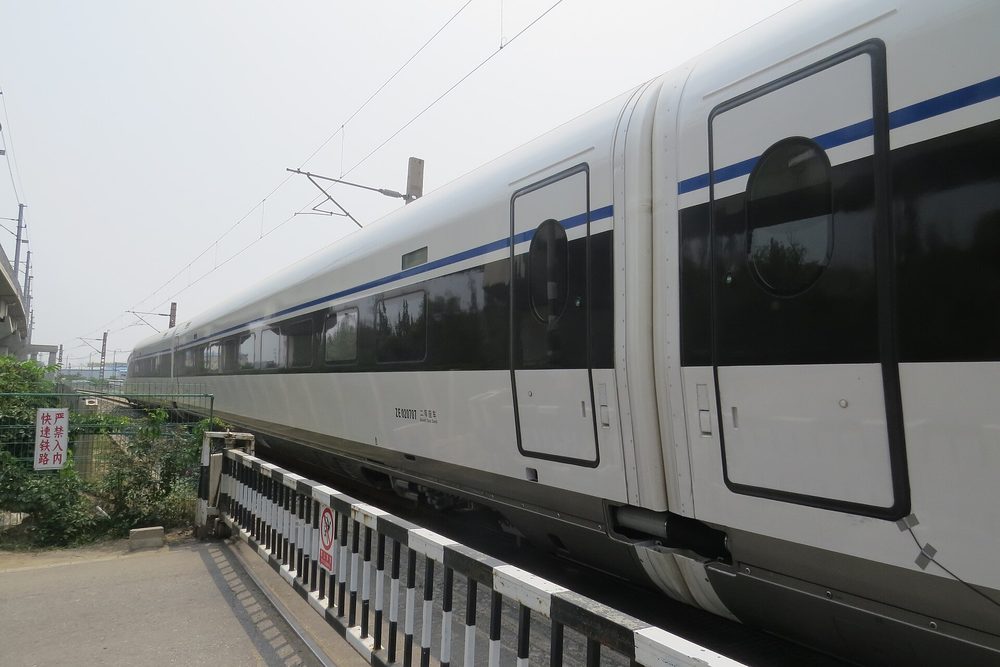
China’s high-speed railway operates the most advanced passenger fleet in the world, whisking travelers between major metropolises at 350 km/h (217 mph). When booking bullet train tickets on 12306 or Trip.com, international visitors face three primary seat tiers: Second Class, First Class, and Business Class. While every class on modern Fuxing (复兴号) and Harmony (和谐号) trainsets is clean, punctual, and air-conditioned, the differences in legroom, privacy, luggage space, and station perks are significant.
Whether you are planning a quick one-hour sprint from Shanghai to Hangzhou or a five-hour trans-provincial journey from Beijing to Xi’an, this detailed breakdown helps you choose the perfect ticket class for your travel style and budget.
Quick Takeaways: China Bullet Train Seat Classes
1. Second Class (二等座): The Smart Budget Standard
Second Class (Èrděngzuò, 二等座) forms the backbone of China’s rail network, occupying roughly 75% to 80% of carriages on every bullet train. If you are used to the cramped seating of European intercity trains or domestic North American flights, Second Class on China’s high-speed rail will be a pleasant surprise.
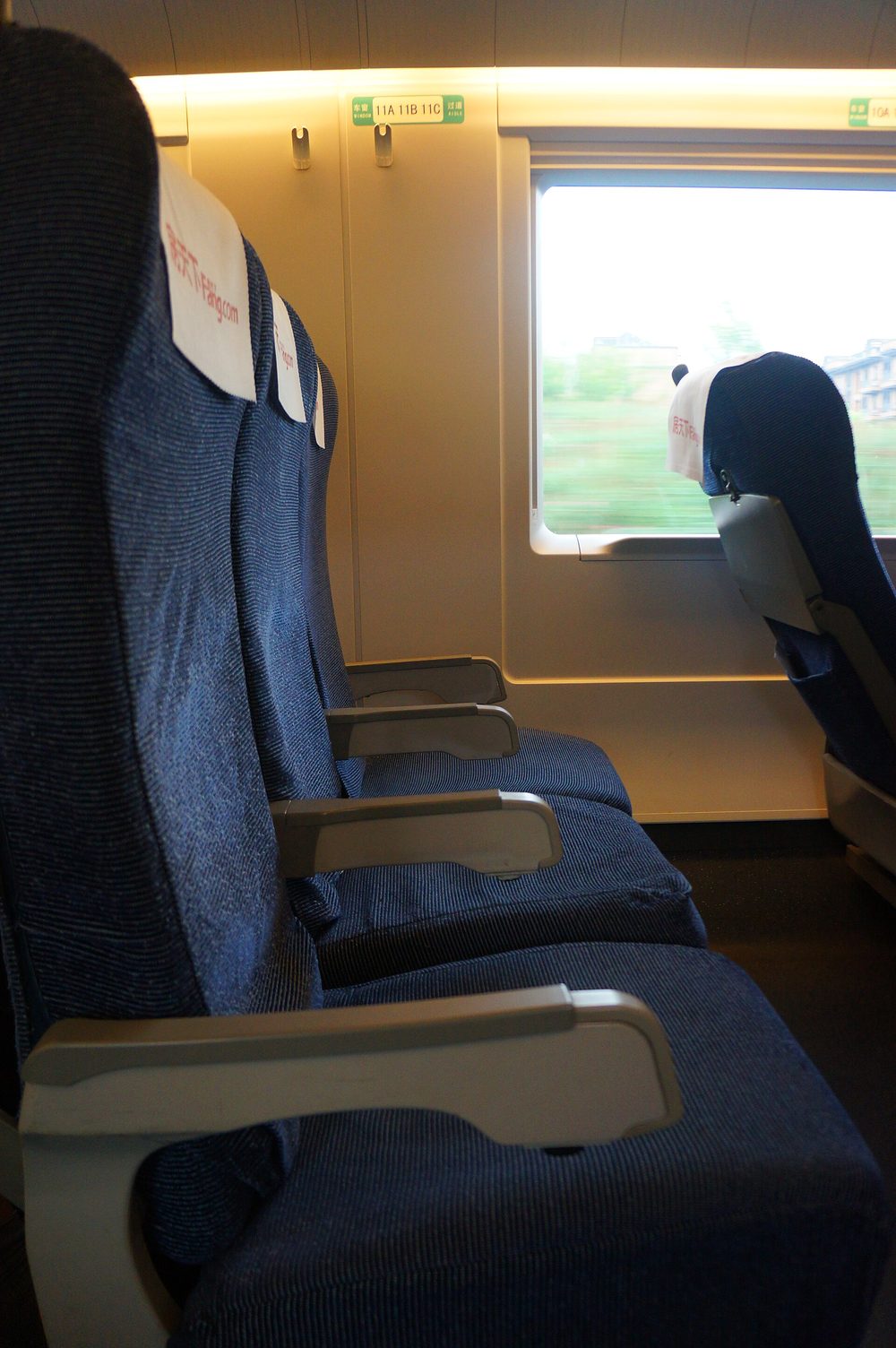
Cabin Configuration: Seats are configured in a 3+2 layout across the aisle. Seats A, B, and C sit on one side, while seats D and F sit on the other (there is no seat E). Seat A and Seat F are window seats, while C and D are aisle seats. Seat B is the middle seat on the 3-seat side.
Legroom and Comfort: Seat pitch measures between 38 and 40 inches (96–102 cm), providing ample space between your knees and the seatback pocket in front of you. Seats recline smoothly up to approximately 120 degrees using a mechanical lever beside the cushion.
Power Outlets and Charging: Every seat row features universal multi-standard 220V electrical sockets and USB charging ports located either between the seat cushions or beneath the front of your seat. Sockets accommodate US two-prong and European two-prong plugs without adapters.
Pricing Benchmark: On the flagship 1,318-kilometer Beijing to Shanghai route (4.5 hours), a Second Class ticket costs approximately 553 to 662 RMB ($77–$92 USD). It is by far the best value for budget-conscious independent travelers.
2. First Class (一等座): Superior Space and Quieter Cabins
First Class (Yīděngzuò, 一等座) typically occupies one or two dedicated carriages (Carriage 1 or 2) on standard trainsets. It is engineered for business commuters, travelers desiring extra personal space, and anyone sensitive to noise.
Cabin Configuration: Configured in a 2+2 layout (Seats A and C, aisle, Seats D and F). With no middle seats, every passenger enjoys direct access to either a window or the aisle.
Enhanced Dimensions: Seat cushions are approximately 48cm wide—significantly broader than Second Class—with generous armrests. Seat pitch expands to 42 to 44 inches (108–112 cm), allowing even tall passengers over six feet (185cm) to stretch their legs straight out without touching the seat ahead. Each seat includes an adjustable fold-down footrest.
Cabin Atmosphere: Because First Class carriages contain roughly 40% fewer total passengers than Second Class cars, the ambient noise level is noticeably quieter. It is far easier to work on a laptop, read, or take an undisturbed nap.
Pricing Benchmark: First Class tickets generally cost about 60% more than Second Class. On Beijing to Shanghai, a First Class seat costs approximately 930 to 1,060 RMB ($130–$148 USD). For journeys exceeding four hours, the modest price premium is well worth the extra comfort.
3. Business Class (商务座): The Ultimate Luxury Experience
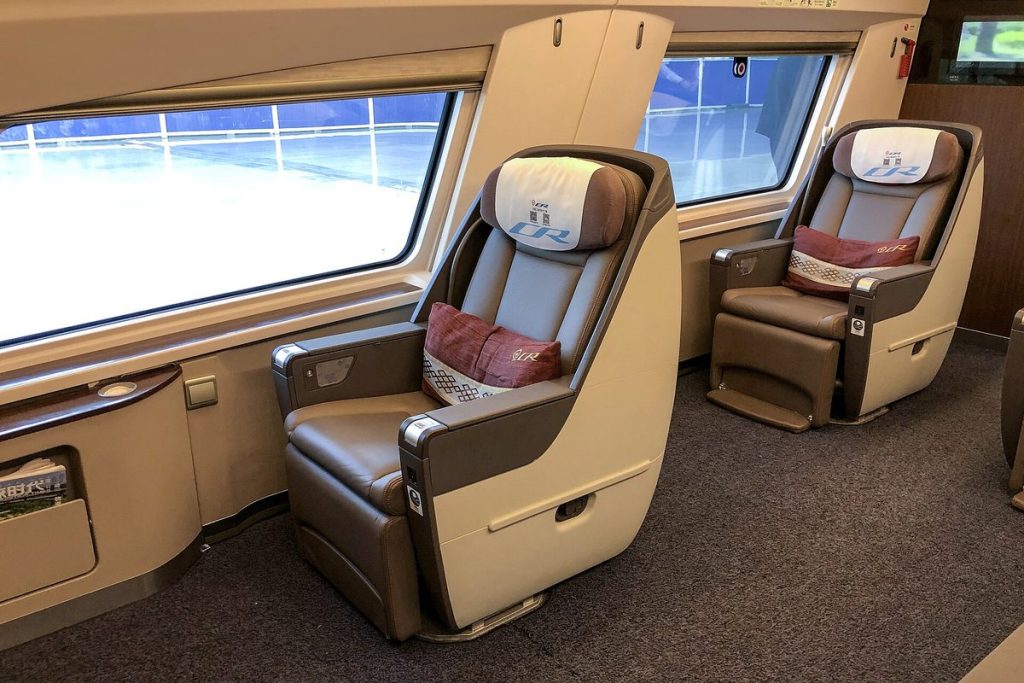
Business Class (Shāngwùzuò, 商务座) is the crown jewel of Chinese high-speed rail, delivering a luxury experience rivaling long-haul international airline business class. Positioned at the very front or rear carriage of the train (Carriage 1 or 16), these exclusive cabins hold only 12 to 24 passengers in a 1+2 or 1+1 layout.
Full 180° Lie-Flat Pods: Each passenger sits in a private composite shell pod upholstered in premium leather. Using electronic armrest controls, the seat transitions from upright mode to an ergonomic 45-degree lounge recliner, or flattens completely into a horizontal 180-degree lie-flat bed. The pod includes a personal reading light, an entertainment display monitor, noise-canceling headphones, and a collapsible wooden dining table.
Station VIP Lounge Access: Business Class passengers do not wait in crowded general station concourses. Major high-speed stations feature dedicated “Business Class VIP Lounges” (Shāngwùzuò Hòuchēshì, 商务座候车室). Lounges offer free espresso, Chinese teas, snacks, private restrooms, and dedicated priority security screening lines. When boarding commences, lounge attendants guide passengers through a private gate directly to the platform via electric golf carts or private elevators.
Complimentary Onboard Dining: Attendants provide complimentary padded slippers, wet towels, and a premium snack box. If your journey crosses lunch (11:30–13:00) or dinner (17:30–19:00) hours, a hot multi-dish bento meal and complimentary beverages are delivered directly to your pod free of charge.
Pricing Benchmark: Business Class costs roughly three times Second Class (Beijing to Shanghai is approximately 2,198 to 2,318 RMB / ~$305–$322 USD). It is a luxurious indulgence perfect for celebrating a special journey or maximizing rest on long cross-country segments.
4. The “Quiet Carriage” (静音车厢) Option
On select G-trains operating along major trunk corridors (such as Beijing-Shanghai and Beijing-Guangzhou), China Railway designates specific Second Class cars (usually Carriage 3) as “Quiet Carriages” (Jìngyīn Chēxiāng, 静音车厢).
Passengers in Quiet Carriages agree to strict behavioral rules:
• Mobile phones must remain on silent or vibrate at all times.
• Wearing headphones is mandatory when watching videos or listening to music.
• Phone calls cannot be conducted inside the carriage; passengers must step out into the vestibule.
• Overhead public announcements are muted or kept at low volume, and carriage door chimes are softened.
You can check the “Quiet Carriage” preference box at zero extra cost when selecting seats on the 12306 app. If you travel with lively young children, however, avoid booking Quiet Carriages to prevent friction with fellow passengers.
5. Seat Class Comparison Matrix & Booking Recommendations
Here is how the three primary seat classes compare at a glance:
| Feature | Second Class | First Class | Business Class |
|---|---|---|---|
| Seating Layout | 3+2 | 2+2 | 1+2 or 1+1 |
| Legroom / Pitch | 38–40 in (96–102 cm) | 42–44 in (108–112 cm) | 180° Full Lie-Flat Bed |
| Power Sockets | 220V + USB at seat | 220V + USB at seat | Multi-plug + USB in pod |
| VIP Station Lounge | No | No | Yes (Free drinks & priority) |
| Free Meals / Drinks | Free hot water only | Free hot water only | Free meals, drinks & snacks |
| Relative Price | 1.0x (Baseline) | ~1.6x | ~3.0x to 3.2x |
Final Decision Advice: For journeys under two hours (such as Shanghai to Hangzhou, Guangzhou to Shenzhen, or Beijing to Tianjin), Second Class is more than comfortable. For journeys between three and six hours (such as Beijing to Xi’an or Shanghai to Wuhan), upgrading to First Class offers excellent quiet productivity. For overnight sleeper high-speed trains or celebratory long-haul sprints, Business Class provides an unmatched transit experience.