
Destinations
This is your gateway to discovering China’s beauty! Whether it’s your first visit or a deeper exploration, we’ve got you covered.
Ningxia
Ningxia Hui Autonomous Region, often called the “Oasis North of the Great Wall” (塞上江南 – Sài Shàng Jiāng Nán), nestled in Northwest China, is becoming a hot new destination for global travelers exploring the mysteries of the East, thanks to its unique blend of nature and culture. It’s not just a “miniature landscape garden” geographically, but also a living museum where diverse civilizations meet, offering international visitors a feast for the senses that spans across time.

A Symphony of Natural Wonders

The majestic Helan Mountains (贺兰山) lie like a giant dragon to the north, shielding the fertile Ningxia Plain from the encroaching desert. The Yellow River flows gently here, creating a rare spectacle where desert and oasis dance together. At Shapotou (沙坡头), golden sand dunes embrace the turquoise river, perfectly capturing the magnificent scene described in Wang Wei’s ancient poem: “Straight smoke rises from the lonely desert, the long river reflects the setting sun.” Further south, the misty peaks of Liupan Mountain (六盘山) and the swaying reeds of Sand Lake (沙湖 – Sha Hu) paint a poetic picture reminiscent of the watery landscapes south of the Yangtze River. This dramatic natural contrast has even been hailed as an “ecological miracle” by the UN Environment Programme.
A Corridor Where Civilizations Converged
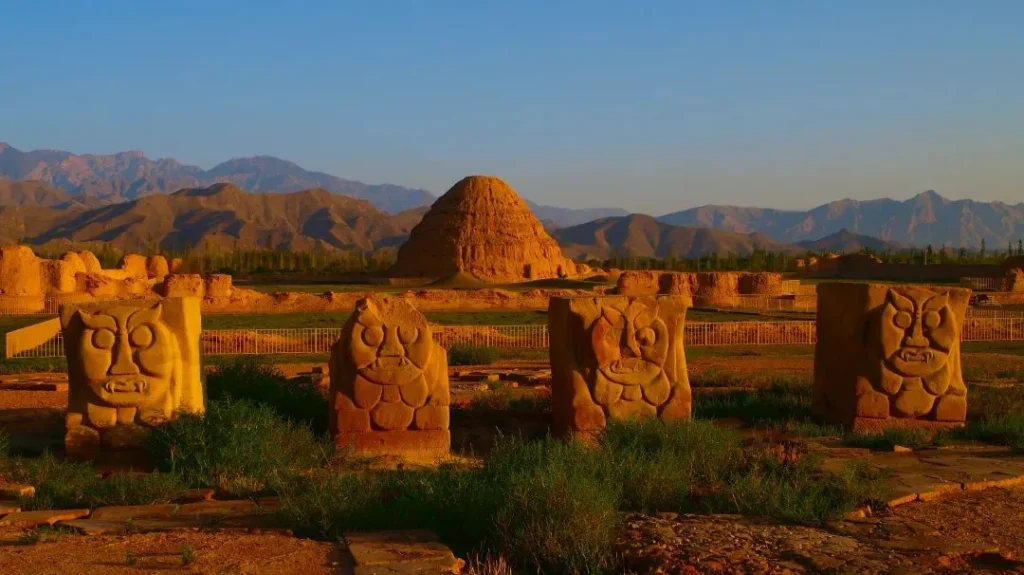
As a key stop on the ancient Silk Road, Ningxia preserves a wealth of history: the 30,000-year-old Shuidonggou Paleolithic site (水洞沟遗址), the mysterious Western Xia Imperial Tombs (西夏王陵 ), and 1,500 kilometers of Great Wall ruins, earning it the nickname “Open-Air History Museum.” Petroglyphs carved into the cliffs of the Helan Mountains record the lives of ancient peoples. Mosques, Buddhist temples, and Taoist monasteries scattered across cities and countryside silently tell the story of a thousand-year dialogue between Islamic civilization and Central Plains culture. Ningxia also holds memories of the “Red” revolutionary era; Mao Zedong’s powerful poem “Qingping Yue · Liupan Mountain” (清平乐·六盘山) still echoes across the vast landscape of Jiangtaibao (将台堡), where different forces of the Red Army met during the Long March.
A Silk Road Feast for the Taste Buds
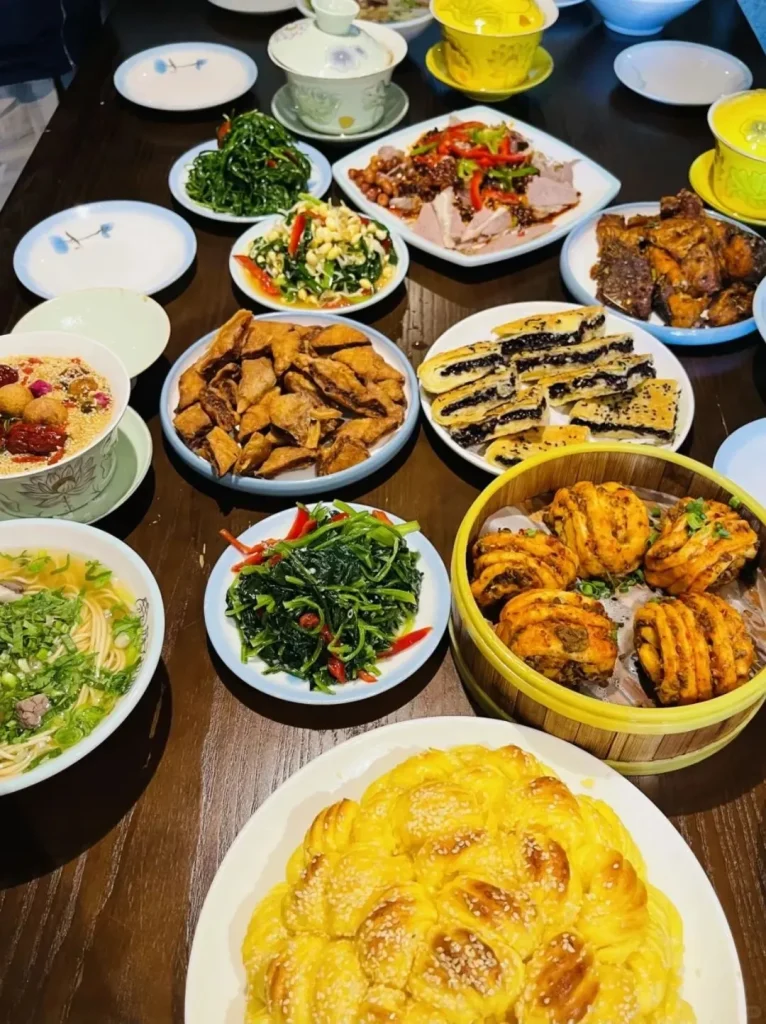
Ningxia’s cuisine is a delicious fusion of Eurasian flavors. Yanchi Tan sheep (盐池滩羊), famous for having almost no “muttony” taste, has won over palates worldwide. The rustic flavor of Hand-Grabbed Mutton (手抓羊肉 – Shǒu Zhuā Yáng Ròu) pairs wonderfully with the region’s mellow wines. In the morning, a Wuzhong (吴忠) “morning tea” feast presents a symphony of over thirty delicate snacks. At night, the unique sweet-spicy kick of Lahuhu Hot Pot (辣糊糊火锅), made with local horn peppers, awakens the senses. In midsummer, the sweetness of the first harvest Goji berries (枸杞 – Gǒuqǐ) and the crispness of selenium-rich watermelons (硒砂瓜 – Xī Shā Guā) bring the Eastern wisdom of “food as medicine” into daily life.
Finding Peace Under the Stars

As an International Dark Sky Reserve, Ningxia boasts pristine night skies where the Milky Way is visible almost 365 days a year, making desert “Star Hotels” a pilgrimage site for astronomy lovers. Visitors can race across the sands in off-road vehicles, float down the Yellow River on ancient sheepskin rafts (羊皮筏子 ) at old ferry crossings, or try their hand at winemaking in vineyards nestled at the foot of the Helan Mountains. When bonfires light up the Tengger Desert (腾格里沙漠) at night, and the folk songs of the Hui people, known as “Hua’er” (花儿), resonate under the stars, the stresses of modern life simply melt away.
This land is embracing the tourism philosophy of “giving your soul a vacation,” deeply integrating ecological protection with cultural and tourism innovation. From the green development of wineries to smart tourism powered by the “Eastern Data, Western Computing” (东数西算) project, Ningxia is writing a new legend where tradition and modernity intertwine. For international travelers seeking in-depth experiences, Ningxia is not just a geographical crossroads, but also a fantastic window into understanding the diverse yet unified nature of Chinese civilization.
Recommended Attractions and Activities:
I. Natural Wonders
- Shapotou: Where the desert meets the Yellow River; enjoy sand sliding, camel riding, desert camping, and the Yellow River zip-line.
- Helan Mountain National Forest Park: Beautiful scenery in all seasons; hike and explore the pristine nature.
- Sand Lake (Sha Hu): A blend of desert, lake, and wetlands; a great spot for birdwatching.
- Huoshizhai National Geopark: The highest Danxia landform in Northern China, featuring unique mountains and rock formations.
II. Cultural Heritage
- Western Xia Tombs (Xixia Wangling): The largest existing Western Xia ruins; explore the mysterious Western Xia civilization.
- Shuidonggou: China’s earliest Paleolithic site; experience prehistoric culture and Ming Dynasty hidden soldier caves.
- Helan Mountain Rock Art: Thousands of ancient petroglyphs recording nomadic life.
- Xumi Mountain Grottoes: Ancient Buddhist grotto art, known as “Ningxia’s Dunhuang”.
III. Unique Experiences
- Desert Stargazing Camping: Watch the Milky Way at places like Shapotou and Star Hotels; enjoy bonfire parties.
- Winery Tour: Taste award-winning wines at the eastern foot of the Helan Mountains; try vineyard cycling.
- Yellow River Culture Exploration: Take a boat trip through the Qingtongxia Gorge, visit the 108 Pagodas, and learn about the Yellow River’s irrigation culture.
- Film Location Tour: Visit Zhenbeibu Western Film Studio (location for “A Chinese Odyssey”) and Minning Town (setting for “Minning Town”); immerse yourself in film culture and take epic desert photos.