

One of the most persistent concerns for international travelers planning a trip to China is hotel accommodation: “Can foreigners stay at any hotel in China, or are international guests still restricted to government-designated hotels?” In recent years, China’s Ministry of Public Security (MPS), National Immigration Administration (NIA), and Ministry of Commerce have issued clear national directives instructing all commercial hotels, guesthouses, and homestays across the country to accommodate international passport holders and facilitate their registration without arbitrary refusal.
- National Policy: All registered hotels in China are officially permitted to host international guests under updated central government guidelines.
- Official PSB Registration: Hotels are legally required to register foreign guest passport details with the local Public Security Bureau (PSB) within 24 hours of arrival.
- Booking Safeguard: Always book accommodation through Trip.com Hotels, which pre-filters properties that actively process international passports.
- Check-in Requirement: Every staying guest must present their original physical passport; photocopies or phone photos are not accepted.
1. The Evolution of China’s “Foreign-Designated Hotel” Policy
Historically, China operated a two-tier hotel system where only properties holding a specialized “foreign-related qualification” (涉外资质) were legally authorized to accommodate overseas visitors. In smaller towns or rural counties, budget guesthouses without PSB terminal connections occasionally turned foreign tourists away.
To support growing international tourism and business exchanges, Chinese authorities officially dismantled this restriction. Today, modern hotel management software integrates directly with national immigration databases, allowing front desk staff to verify passports electronically via automated optical character scanners in under two minutes.
2. What Actually Happens During Check-in at Chinese Hotels
Checking into a hotel in Beijing, Shanghai, Chengdu, or Shenzhen is smooth and efficient when you know what to expect:

- Physical Passport Presentation: Hand your physical passport to the front desk clerk. They will scan the photo identification page and verify your valid Chinese visa stamp or visa-free entry permit.
- Digital Face Verification: Most front desks have a small desktop camera that takes a quick portrait photo to match your passport biometric chip in the official PSB police network.
- Deposit & Payment: Most hotels accept international Visa/MasterCard, but paying via Alipay or WeChat Pay linked to your foreign card is the fastest method. Room deposits (usually 200–500 RMB) are automatically refunded to your digital wallet upon checkout.
- Key Card & Wi-Fi Access: You will receive your electronic key card and Wi-Fi login instructions. Most hotels use your room number and last four digits of your passport for complimentary high-speed wireless access.
3. Best Hotel Chains & Booking Strategies for Smooth Stays
While international luxury chains like Marriott, Hilton, Hyatt, and InterContinental are always foolproof, China’s domestic midscale hotel brands offer exceptional cleanliness, high-tech amenities (including robot room service and smart voice-controlled rooms), and incredible value for money.
Related Guide: Check our in-depth practical advice on drinking tap water and hotel kettle safety rules in China.
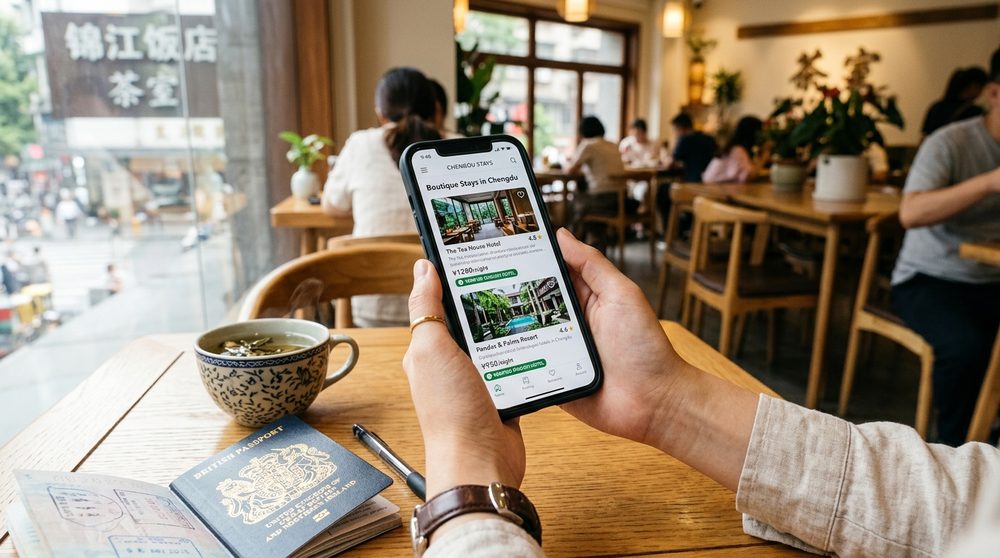
- Top Domestic Hotel Brands: Highly recommended midscale chains include Atour Hotel (亚朵酒店), Ji Hotel (全季酒店), Orange Hotel (桔子酒店), and Crystal Orange. Nightly rates typically range from $45 to $85 USD with outstanding comfort.
- Book via Trip.com (English Interface): Domestic Chinese booking platforms like Meituan or Fliggy often list properties that do not handle English communication. Booking on Trip.com Hotels gives you 24/7 English customer support and guaranteed booking protection.
- What to Do If a Desk Clerk Seems Confused: In tier-3 cities or small boutique inns where staff rarely encounter overseas guests, clerks may initially hesitate simply because they are unfamiliar with the passport registration software tab. Politely show your Trip.com English/Chinese booking voucher; staff will quickly phone their manager or local police station to complete the standard registration entry.