

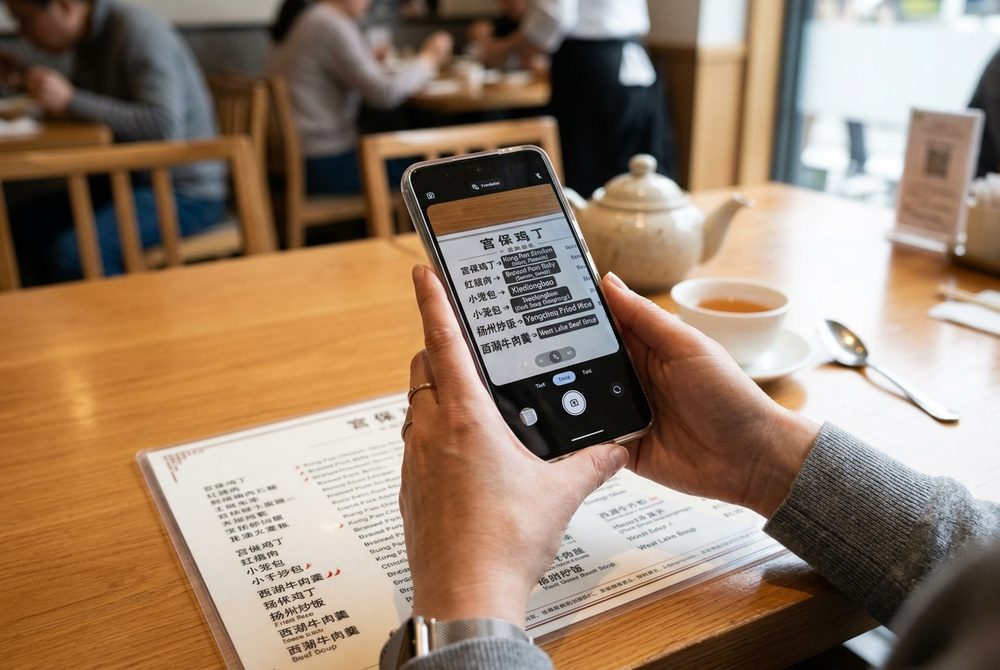
While English signage is ubiquitous throughout Chinese airports, subway stations, bullet trains, and international hotels, encountering people who speak fluent English in local neighborhood restaurants, taxis, or small street shops remains relatively rare. However, traveling across China with zero knowledge of Mandarin is easier today than ever before. With modern camera OCR translation, instant two-way voice translation apps, and offline language dictionaries on your smartphone, you can comfortably order regional delicacies, ask for directions, and communicate with local people without stress.
- Top Translation Apps: Download DeepL for text accuracy, Baidu Translate (百度翻译) or Tencent Translator for offline camera OCR, and Pleco for character dictionary lookups.
- Built-in In-App Translation: Both Alipay and WeChat feature built-in real-time translators for chat messages, ride-hailing notes, and merchant payment receipts.
- Save Addresses in Chinese Characters: Always save your hotel and attraction names in Chinese characters (汉字); taxi drivers and station staff recognize written characters instantly.
- Dietary Emergency Cards: Save screenshots of key dietary restrictions (e.g., “No Peanuts / 对花生过敏” or “Vegetarian / 我吃素”) on your phone lock screen.
1. Essential Smartphone Translation Apps: Text, Camera OCR & Voice
Relying solely on Google Translate can be tricky in China because Google services require an active VPN or roaming eSIM to function. Installing domestic and offline-capable alternatives ensures you never lose translation capabilities:
- DeepL (Best for Nuanced Sentences): Provides the most natural, idiomatic translations between English and Chinese, ideal for composing detailed polite messages to hotel managers or hosts.
- Baidu Translate (百度翻译 – Best Camera OCR): Developed specifically for Chinese text, its camera feature instantly translates handwritten restaurant signs, printed receipts, and packaging with extraordinary accuracy. Download the offline Chinese-English language pack before arriving.
- Microsoft Translator (Offline Backup): Allows full offline two-way text and voice translation without needing data roaming or VPN access.
- Pleco: The gold-standard English-Chinese offline dictionary app. If you see an unfamiliar character, you can draw it with your finger or look up pinyin pronunciation instantly.
2. Real-Time Voice Translation: Talking with Drivers and Attendants
Speaking directly with taxi drivers, shopkeepers, or station staff is effortless using two-way conversation mode:

- How Two-Way Voice Mode Works: Open the voice feature on Baidu Translate or WeChat. Tap the microphone, speak in English, and the app reads out the Mandarin translation aloud while displaying clear Chinese characters on your screen. The local speaker then taps their button to respond in Mandarin, which translates back into spoken English.
- Built-in Chat Translation in DiDi & Alipay: When taking a taxi via DiDi inside Alipay, any message the driver sends you (such as “I am waiting at Exit B in a white sedan”) automatically displays a one-tap “Translate” button, allowing seamless in-app communication without switching apps.
3. Essential Cultural Phrases & Visual Communication Tips
While technology does the heavy lifting, knowing a few polite Mandarin words creates an instant warm rapport with locals:
- Nǐ Hǎo (你好 – “Hello”): Greet hotel clerks, ticket attendants, and waiters.
- Xièxie (谢谢 – “Thank you”): Universal appreciation.
- Duōshao Qián? (多少钱? – “How much is it?”): Useful at markets (vendors will tap the amount on their calculator or point to their QR code).
- Mǎidān (买单 – “Check, please”): Wave politely to the waiter when finishing a restaurant meal.
- Show Hotel Cards in Characters: Always request a physical hotel business card from reception upon check-in, or save a screenshot of the hotel’s Chinese name and address. If you ever get lost, showing this to any taxi driver guarantees you arrive right at your hotel entrance.