
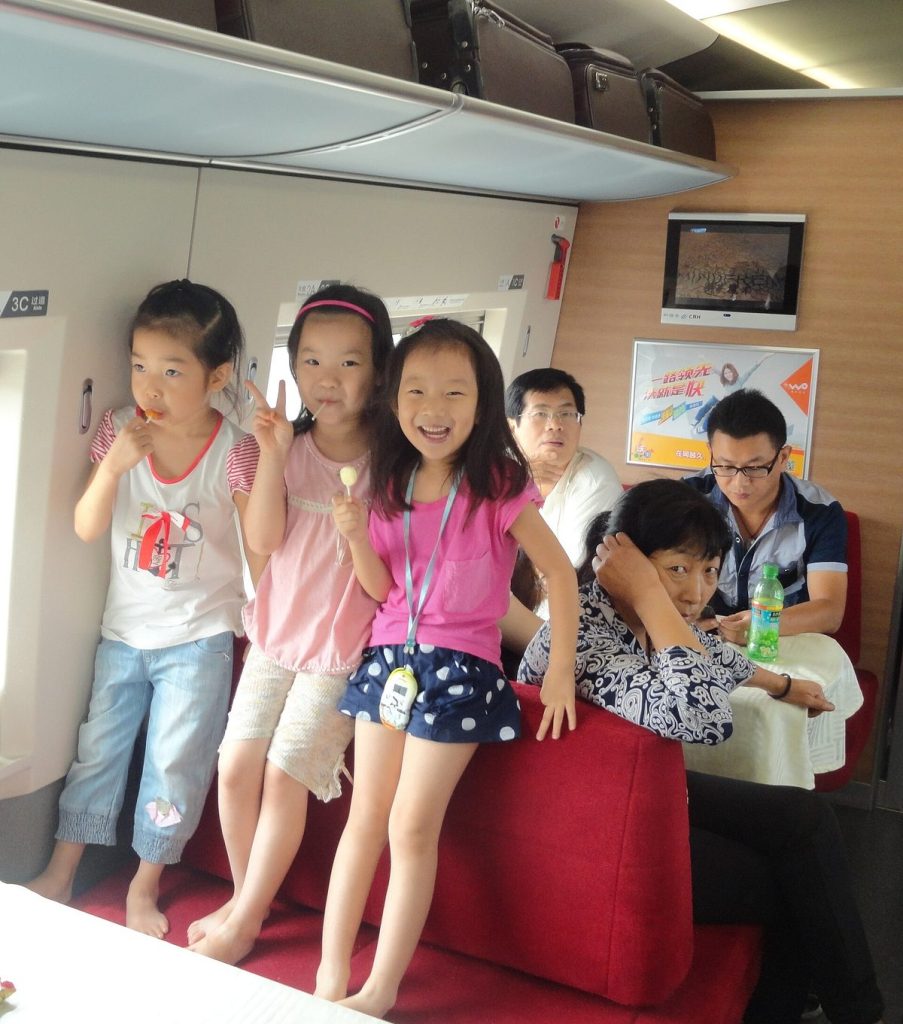
Dining aboard China’s high-speed rail network is a surprisingly delicious and technologically seamless experience. Gone are the days when train travel meant surviving solely on dry biscuits or instant noodles. Today, passengers speeding across the country at 350 km/h (217 mph) on sleek Fuxing and Harmony bullet trains can order piping-hot, freshly cooked meals from top local restaurants along their route and have them delivered directly to their train seat.
Whether you want to sample authentic regional roast duck as your train stops in Nanjing, pick up freshly fried dumplings in Jinan, purchase a balanced bento box in the onboard dining car, or brew loose-leaf tea using the carriage’s free 100°C boiling water dispenser, this guide covers everything you need to know about eating well on China bullet trains.
Quick Takeaways: Eating on China High-Speed Trains
1. How In-Seat Meal Delivery via the 12306 App Works
China Railway’s in-seat meal delivery service (Tiělù Dìngcān, 铁路订餐) is one of the most convenient travel innovations on the modern rail system. Rather than eating standard reheated train food, you can order from national fast-food chains and certified local culinary brands located inside major transit stations along your journey.
Here is the exact step-by-step ordering workflow:
Step 1: Open the 12306 App. On the homepage of the official Railway 12306 mobile app, tap the “Food & Specialty” icon (餐饮·特产, Cānyǐn Tèchǎn).
Step 2: Enter Your Train Details. Input your train number (e.g., G14 or G28), travel date, and departure station. The app automatically maps your route and identifies every intermediate transit station that offers station-side platform meal delivery (such as Jinan West, Nanjing South, Wuhan, or Zhengzhou East).
Step 3: Select Your Station and Restaurant. Browse the list of available restaurants for your chosen delivery station. You will find global staples (KFC, McDonald’s) alongside beloved regional Chinese delicacies—such as Nanjing salted duck, Wuhan hot dry noodles (Règānmiàn), or Cantonese dim sum bento sets.
Step 4: Input Your Carriage and Seat Number. Select your meal items, then accurately type in your carriage number (车厢) and seat number (座位号, e.g., Carriage 04, Seat 12F). Input your mobile phone number.
Step 5: Pay via Alipay or WeChat Pay. Complete payment online. A small 8 RMB delivery surcharge is bundled into the order. Crucial rule: You must submit and pay for your order at least 60 minutes before your train reaches the target delivery station.
Step 6: Delivery to Your Tray Table. When your train pulls into the station for its scheduled two-minute dwell, station couriers hand insulated thermal food boxes to the train conductor. Shortly after the train accelerates away, a uniformed attendant walks down the aisle, verifies your name and seat number, and places your steaming hot meal onto your tray table.
2. The Onboard Dining Car: Menus and Bento Boxes
If you forgot to order ahead or board on a short regional hop where in-seat delivery is unavailable, head directly to the train’s Dining Car (Cānchē, 餐车).
On standard 8-carriage trainsets, the dining bar is in Carriage 5. On longer 16-carriage trains, it is in Carriage 9. The dining car features a service counter, upright standing tables, panoramic picture windows, and several four-person booth tables.
The dining counter offers several meal categories:
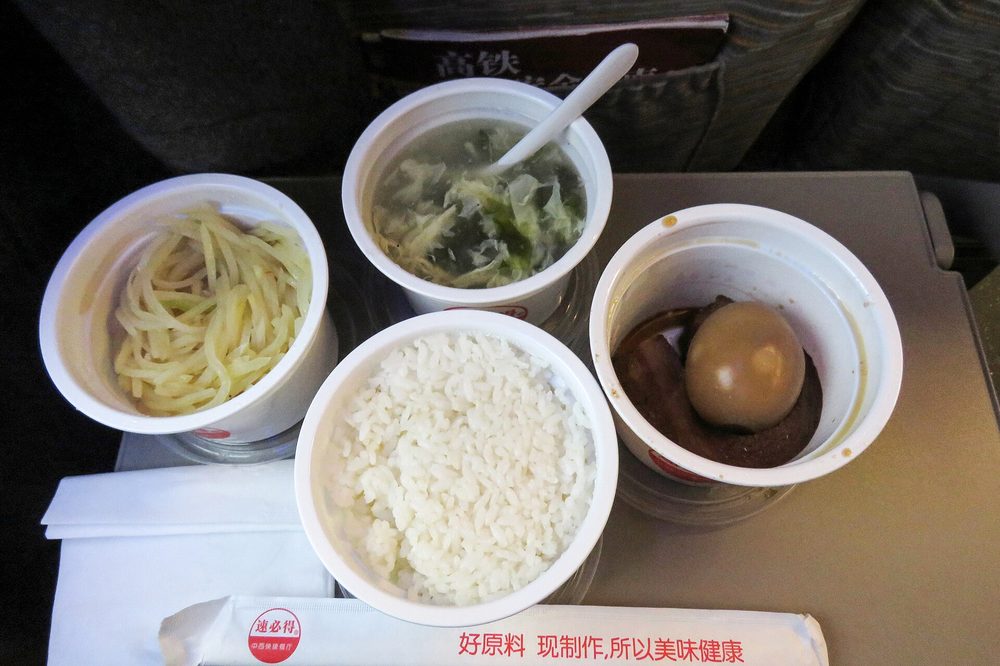
Microwave Bento Meal Boxes (盒饭, Héfàn): These pre-packaged meals are steam-heated in commercial microwave ovens behind the counter. China Railway guarantees a range of price points by law:
• Budget Tier (15 RMB / ~$2.10 USD): Simple vegetarian or egg-and-tomato rice boxes (often limited in quantity, ask directly for Shíwǔ kuài héfàn).
• Standard Tier (30–45 RMB / ~$4.20–$6.30 USD): Braised pork belly (Hóngshāoròu), Gong Bao chicken (Gōngbǎo Jīdīng), or shredded pork in garlic sauce with rice and pickled vegetables.
• Premium Tier (60–68 RMB / ~$8.50–$9.50 USD): Braised beef brisket, Cantonese roasted duck, or black pepper beef steak accompanied by fresh seasonal greens and soup.
Snacks and Refreshments: The dining car and roaming aisle carts sell sliced fresh fruit bowls (watermelon, honeydew, cherry tomatoes, 15–20 RMB), vacuum-packed braised chicken wings, spiced tofu snacks, roasted nuts, canned sodas, and hot Americano or latte coffee brewed from bean-to-cup machines (22–28 RMB).
3. Carriage Hot Water Dispensers and Instant Noodle Culture
At the end of every high-speed train carriage, located in the vestibule between the passenger cabin and the restrooms, stands an automated stainless steel boiling water dispenser (Kāishuǐchù, 开水处). This water is 100% free, continuously filtered, and dispensed at a piping-hot 100°C (212°F).
Eating instant cup noodles (Pàomiàn, 泡面) on trains is an enduring cultural institution in China. Passengers frequently bring bowls of Master Kong (康师傅) or Uni-President (统一) braised beef or spicy pickled cabbage noodles purchased at station convenience stores for 5 to 7 RMB.
To use the dispenser safely:
1. Place your noodle cup or insulated tea thermos firmly on the drainage tray under the brass spigot.
2. Locate the child-safety release button (usually a small red or green button labeled “Push” or “Unlock” / 解锁).
3. Hold the unlock button while pressing the red water lever. Release the lever two centimeters below the rim to prevent scalding spills when walking back down the aisle of a moving train.
4. Bringing Outside Food: Permitted Snacks and Strict Bans
China Railway welcomes passengers bringing their own food and non-alcoholic drinks aboard without restriction. Major train stations feature extensive food halls before the ticket gates where you can buy fresh bakery pastries, sandwiches, sushi boxes, cut fruit, and craft bubble teas to take onto the train.
However, safety and comfort regulations strictly enforce two critical food prohibitions:
Strict Ban on Self-Heating Packs (自热火锅 / 自热米饭): Commercially popular self-heating meals—which use water-activated magnesium-iron exothermic chemical pads to boil food without fire—are strictly prohibited on high-speed trains. The dense steam clouds produced by chemical heating packets trigger sensitive ceiling optical smoke alarms, which automatically force the bullet train’s computer safety system to decelerate from 300 km/h to an emergency crawl. Station security will confiscate self-heating meal kits at the entrance X-ray machine.
Pungent and Strong-Smelling Foods: Because high-speed train cabins are tightly sealed pressurized environments with continuous recirculated climate control, foods with overwhelming odors—most notably fresh durian (Liúlián, 榴莲) and pungent fermented stinky tofu (Chòudòufu, 臭豆腐)—are prohibited inside passenger carriages as a matter of civic etiquette (Wénmíng Chéngchē, 文明乘车).