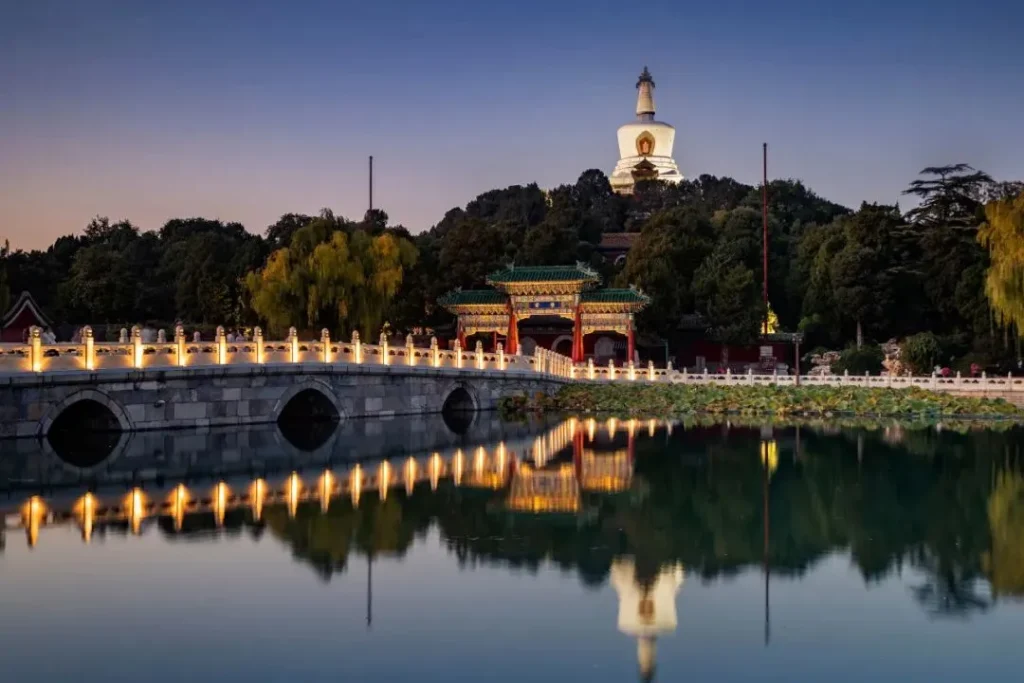
Hey there, explorers! Step into Beihai Park (北海公园), right in the bustling center of Beijing, and you’ll feel like you’ve walked into a living, breathing history book that spans a thousand years. This isn’t just any park; it’s China’s oldest, best-preserved, and culturally richest classical royal garden. From the Jin, Yuan, Ming, and Qing dynasties all the way to today, Beihai Park has seen it all, making it a super important piece of Beijing’s ancient story and a precious treasure for everyone. As the top dog of Beijing’s famous “Three Seas” (三海), Beihai Park wows visitors from all over the globe with its unique garden artistry and deep cultural roots.
A Thousand Years of History: Beihai’s Story
Beihai Park’s story kicks off way back in the Liao Dynasty, when it was known as “Jin Hai” (金海) or “Haizi” (海子). The park’s centerpiece, Qionghua Island (琼华岛), probably started out as the Liao Dynasty’s “Yaoyu” (瑶屿). Fun fact: Beihai Park was actually around more than 200 years before Beijing was even chosen as the capital city! It was this stunning scenery that drew the city builders here, eventually leading to the Beijing we know today. Through centuries of careful crafting and expansion by various dynasties, Beihai Park grew into the magnificent place it is now, packed with history and culture. It used to be a key spot for royal worship, government affairs, and just chilling out – every pavilion and hall seems to whisper tales of its glorious past.
Where It Is & What It Looks Like
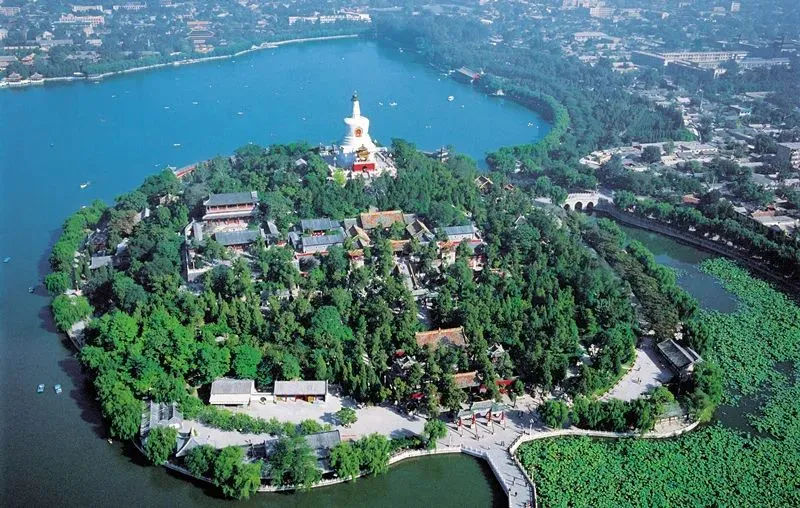
Beihai Park has a prime spot, with Jingshan Park (景山) to its east, Zhongnanhai (中南海) to its south, and Shichahai (什刹海) to its north – a true green oasis in the city. It covers about 69 hectares (around 170 acres), and a whopping 39 hectares (about 96 acres) of that is water, which is its main feature. The whole park is centered around Beihai Lake and cleverly divided into four main areas: the North Shore, East Shore, Qionghua Island, and the Round City (团城).
Royal Garden Smarts: “One Pool, Three Fairy Mountains”
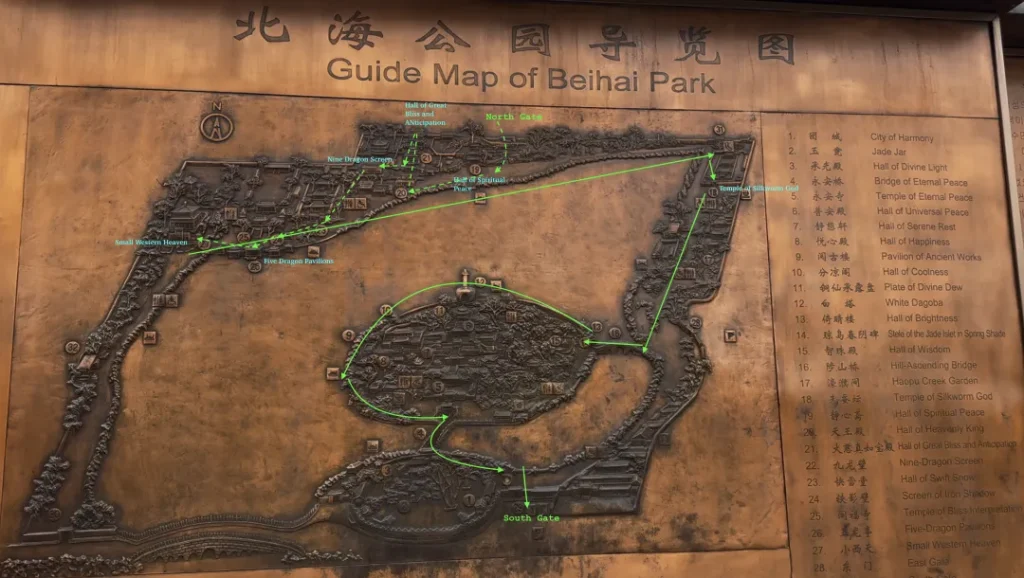
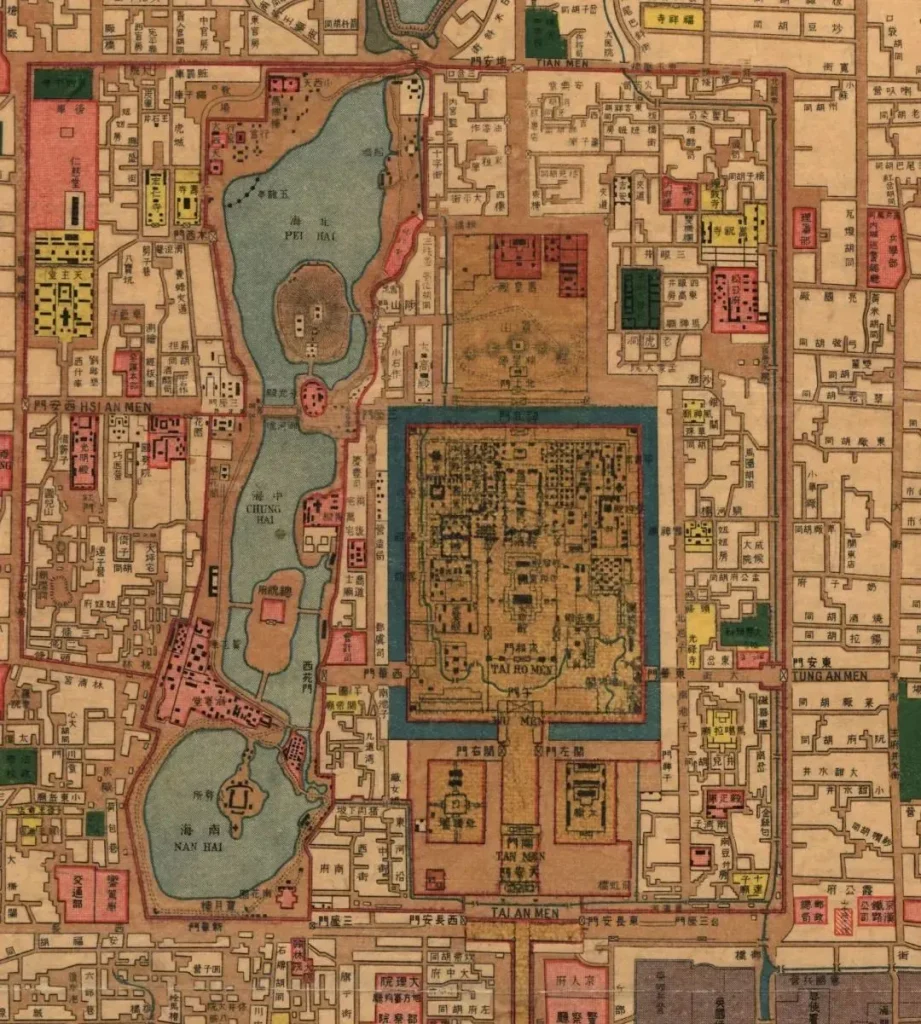
The design of Beihai Park is heavily inspired by ancient Chinese myths, especially the famous “One Pool, Three Fairy Mountains” (一池三仙山) concept. The “one pool” is the vast Taiye Lake (太液池), and the “three fairy mountains” represent Penglai (蓬莱), Fangzhang (方丈), and Yingzhou (瀛洲) from the legends. So, Qionghua Island in the middle of the lake is like “Penglai Fairyland,” the cute little Round City (团城) is “Yingzhou,” and Xishan Terrace in Zhongnanhai is “Fangzhang.” This design makes the whole park feel like a dreamy painting, with shimmering lake reflections, elegant pavilions, and ancient pine trees. Walking around here, you might just feel like you’ve stepped into a fairy tale.
Must-See Spots You Can’t Miss
- Qionghua Island & the White Pagoda: The Park’s Icon
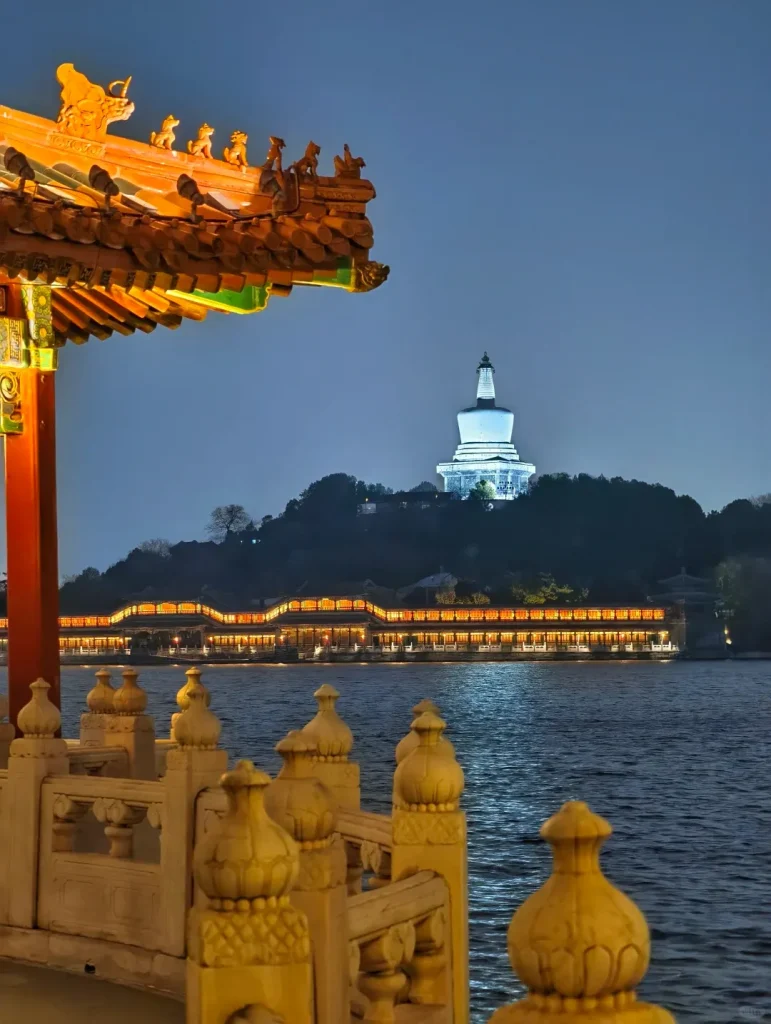
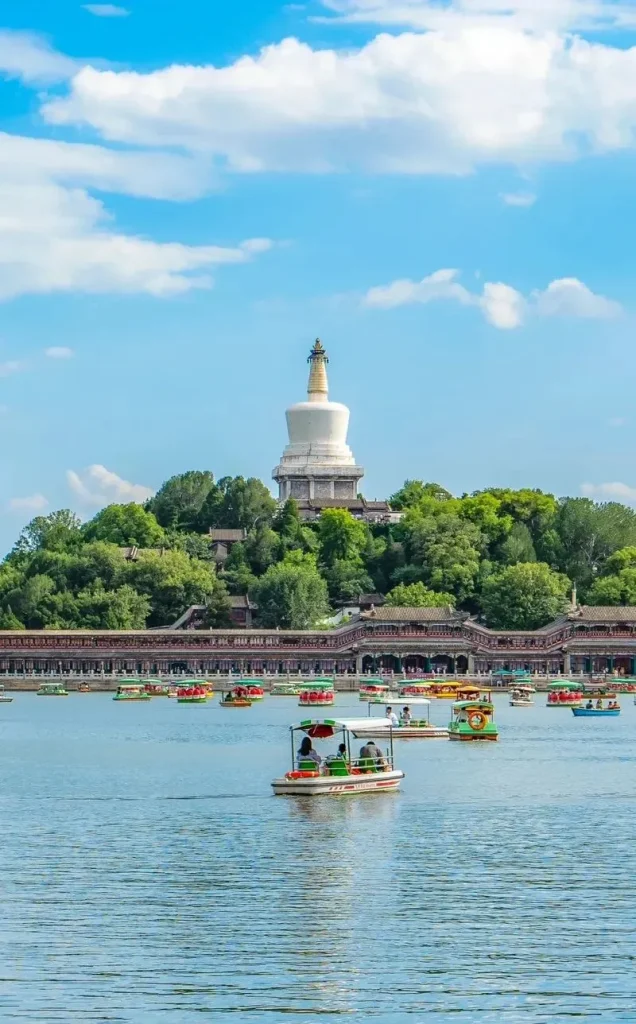
Qionghua Island (琼华岛) is definitely the heart and soul of Beihai Park, and the towering White Pagoda (白塔) on top is the landmark of the park, and even Beijing itself. This Tibetan-style stupa was built in 1651 during the early Qing Dynasty. According to the inscription, a lama from the Western Regions requested its construction “to bless the imperial rule with Buddhism.” The pagoda stands 35.9 meters (about 118 feet) tall, pure white and majestic. You can climb the stone steps for an amazing panoramic view of Beihai’s beauty and the sprawling Beijing cityscape.
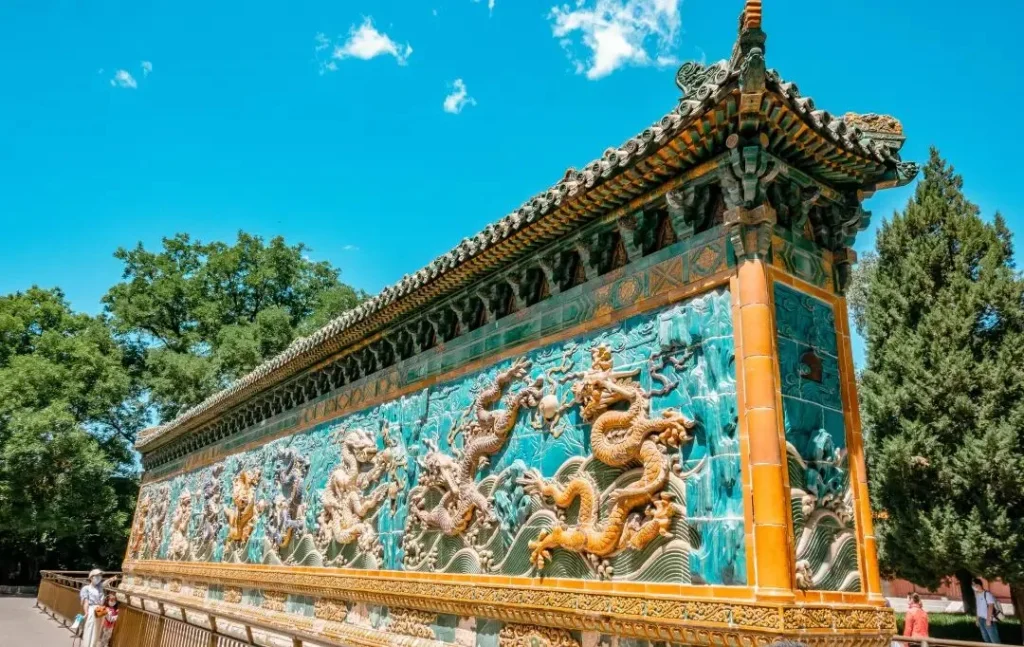
- Nine-Dragon Screen: A Glazed Tile Masterpiece
Beihai Park’s Nine-Dragon Screen (九龙壁) is one of China’s three ancient glazed tile Nine-Dragon Screens, and arguably the most stunning. It’s a double-sided screen, both sides adorned with colorful glazed tiles depicting a total of 635 writhing, soaring dragons. The vibrant colors, lively forms, and incredible craftsmanship are simply impressive.
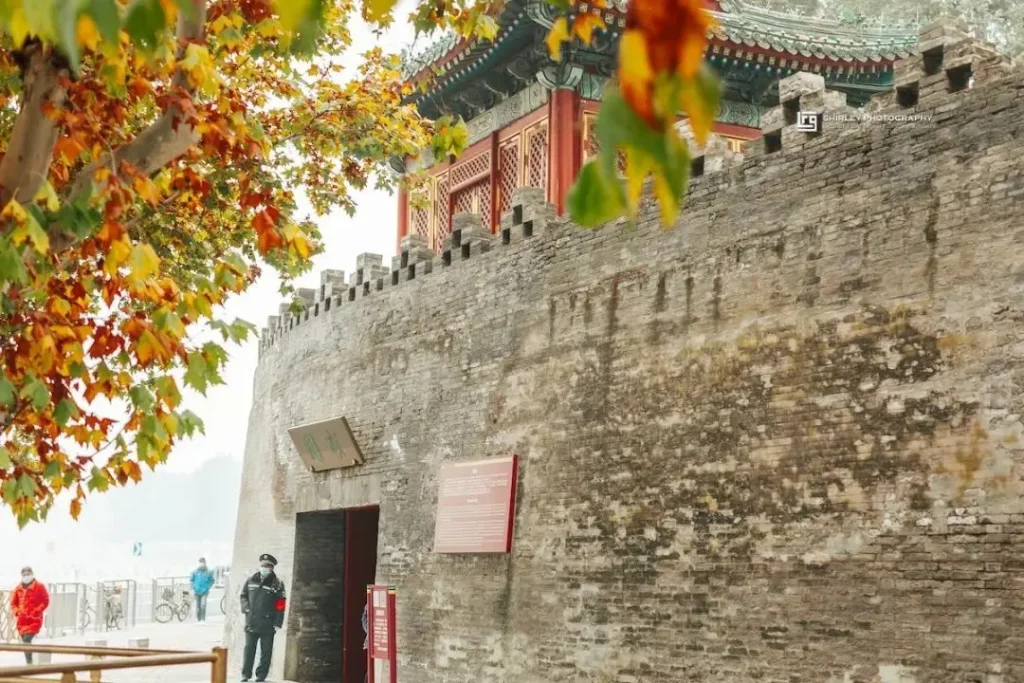
- The Round City (团城): History in a Nutshell
Though small, the Round City (团城) is packed with historical treasures. You’ll find the “Dushan Dayuhai” (渎山大玉海), a massive jade urn from the Yuan Dynasty, said to have been used by Kublai Khan to serve wine. There’s also a beautiful white jade Buddha and ancient trees personally named by Emperor Qianlong: the “White-Robed General” (白袍将军), a thousand-year-old lacebark pine, and the “Shade-Providing Marquis” (遮阴侯), an old scholar tree. The north gate of the Round City (团城) leads you right into the main part of Beihai Park.
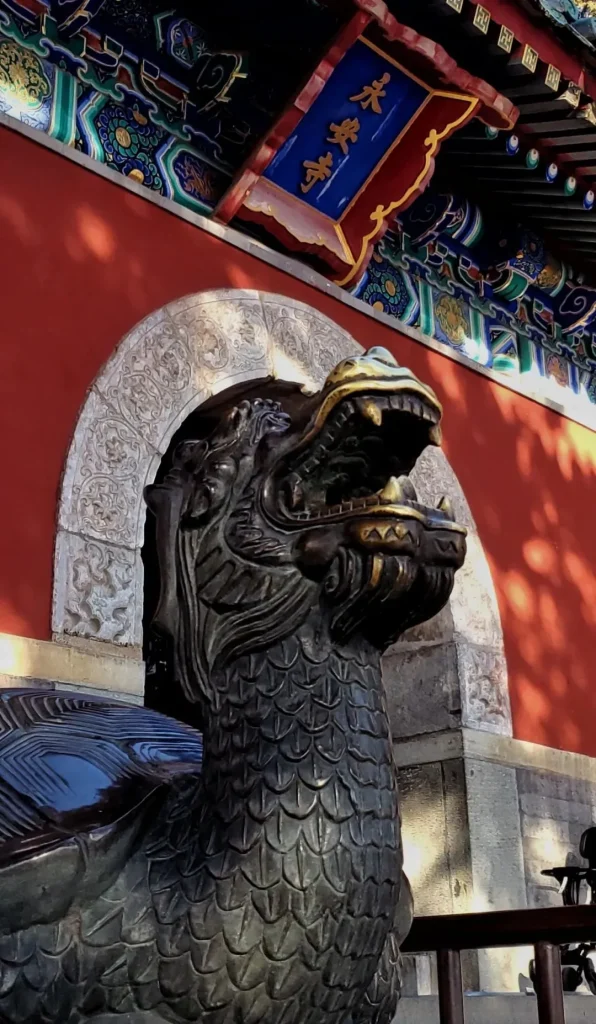
- Yong’an Temple (永安寺): Peace on Qionghua Island
Located on Qionghua Island, Yong’an Temple is an important ancient temple complex. As a royal temple, it’s not only witnessed history but also adds a touch of solemnity and peace to the beautiful garden.
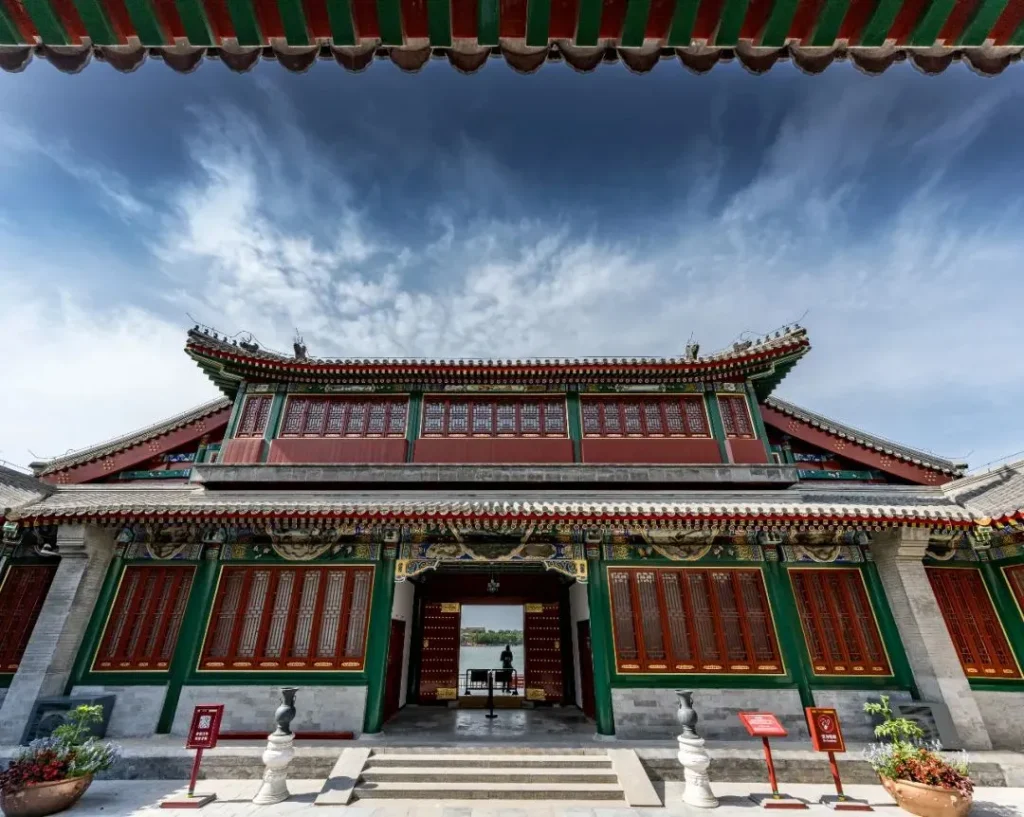
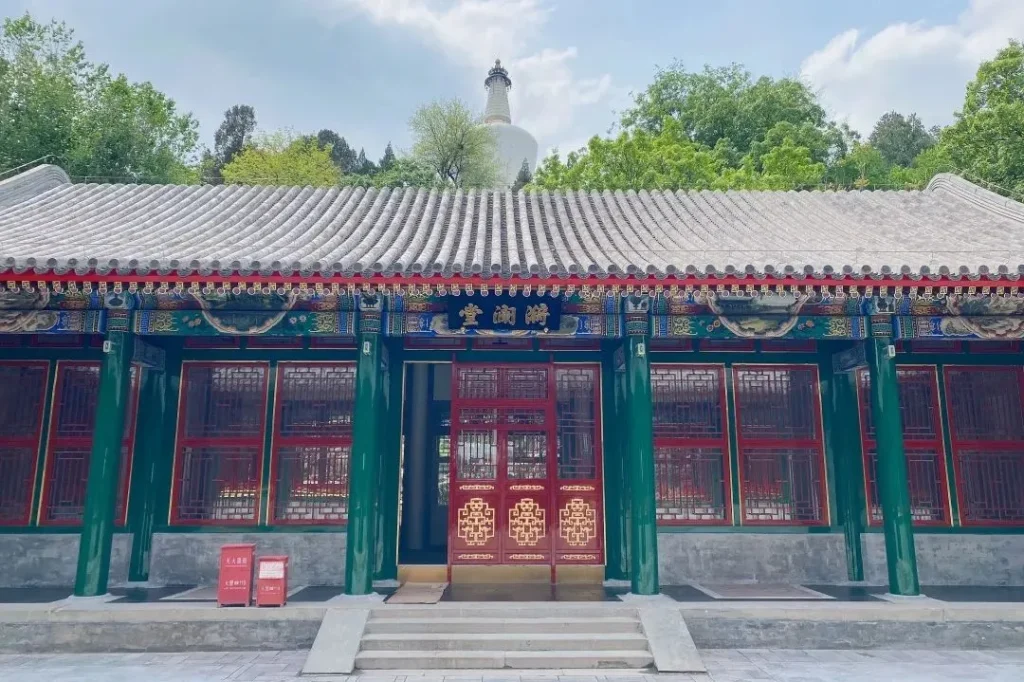
- Yilan Hall Scenic Area (漪澜堂景区): Elegance Amidst Mountains and Water
On the north side of Qionghua Island, the Yilan Hall area includes structures like Yilan Hall (漪澜堂), Daoning Study (道宁斋), and Qinglan Huayun (晴栏花韵). It was modeled after the “temple enveloping a hill” layout of Jinshan Temple in Zhenjiang, a Jiangnan garden scene Emperor Qianlong had replicated after his southern tours. The pavilions, rockeries, and water features are beautifully integrated here. - Exquisite Gardens Within the Garden:
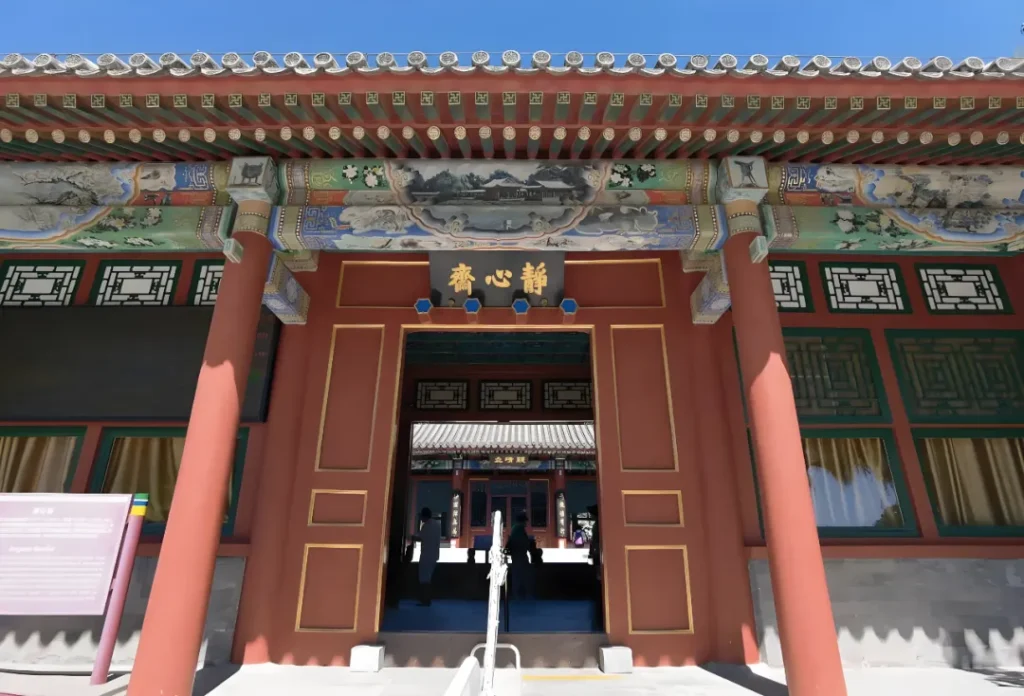
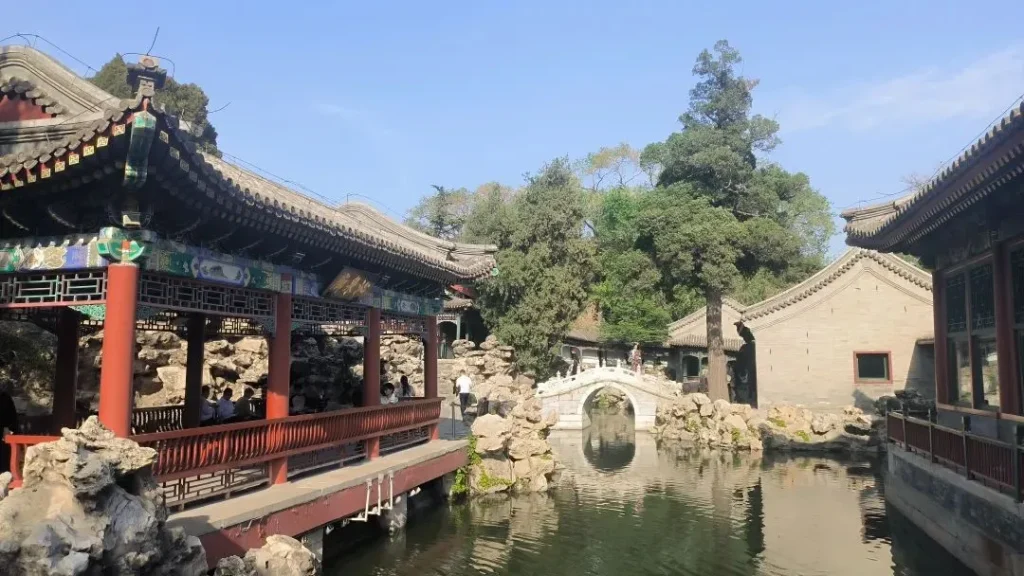
- Jingxinzhai (静心斋): Known as “Qianlong’s favorite garden-within-a-garden,” this courtyard is full of Jiangnan charm with its rockeries, winding paths, and surrounding pools. Super elegant!
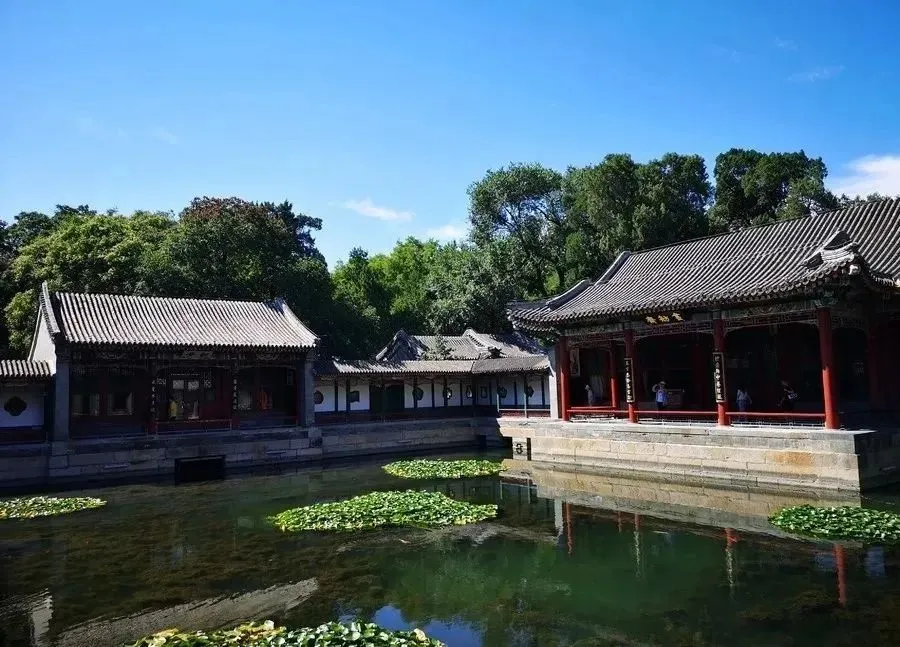
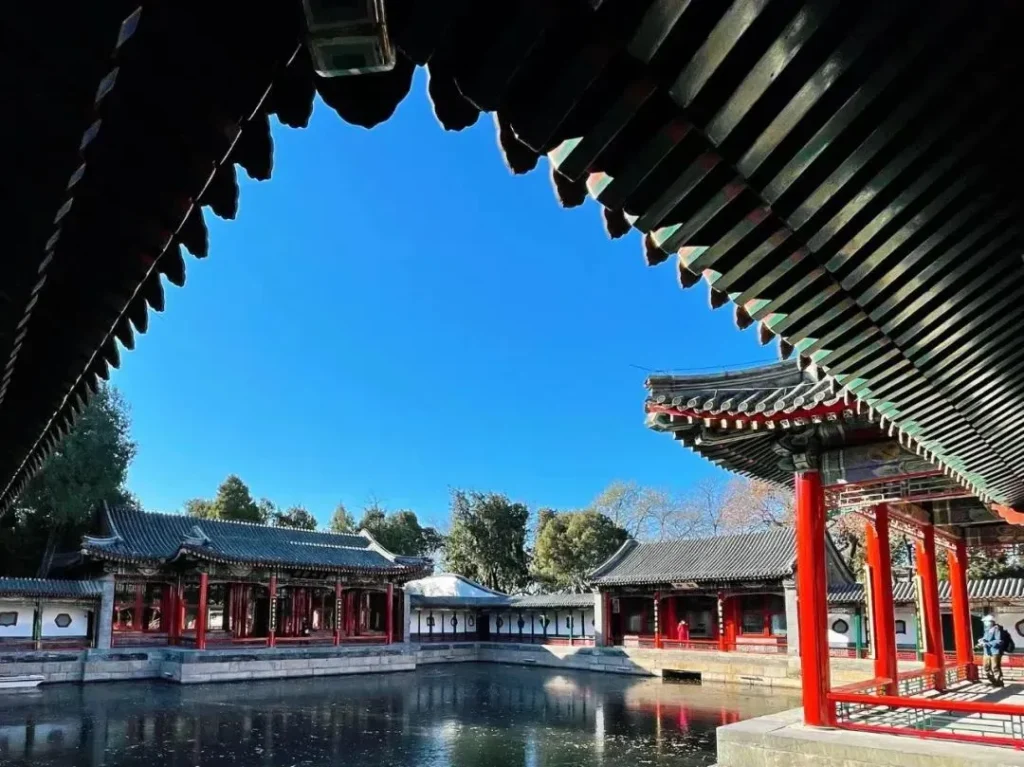
- Huafangzhai (画舫斋): Famous for its unique water courtyard layout, this three-courtyard complex is tucked away on the park’s east shore. In spring, the white lilac blossoms look like snow against the traditional architecture.
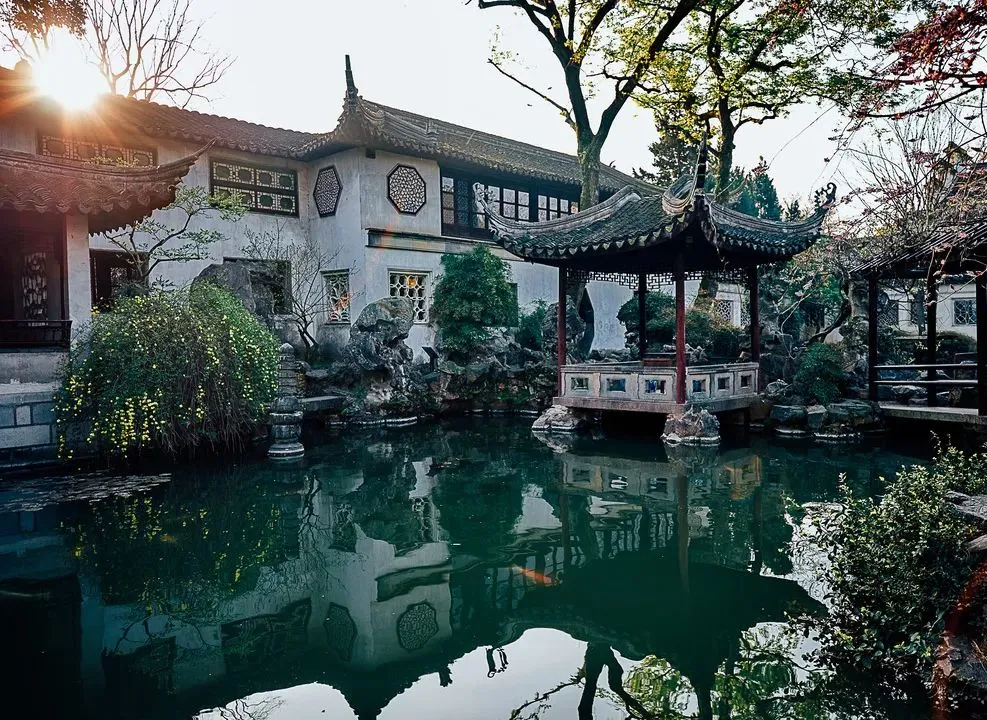
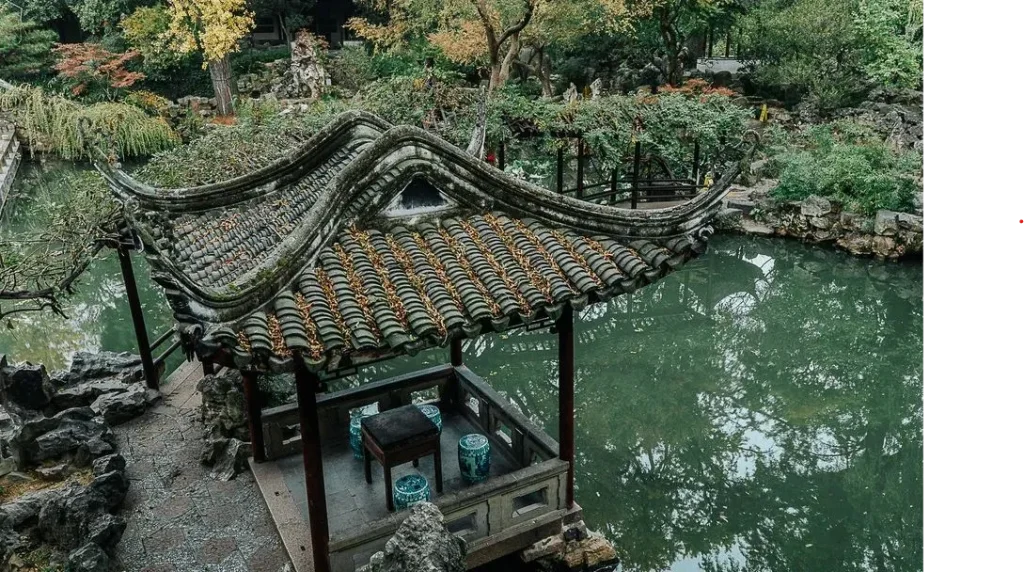
- Haopujian (濠濮间): A quiet, wooded spot where Emperor Qianlong supposedly enjoyed tea and listened to the springs, seeking a sense of “seclusion.”
- Scars of History:
Besides its beauty, Beihai Park also bears some historical wounds. For example, you can still see bullet marks on the glazed tile pavilion of the Hall of Heavenly Kings (天王殿) from the Eight-Nation Alliance invasion. The original golden Buddhas in the Wanfo Lou (万佛楼 – Hall of Ten Thousand Buddhas) were also looted then, silent reminders of China’s more recent, tougher times.
Beauty in Every Season
Beihai Park is stunning all year round, with something new to see each season:
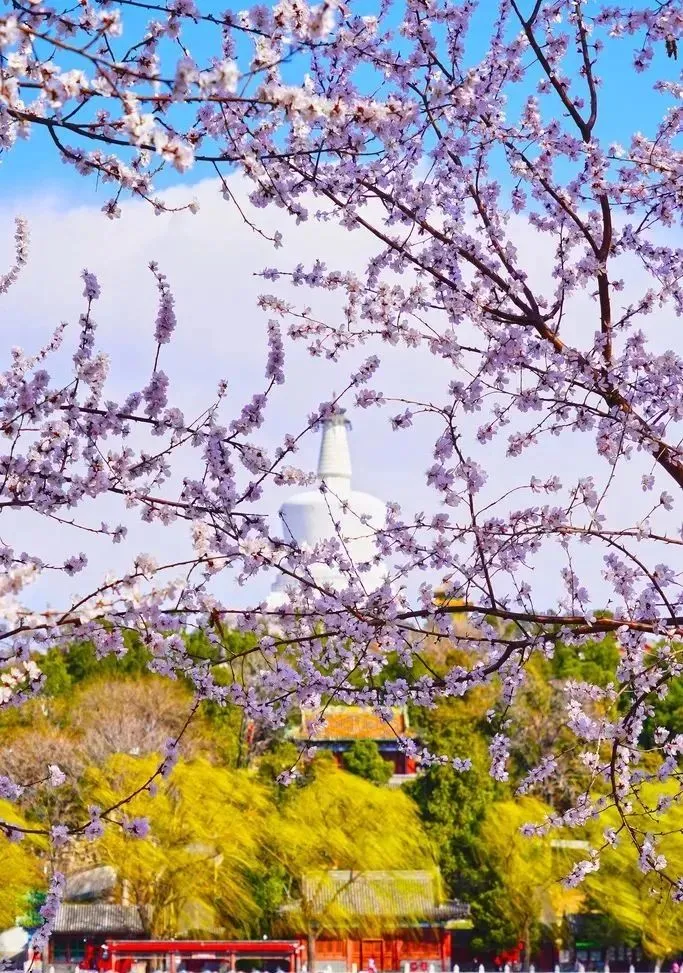
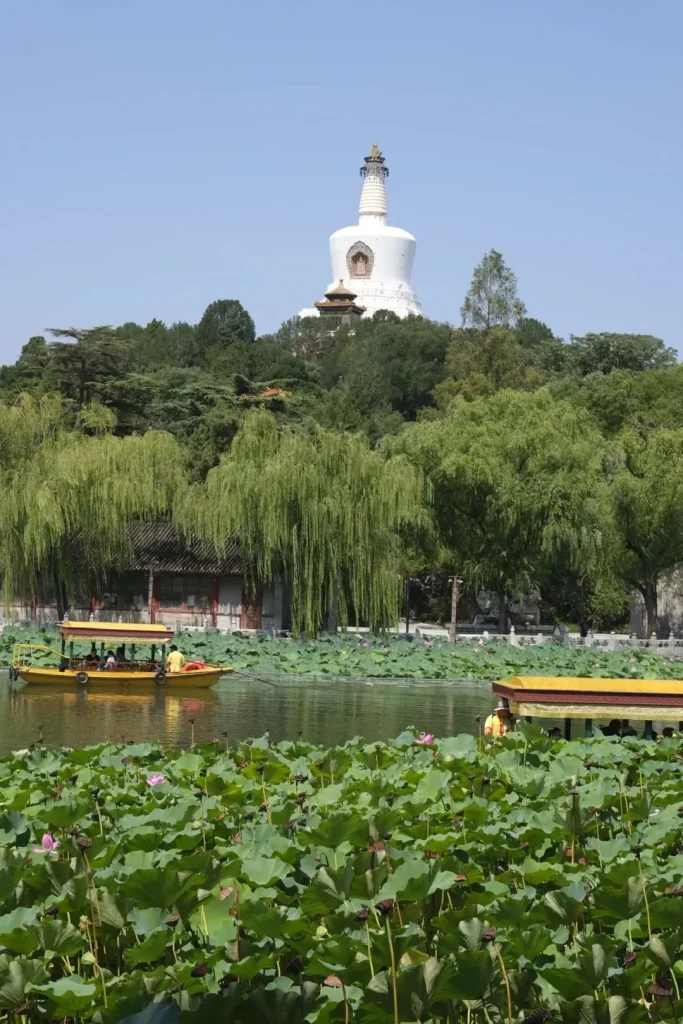
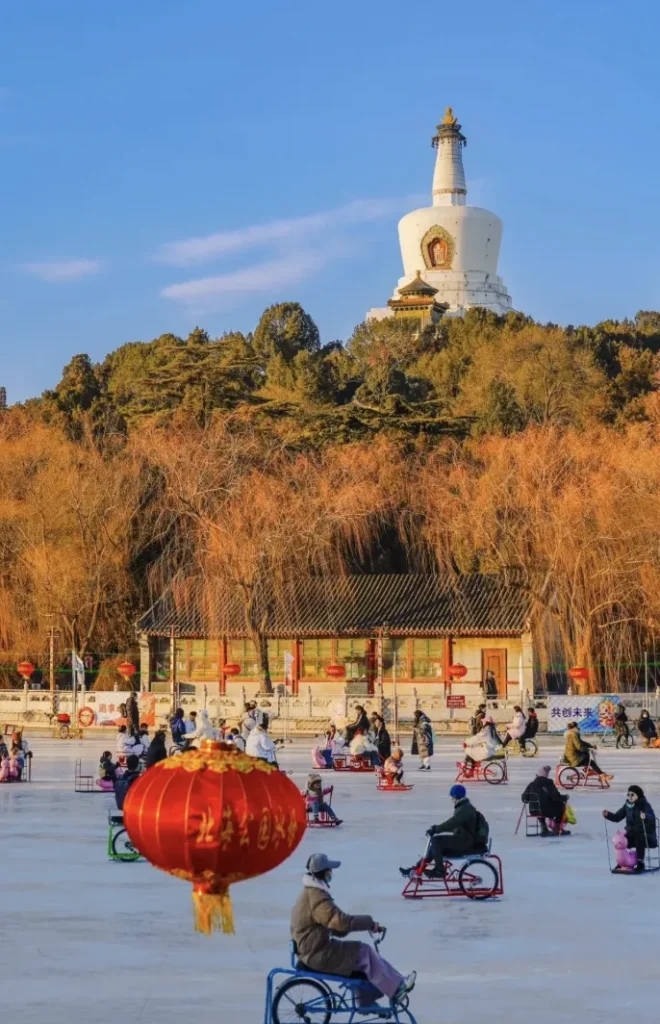
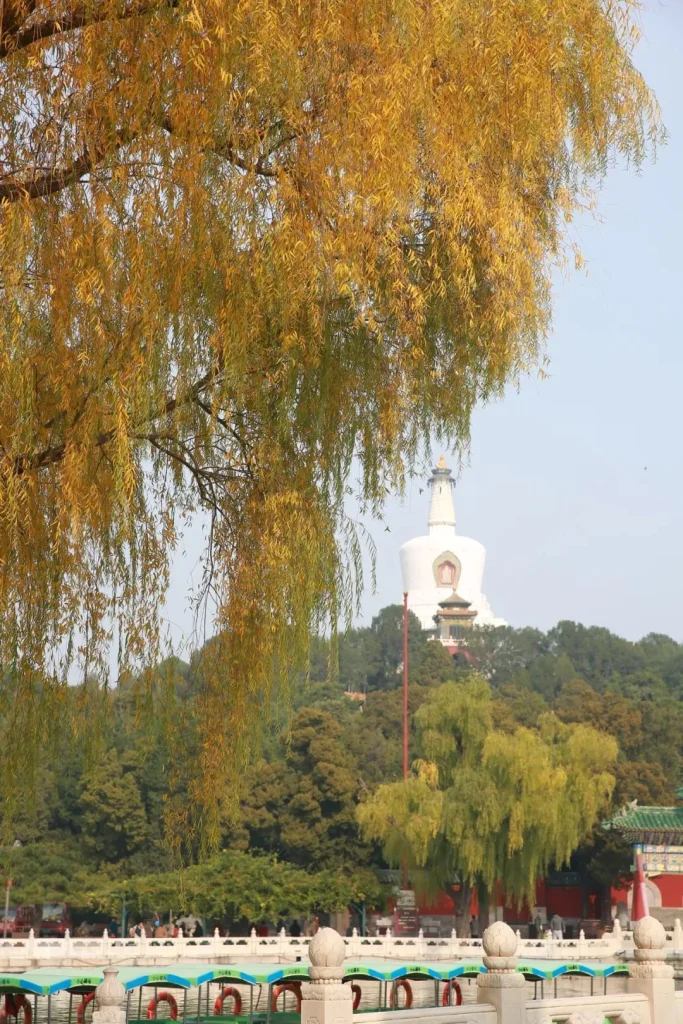
- Spring: “Spring Shade on Qiongdao” & Blooming Flowers
Spring is when Beihai bursts with life. Around the “Qiongdao Chunyin” (琼岛春阴 – Spring Shade on Qiongdao) stele pavilion, one of the “Eight Great Sights of Yanjing (Beijing),” lilacs and crabapple blossoms are everywhere. The white lilacs at Huafangzhai (画舫斋) against the green tiles and white walls look like a delicate Jiangnan ink painting. - Summer: “Lotus Viewing in the Imperial Garden” & Boating
Summer turns Beihai into a lotus paradise. They’ve been growing lotuses here since the Yuan Dynasty! Near the South Gate, the Xiaohai Lotus Lake is filled with gorgeous Baiyangdian red lotuses and space-bred lotuses. Rent a boat and drift among them – it’s just like the scene from the famous song “Let Us Sway Twin Oars” (让我们荡起双桨). Pure summer bliss! - Autumn: Colorful Foliage & Golden Hues
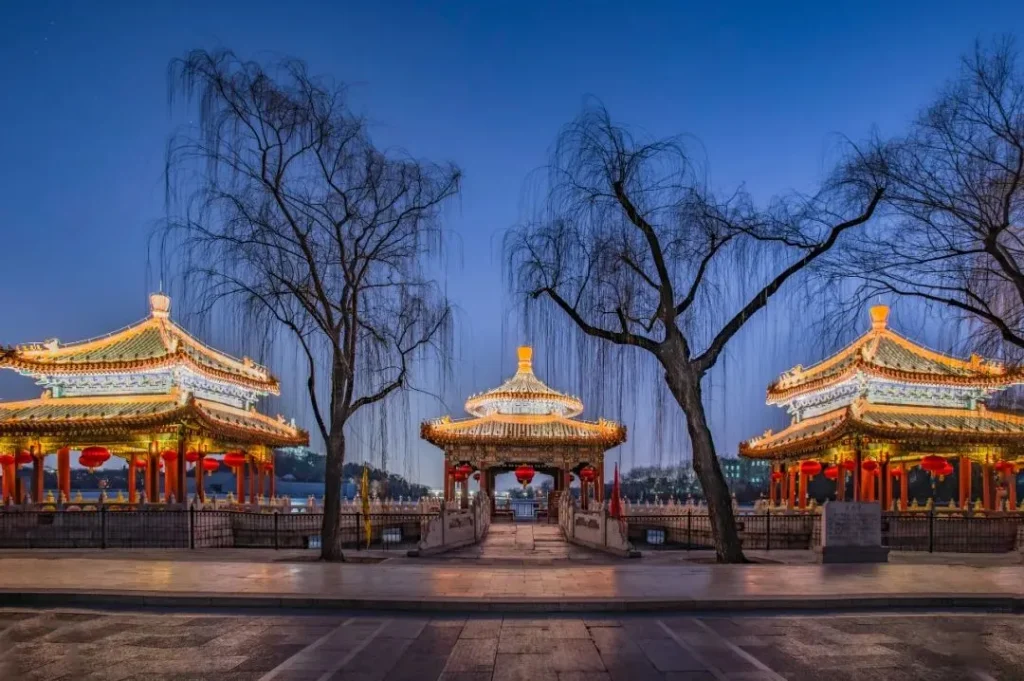
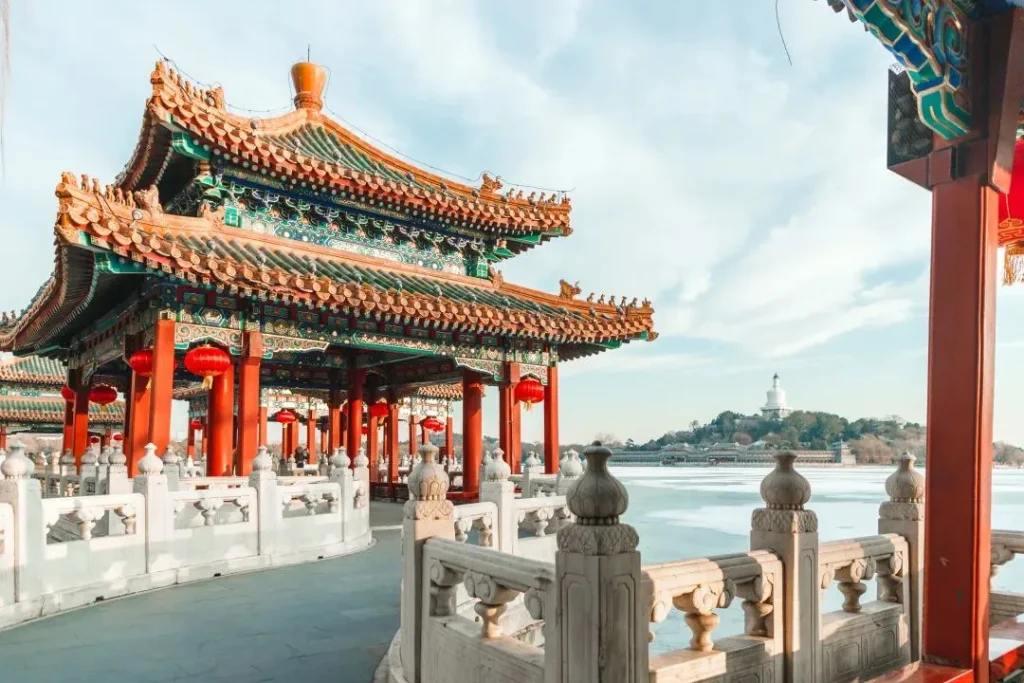
Autumn paints Beihai in vibrant colors. The maple leaves near the Five-Dragon Pavilions (五龙亭) turn fiery red, and the park’s ginkgo and scholar trees don their golden coats, attracting photographers from all over. - Winter: Snowy Wonderland & Ice Skating
When the lake freezes over, Beihai Park becomes a giant natural ice rink. Skating with the White Pagoda (白塔) as your backdrop and admiring the snow-covered royal garden is a truly unique winter experience.
Culture & Fun Things to Do
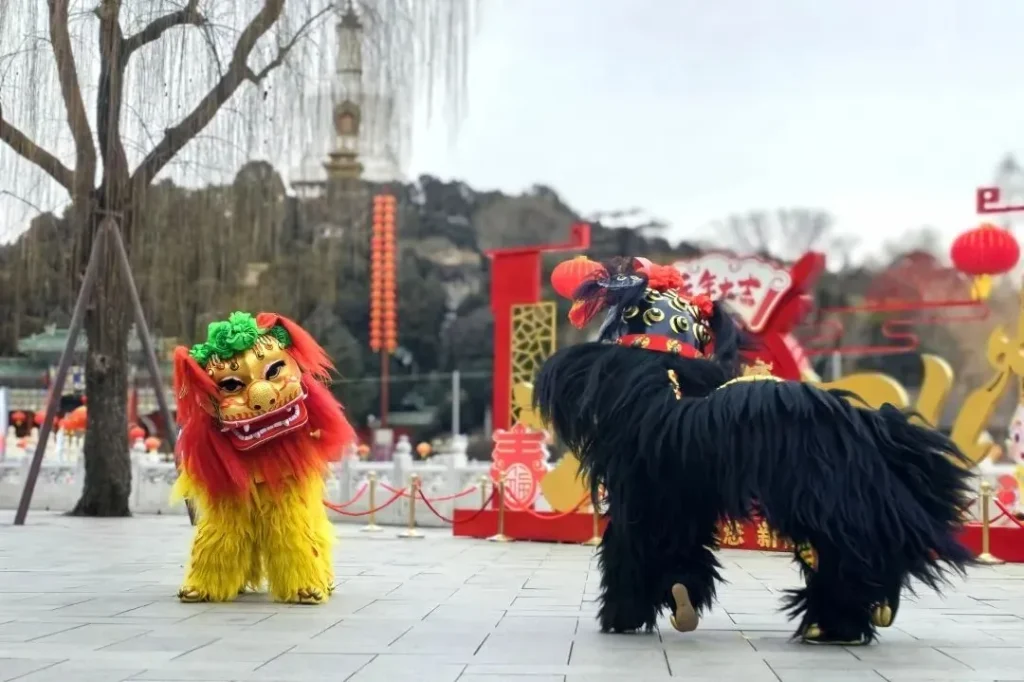
- Cultural Feasts: Beihai Park often hosts calligraphy and painting exhibitions, traditional music performances, and more. For example, Kuaixue Hall (快雪堂) has displayed Emperor Qianlong’s imperial steles and beautiful potted lotus exhibitions.
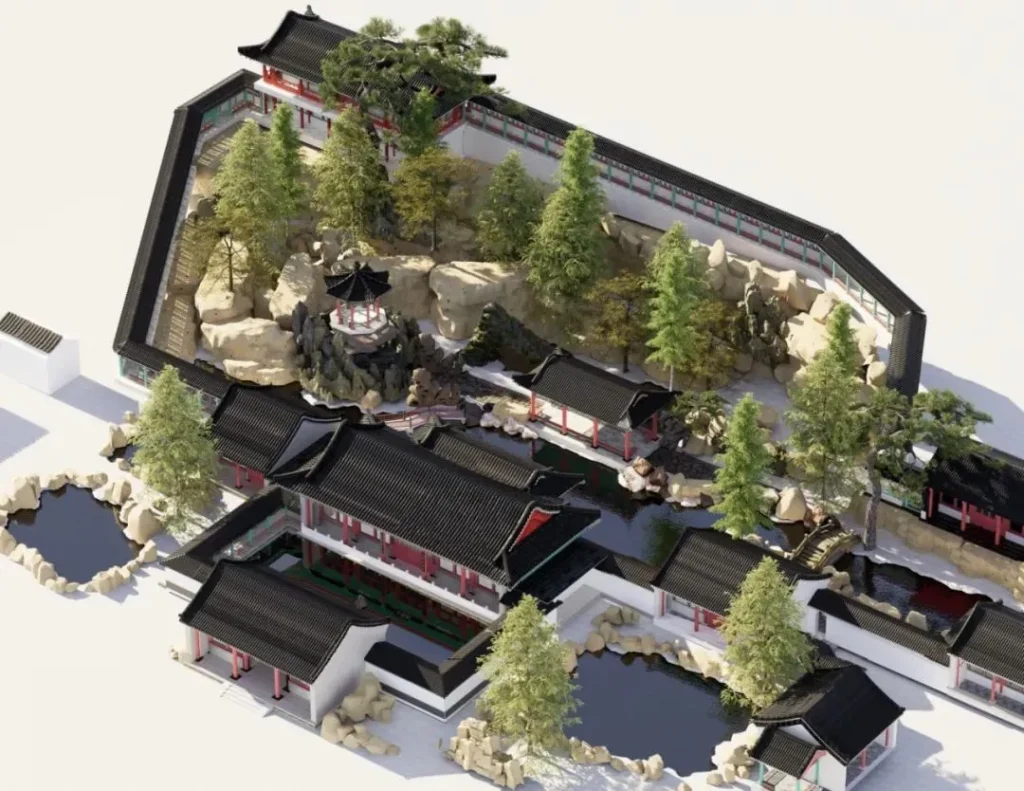
- New Digital Garden Adventures: For a modern twist, the park plans to launch a VR game called “Exploring Jingqing” (探秘镜清) in 2025. Set in Jingxinzhai (静心斋), it’ll take you back to Qianlong’s era and even connect with Lin Huiyin’s time, mixing architectural survey knowledge with cool interactive storytelling.
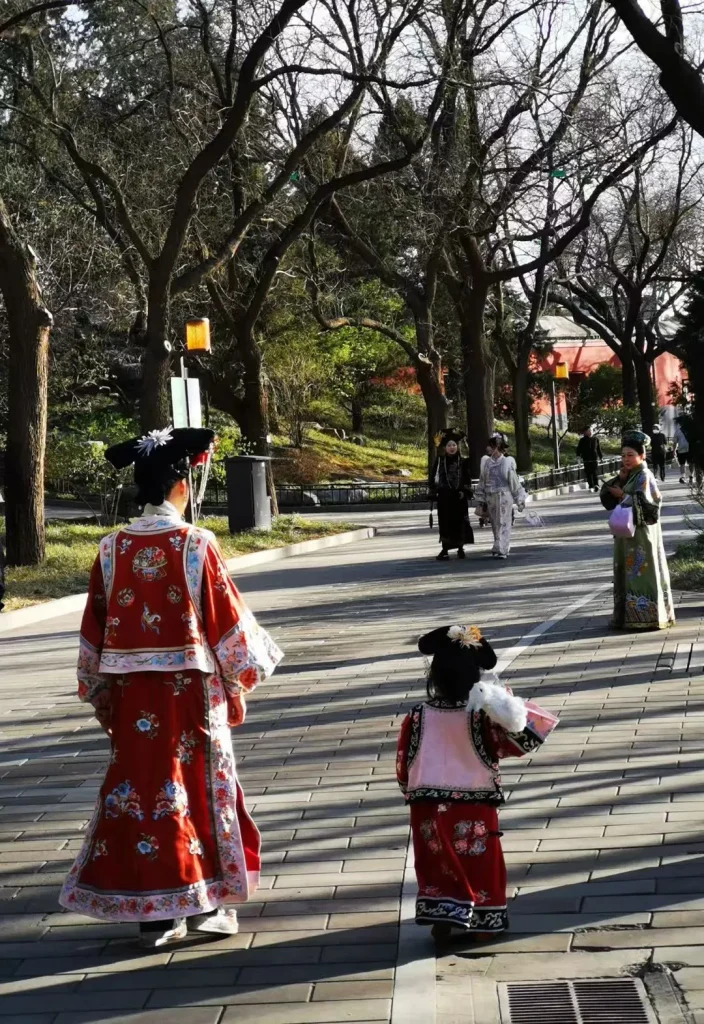
- Family Fun & Relaxation: There’s a children’s play area on the west shore, perfect for families. The paths around the lake are also great for a jog or a leisurely stroll.
Your Handy Travel Info
- Getting There:
- Subway: Take Line 6 to “Beihai North” (北海北) station.
- Bus: Several bus routes like No. 3, 13, 107, etc., stop near the park.
- Opening Hours:
- Peak Season (April 1 – Oct 31): 6:00 AM – 9:00 PM (last entry 8:30 PM).
- Off-Peak Season (Nov 1 – Mar 31): 6:30 AM – 8:00 PM (last entry 7:30 PM).
- Heads up: Smaller attractions inside the park (like Qionghua Island, Round City, Jingxinzhai) are usually closed on Mondays (except public holidays). Always best to check official info beforehand!
- Tickets:
- Park Entrance: 10 RMB (peak season); 5 RMB (off-peak).
- Through Ticket (includes park entrance & main smaller attractions like Qionghua Island, Round City): 20 RMB (peak); 15 RMB (off-peak).
- Round City (团城) only: Just 1 RMB! You can check out its cool thousand-year-old drainage system.
- Discounts: Usually free for kids under 6 or 1.2m;; discounts for seniors aged 60-69. Check current policies on the day.
- Boating: When the weather’s good, you can rent various boats (rowboats, paddleboats, electric boats) – a great way to see the lake. Check park notices for operating times and docks.
- E-Tickets: You can usually buy e-tickets, and some platforms might offer electronic audio guides for a self-guided tour.
- Suggested Routes & How Long You’ll Need:
- Classic Route (about 3 hours): Enter from the South Gate → Visit the Round City (团城) → Climb Qionghua Island (琼华岛) (see Yong’an Temple 永安寺, White Pagoda 白塔, etc.) → Head to Jingxinzhai (静心斋) → See the Nine-Dragon Screen (九龙壁) → Visit the Five-Dragon Pavilions (五龙亭).
- Two-Hour Route: Focus on the main areas of the Round City (团城) and Qionghua Island (琼华岛).
- Four-Hour Deep Dive: Explore all the nooks and crannies, including Yilan Hall (漪澜堂) and Huafangzhai (画舫斋).
Final Thoughts: A Living History Book
Beihai Park is way more than just a pretty garden; it’s a living history lesson. From its ancient Liao and Jin dynasty roots to its modern digital makeover, from its past royal grandeur to its present role as a beloved city park, it uses its serene lake and iconic White Pagoda (白塔) to connect a thousand years of time. Every plant, every stone here has a story to tell.
For anyone visiting Beijing, Beihai Park is an absolute must-see. Wander through its pavilions, feel the majesty and beauty of a royal garden, take a boat out on Taiye Lake (太液池) for a moment of peace, and soak in the rich history and vibrant culture of this thousand-year-old gem. Beihai Park, Beijing’s “most classical internet-famous spot,” is waiting for you to discover its wonders!
Related posts
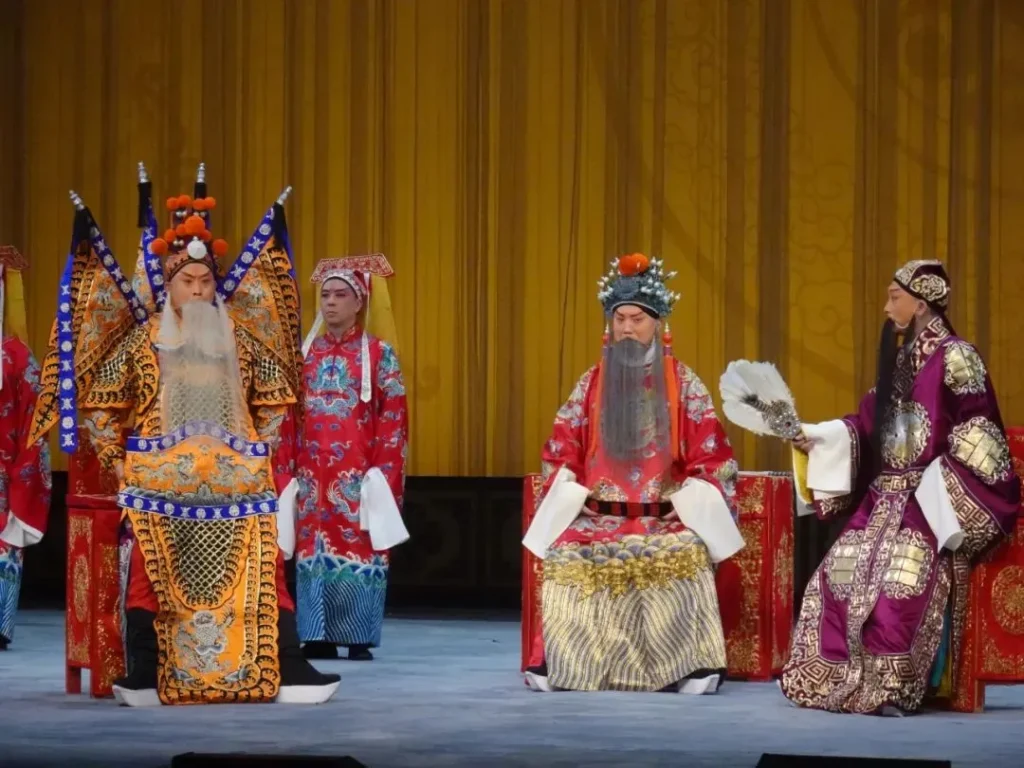
Exploring Beijing’s Traditional Culture: A Guide for Overseas Visitors
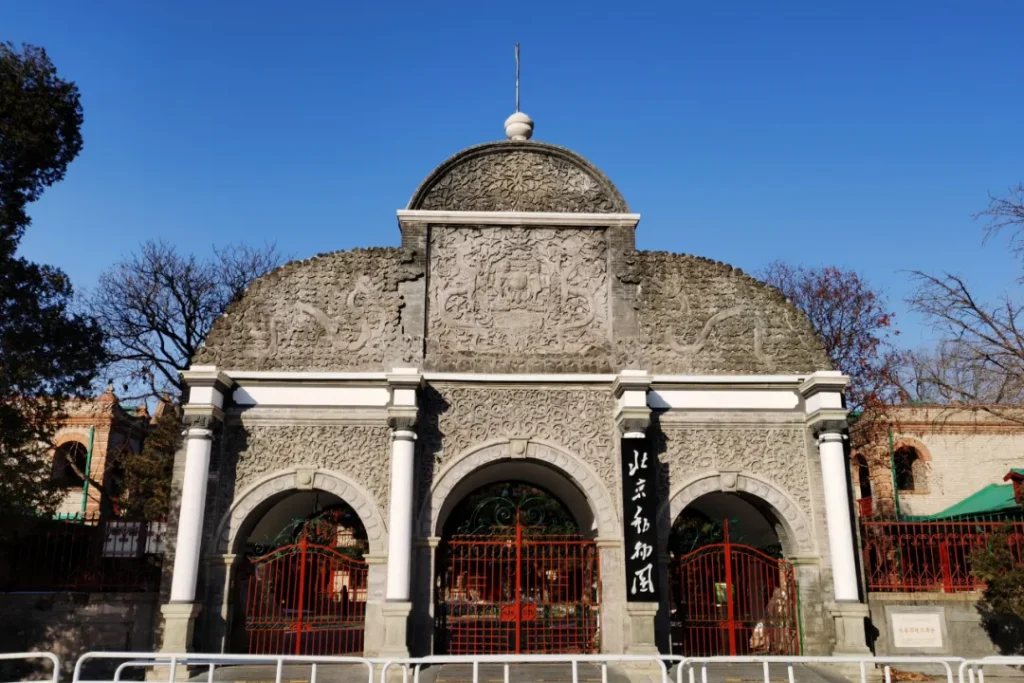
Beijing Zoo: Animals, Culture & Top Beijing Attraction!
Beijing Botanical Garden: Where Nature, Culture, and Science Meet! – A Top Beijing Attraction
Beijing Olympic Park: Olympic Glory & Urban Oasis – A Top Beijing Attraction

The Place & Sanlitun Taikoo Li: Beijing’s Dynamic Duo of Style!