
Landing at a major Chinese international gateway—such as Beijing Capital, Beijing Daxing, Shanghai Pudong, Shanghai Hongqiao, or Guangzhou Baiyun—after a grueling ten-hour transcontinental flight requires making a critical transit decision: Should you join the queue for an official metered municipal taxi, or call a private car using the DiDi ride-hailing app on your smartphone?
Both options are safe, clean, and vastly more affordable than airport transfers in North America or Western Europe. However, choosing the best option depends on your cellular connectivity, terminal layout, language comfort, and whether you arrive during peak rush hour or late at night. Understanding terminal pickup zones and knowing how to steer clear of unauthorized touts ensures a completely stress-free arrival.
Quick Takeaways: Airport Taxis vs. DiDi
1. The Arrival Hall “Black Cab” Trap (黑车, Hēichē)
The moment you step through customs into the public arrivals hall with your luggage trolley, you will inevitably encounter persistent individuals—often wearing business attire or lanyards—approaching travelers with phrases like “Taxi? City center? Beijing hotel? Good price, no line!”
These individuals are unauthorized, unlicensed drivers known locally as Hēichē (黑车, “black cabs”). They target tired, jetlagged international arrivals who are unfamiliar with local currency rates.
They will quote an arbitrary “flat rate” of 400 to 800 RMB ($55–$110 USD) for a journey that legitimately costs 100 to 130 RMB on a taximeter. In worse scenarios, they lead travelers to distant parking structures, demand extra luggage fees halfway through the trip, or refuse to turn on air conditioning. Adopt this ironclad rule: Never speak to, negotiate with, or follow anyone who approaches you verbally inside an airport terminal. Keep walking past them without stopping.
2. The Official Metered Taxi Queue (出租车)
Every commercial airport in China features a heavily regulated, municipal-controlled taxi rank (Chūzūchē Chéngchēdiǎn, 出租车乘车点). Follow the clear, overhead illuminated yellow signs through the terminal to the designated outdoor taxi dispatcher lanes.
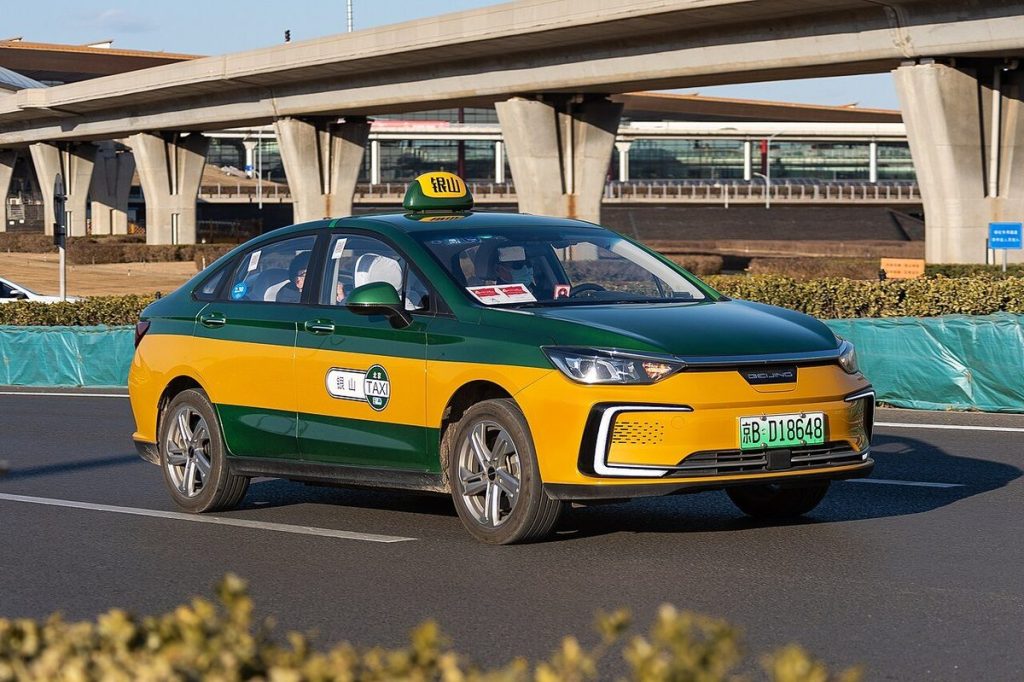
The Queue Process: Uniformed airport marshals organize passenger queues and direct you to the next waiting taxi. Fleets are uniform in appearance: turquoise or blue in Shanghai, yellow and brown in Beijing, and green or yellow in Guangzhou.
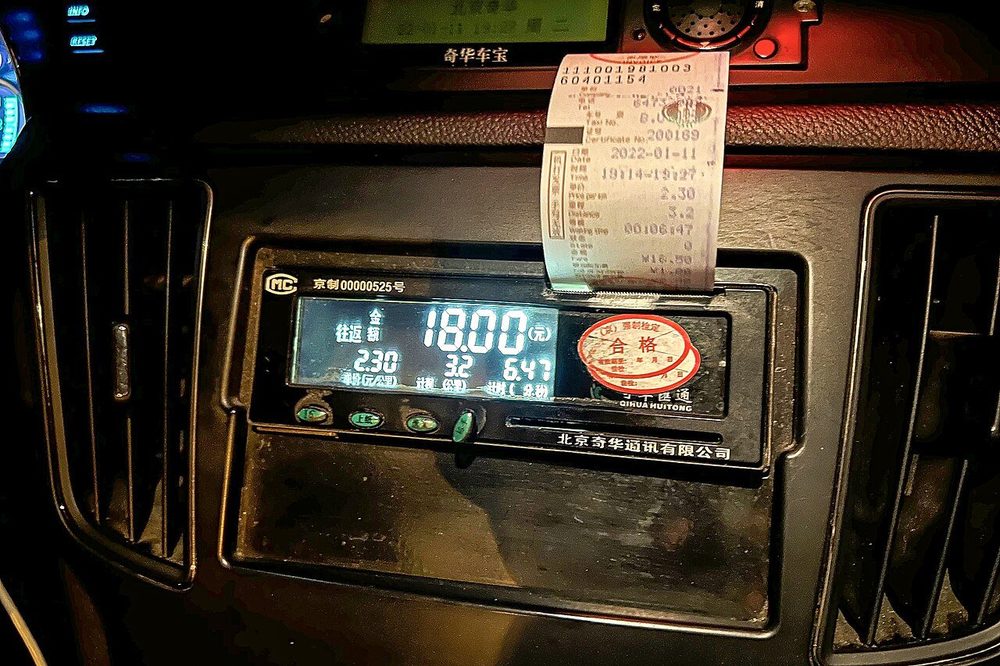
Insist on the Taximeter: The driver must immediately engage the dashboard taximeter (Dǎbiǎo, 打表). A red digital LED flag will drop and begin calculating distance and waiting time. If a driver ever attempts to negotiate a flat cash price before starting, point firmly to the meter and say “Qǐng dǎbiǎo” (请打表, “Please use the meter”). If they refuse, immediately step out and notify the queue marshal.
Legitimate Surcharges: Do not be alarmed when the final price is slightly higher than the meter display. Highway expressway toll fees (usually 10 to 20 RMB) and late-night surcharges (typically 20% to 30% between 23:00 and 05:00) are legally added to the final fare. Always request the printed paper tax receipt (发票, Fāpiào) printed by the meter machine; it records the taxi company, driver registration, exact route timestamps, and vehicle license plate number in case you accidentally leave a bag behind.
3. DiDi Ride-Hailing: Seamless English Booking
For most international travelers, DiDi (滴滴出行)—available as a standalone English app or directly inside the Alipay mobile wallet—is the superior choice. DiDi completely eliminates language barriers and payment confusion.
Key advantages of booking DiDi from the airport include:
Guaranteed Upfront Pricing: When you input your destination hotel, DiDi calculates the exact fare before you tap “Confirm”. You know precisely what the journey will cost down to the cent, with road tolls bundled automatically into the digital receipt.
In-App Bilingual Messaging: If the driver needs to clarify your pickup location, they message you through the app. DiDi’s integrated translation engine automatically translates their Chinese messages into English and translates your English responses back into natural Chinese in real time.
Multiple Service Tiers: Choose between “DiDi Express” (Kuàichē, standard clean sedans), “DiDi Select” (spacious mid-size vehicles), or “DiDi Premier” (Zhuānchē, executive luxury sedans with suited drivers, complimentary bottled water, and phone chargers). If traveling with three or four passengers and multiple 28-inch suitcases, choose “6-Seat Van” (Liùzuò Shangwùchē) to guarantee adequate trunk space.
4. Navigating Airport Ride-Hailing Pickup Zones (网约车)
Because ride-hailing drivers are private contractors rather than licensed medallion taxis, municipal airport regulations prohibit them from picking up passengers at the curbside arrivals curb. Instead, airports construct dedicated, climate-controlled “Ride-Hailing Pickup Zones” (Wǎngyuēchē Shàngkèqū, 网约车上客区) inside adjacent parking structures.
Follow this exact sequence to meet your driver:
Step 1: Collect Baggage First. Never call your DiDi while waiting at the luggage carousel. Airport parking rules limit ride-hailing drivers to 5 or 8 minutes of free dwell time in pickup bays before steep parking penalties apply. Collect all suitcases and clear customs before requesting your car.
Step 2: Follow “Ride-Hailing” Overhead Signs. Look for signs labeled “Online Car-Hailing” or “Ride-Hailing” (网约车). In major terminals, these lead to dedicated indoor waiting lounges equipped with seats, charging kiosks, and numbered pick-up pillars:
• Beijing Capital (PEK) Terminal 3: Parking Garage P1 / P2, Level B1.
• Beijing Daxing (PKX): Parking Building P1, Floor 1F.
• Shanghai Pudong (PVG) T1 & T2: Long-term Parking Garage P1 / P2, Level B1.
• Guangzhou Baiyun (CAN) T2: Ground Transportation Center (GTC) Car Park P8.
Step 3: Select Your Pillar / Zone in the App. When confirming your pickup point in the DiDi app, the map will display specific numbered pillars (e.g., “Pillar B2” or “Bay 4”). Select the exact pillar where you are standing. The app transmits this precise bay to the driver’s navigation screen.
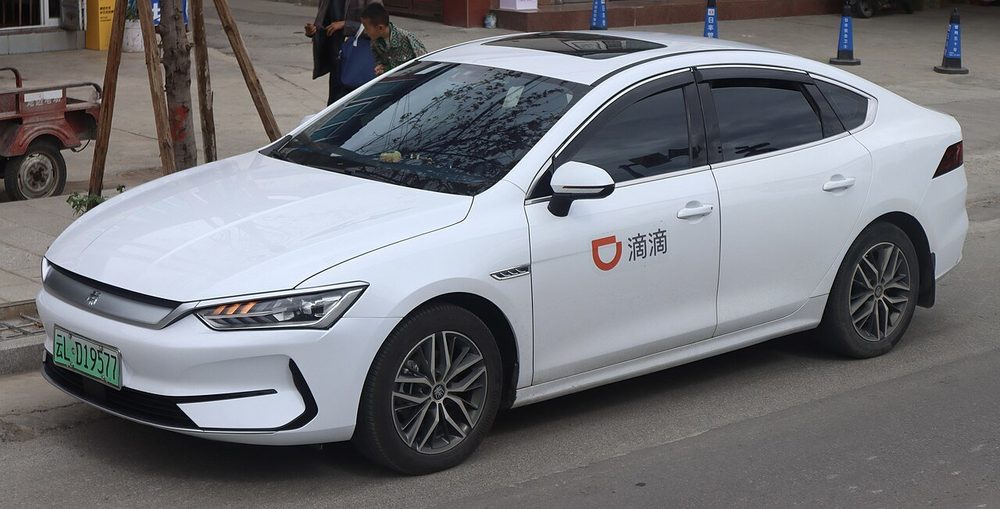
Step 4: Match the License Plate. When the car pulls into your bay, check the vehicle’s rear license plate against the alphanumeric number displayed on your phone screen before opening the door.
5. Decision Framework: When to Take Taxi vs. DiDi
Use this quick practical decision framework upon arrival:
Choose the Official Taxi Rank if:
• Your smartphone battery is under 10% and you cannot risk it dying before meeting a driver.
• You arrive late at night (past midnight) when official taxi queues are short, moving in under five minutes.
• You have your hotel name and full street address clearly written in Chinese characters on a printed slip or offline screenshot.
Choose DiDi Ride-Hailing if:
• You do not speak Chinese and want zero communication misunderstandings.
• You arrive during peak domestic flight arrival banks (18:00–21:00) when outdoor taxi queues can stretch to 45 minutes.
• You prefer guaranteed automatic payment through your overseas credit card without worrying about cash change or broken handheld card readers.