
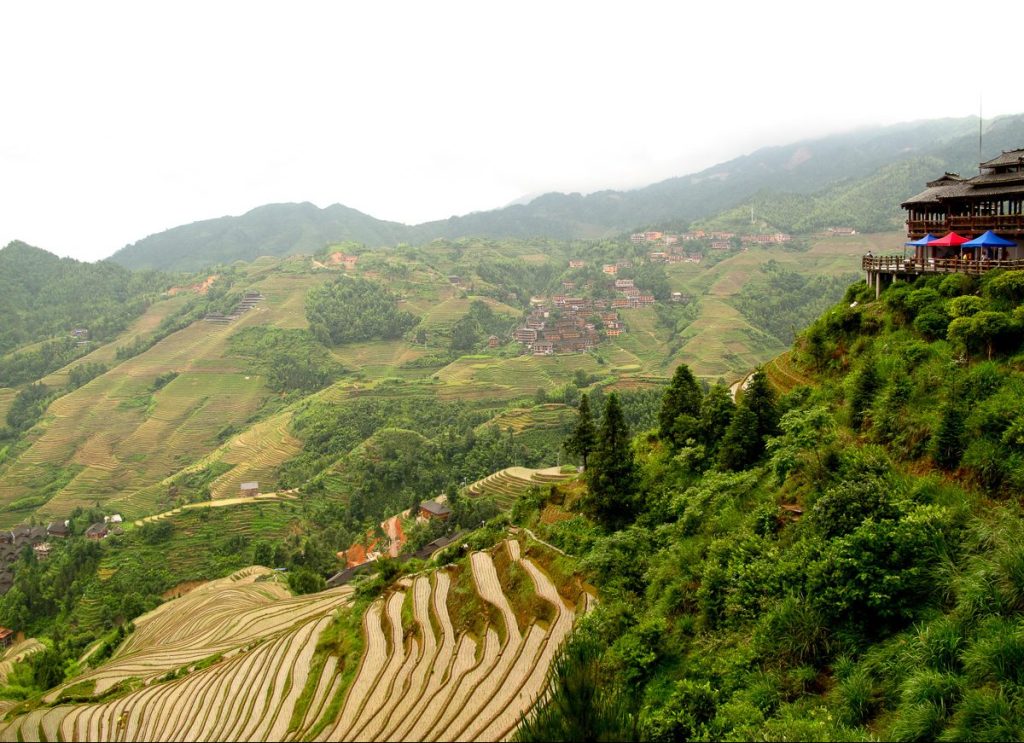
Sculpted into the steep mountain slopes of Longsheng County over seven centuries by the Zhuang and Yao ethnic minorities, the Longji Rice Terraces (Lóngjǐ Tìtián, 龙脊梯田)—literally translated as the “Dragon’s Backbone”—are an agricultural and landscape masterpiece. Cascading from river canyons at 300 meters up to mist-shrouded mountain ridges at 1,100 meters above sea level, the sinuous, ribbon-like paddies create an astonishing natural amphitheater.
Located roughly two to two-and-a-half hours northwest of Guilin, visiting Longji is the ultimate scenic and cultural contrast to the limestone karst formations of Yangshuo. However, choosing between the two primary valleys—Ping’an Zhuang Village versus Dazhai Jinkeng Village—and understanding seasonal field conditions is essential for planning a successful trip.
Quick Takeaways: Longji Rice Terraces Planning
1. Choosing Your Base: Ping’an Village vs. Dazhai (Jinkeng)
The Longji scenic reserve encompasses several distinct ethnic minority settlements, but 95% of international travelers base themselves in one of two primary valleys:
Ping’an Zhuang Village (平安壮寨):
Ping’an was the first area developed for tourism in the late 1980s. Inhabited primarily by the Zhuang people, the village features tightly clustered multi-story timber houses (Diàojiǎolóu) built on steep mountainsides with stone-paved pedestrian footpaths.
• Viewpoints: Features two world-famous viewpoints: “Seven Stars Accompany the Moon” (七星伴月, seven small crescent mounds flanking a round central pool) and “Nine Dragons and Five Tigers” (九龙五虎).
• Vibe & Access: Highly atmospheric, compact, with mature boutique guesthouses and western-friendly cafes. However, there are no cable cars or roads inside the village. Reaching your guesthouse and scenic viewpoints requires climbing steep, uneven stone staircases for 20 to 45 minutes.
Dazhai Jinkeng Red Yao Village (大寨金坑红瑶梯田):
Located deeper in the mountains, Dazhai is home to the Red Yao minority. The valley is roughly three times larger than Ping’an, with colossal ridgelines sweeping upward like a natural amphitheater.
• Viewpoints: Divided into three epic viewpoints: Viewpoint #1 (West Hill Music / Xīshān Sháoyùe), Viewpoint #2 (Large Thousand-Layer Terraces / Dàqiāncéng), and Viewpoint #3 (Golden Buddha Peak / Jīnfó Dǐng).
• The Cable Car Advantage: Dazhai features a modern European-engineered enclosed gondola cable car (Jīnkēng Suǒdào, 金坑索道). The 20-minute ride whisks passengers directly from the valley parking lot up to Viewpoint #3 (Golden Buddha Peak) for 100 RMB round trip (60 RMB one way). This makes Dazhai the ideal choice for families, travelers with limited hiking stamina, or anyone carrying heavy luggage.
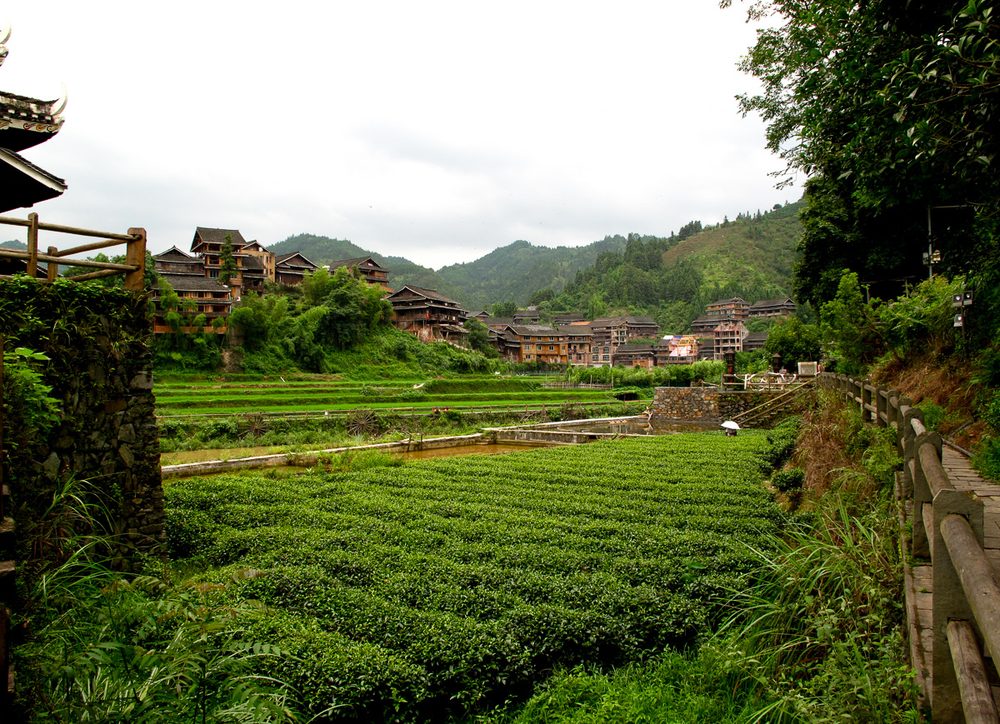
2. The Four Seasons of the Dragon’s Backbone
Because the terraces are active, living agricultural systems rather than static stone monuments, their visual appearance transforms completely throughout the four seasons:
1. The “Mirror Water” Season (灌水期, Late April to Mid-May): Farmers flood the tiered paddies with fresh spring rainwater to prepare the soil for planting. The curving terraces transform into thousands of glittering mirrors, reflecting sunrise skies, drifting mist, and pink evening clouds like shattered glass. This is the undisputed peak season for landscape photographers.
2. Lush Emerald Summer (生长期, June to August): The young rice stalks grow rapidly, turning the entire mountain range into rolling waves of vibrant lime and emerald green. The valleys are lush, warm, and alive with mountain streams, though afternoon rainstorms are common.
3. Golden Autumn Harvest (收获期, Late September to Mid-October): The heavy grain heads ripen into brilliant golden yellow, forming shimmering tapestries across the ridgelines. The golden season culminates around China’s National Day holiday, right before the local farmers begin the communal hand-harvesting process in mid-to-late October.
4. Winter Frost (冬雪, December to February): During winter, the terraced slopes are fallow, occasionally blanketed in ethereal white snow and frost, creating stark, minimalist monochrome patterns across the hillsides.
3. Red Yao Culture and the Long Hair Phenomenon
In Dazhai and the neighboring Huangluo Yao Village (黄洛瑶寨), you will meet the women of the Red Yao minority (Hóngyáo, 红瑶), named for their hand-woven, vibrant pink and crimson embroidered jackets.
Huangluo holds the official Guinness World Record as the “World’s First Long Hair Village.” Women in the community cut their hair only once in their lifetime—at age eighteen during their coming-of-age ceremony. Hair lengths routinely exceed 1.5 to 2.1 meters (5 to 7 feet), remaining glossy, jet-black, and free of gray hairs well into their seventies and eighties.
Their secret is a centuries-old tradition of washing hair in special wooden basins filled with fermented rice water (Tǎomǐshuǐ, 淘米水) boiled with tea seeds and pomelo peels. Yao women wind their hair into distinctive coiffures on top of their heads: a neat coil covered by a scarf signifies an unmarried maiden, while a prominent front bun indicates a married woman with children.
4. Local Countryside Cuisine: Bamboo Rice and Bamboo Chicken
Dining in Longji guesthouses is an authentic farm-to-table delight, centered around cooking inside freshly cut thick bamboo stalks over open wood fire embers:
Bamboo Tube Rice (竹筒饭, Zhútǒngfàn): Glutinous sweet rice mixed with diced cured mountain pork, sweet corn, and peanuts is packed tightly into a fresh green bamboo stalk, sealed with banana leaves, and roasted slowly over burning embers. The natural fragrant bamboo sap infuses the rice with a subtle, smoky herbal aroma.
Bamboo Tube Chicken (竹筒鸡, Zhútǒngjī): Free-range mountain chicken chopped and stewed inside bamboo with goji berries, local mountain mushrooms, and ginger, producing a rich, nourishing, savory golden broth.
Longsheng Wild Mountain Tea: Locally foraged roasted green teas, enjoyed in porcelain bowls while gazing across the misty terraces from wooden balcony dining decks.
5. Transportation Logistics and Luggage Portage Survival
Getting to Longji and managing your bags requires specific tactical planning:
Transit from Guilin or Yangshuo: Direct tourist express buses run daily from outside the Guilin Railway Station square directly to the Dazhai and Ping’an ticket gates (approx. 50–65 RMB, 2 hours). From Yangshuo, boutique guesthouses can book seats on direct shuttle vans departing around 8:00 AM (approx. 70–90 RMB, 3 hours). The universal park admission ticket costs 80 RMB per person.
The Luggage Strategy: If your guesthouse is perched high on the ridgeline in Ping’an or Dazhai, do not attempt to roll hard-sided wheeled suitcases up the stone paths. Either leave your large suitcases in left-luggage storage at the park entrance gate or your Guilin hotel (taking only a light backpack), or hire the local Yao porters waiting at the bus drop-off. Porters use sturdy woven bamboo back-baskets or shoulder poles to carry 25kg suitcases up to mountain lodges for 50 to 80 RMB per piece, providing vital income to local village families.