
One of the first cultural surprises awaiting foreign travelers in China happens the moment they sit down at a restaurant: instead of an ice-cold glass of tap water with lemon, the waiter promptly pours a cup of steaming hot water. Whether it is mid-winter in snowy Harbin or a sweltering 38°C (100°F) July afternoon in Guangzhou, hot water (Rèshuǐ, 热水) is China’s universal default beverage.
Understanding China’s drinking water landscape—from the non-potability of hotel tap water and trusted bottled water brands to the extraordinary availability of free public 100°C boiling water dispensers and the linguistic tricks needed to secure an iced beverage—is vital for health, comfort, and hydration throughout your travels.
Quick Takeaways: Drinking Water in China
1. Tap Water Safety: Why You Must Never Drink from the Faucet
The golden rule of personal health in China is unequivocal: Do not drink untreated tap water from hotel bathroom sinks or public faucets.
While municipal water treatment plants in tier-1 cities like Beijing, Shanghai, and Shenzhen filter water to national sanitary standards, the secondary delivery infrastructure—namely decades-old underground distribution piping, aging metal joints, and open rooftop residential storage cisterns—can introduce rust, bacterial contamination, and heavy sediment before water reaches the tap.
However, tap water is completely safe for brushing your teeth, showering, washing your face, and doing laundry. For drinking, either use the complimentary sealed plastic bottles provided daily on your hotel nightstand, or fill the electric room kettle with tap water and bring it to a rolling boil for a full minute, which neutralizes all microbiological pathogens.
2. Trusted Bottled Water Brands and Pricing
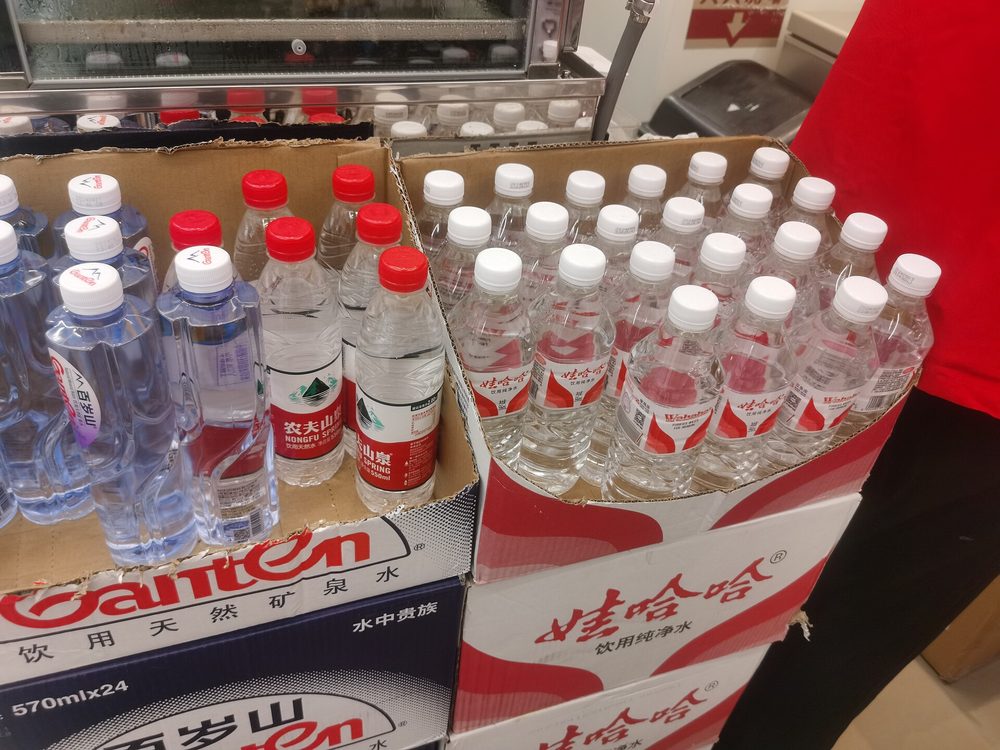
Commercial bottled water in China is ubiquitous, strictly inspected, and remarkably inexpensive. You will find chilled and room-temperature bottles in convenience stores (7-Eleven, FamilyMart, Lawson), subway kiosks, train platforms, and street stalls.
The standard price for a 550ml bottle ranges between 2 and 3 RMB ($0.30–$0.45 USD). Larger 1.5-liter bottles cost 4 to 6 RMB. Look for these four nationwide household brands:
• Nongfu Spring (农夫山泉, Nóngfū Shānquán): The undisputed market leader, instantly recognizable by its bold red cap and label. Sourced from natural mountain reservoirs and lakes, it tastes clean, soft, and slightly sweet.
• C’estbon (怡宝, Yíbǎo): Owned by China Resources, this green-labeled bottle contains pure multi-stage reverse-osmosis purified water with zero mineral aftertaste.
• Ganten (百岁山, Bǎisuìshān): A premium natural mineral water packaged in distinctive fluted plastic bottles with purple accents (usually 3 to 4 RMB).
• Wahaha (娃哈哈): One of China’s oldest beverage pioneers, renowned for laboratory-grade pure distilled water.
Always verify that the plastic bottle cap safety ring is intact and snaps audibly upon opening.
3. The Cultural Phenomenon of “Drink More Hot Water” (多喝热水)
To foreign visitors, drinking steaming hot water on a blistering summer day seems counterintuitive. In China, however, “Duō hē rèshuǐ” (多喝热水, “drink more hot water”) is a beloved national panacea and cultural cornerstone.
This practice is rooted in Traditional Chinese Medicine (TCM) thermal balance. TCM posits that the human digestive system relies on internal “digestive fire” (Spleen and Stomach Yang energy) to process food and circulate Qi. Drinking ice-cold beverages is believed to shock the internal organs, contract blood vessels, impede digestion, and cause abdominal cramping.
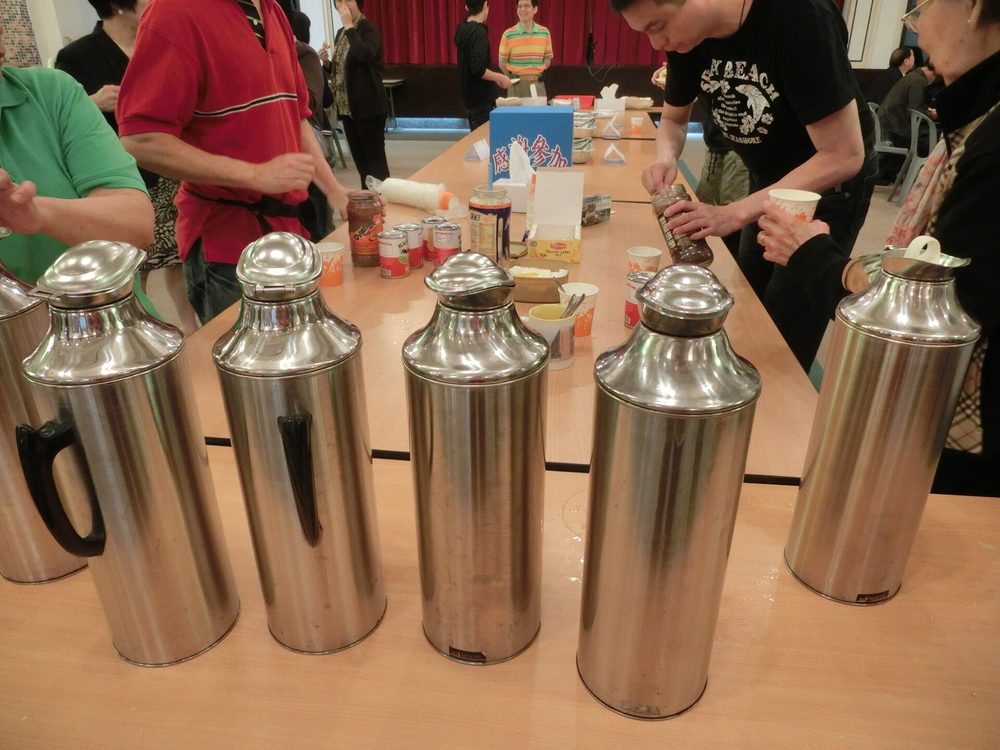
Hot or warm water, by contrast, is thought to promote blood circulation, flush bodily toxins, soothe throat irritation, and maintain internal equilibrium. Beyond medicine, boiling water historically served as a critical public health defense against waterborne cholera and typhoid in the early 20th century. Today, carrying a double-walled insulated stainless steel thermos flask (Bǎowēnbēi, 保温杯) filled with hot tea or warm water is a universal lifestyle habit across all generations.
4. Free Public Water Dispensers in Transit Hubs
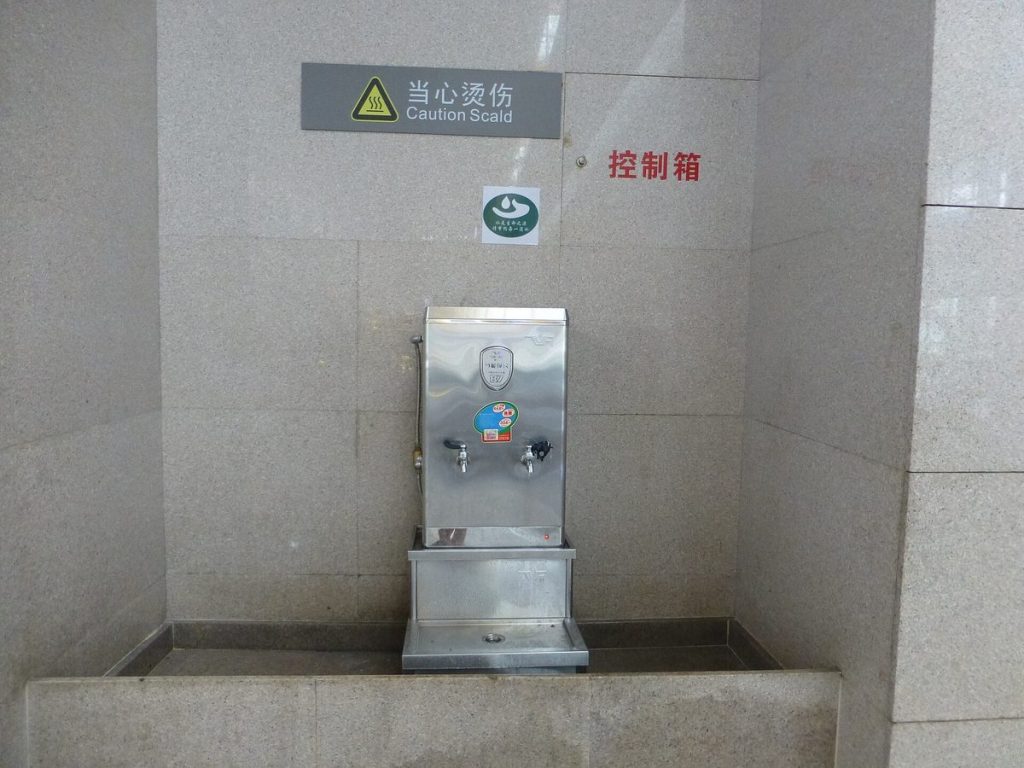
One of China’s most impressive public conveniences is the availability of free, high-capacity purified water kiosks (Zhíyǐnshuǐ, 直饮水 / Kāishuǐjī, 开水机). You will find them stationed throughout airport departure gates, high-speed rail concourses, bullet train carriages, and museum lobbies.
Modern dispensers in international airports (like Beijing Daxing and Shanghai Pudong) feature three clearly labeled push-button temperature choices:
• Boiling Water (开水, Kāishuǐ, ~100°C): Dedicated for steeping loose-leaf green tea or brewing instant cup noodles.
• Warm Water (温水, Wēnshuǐ, ~40°C–50°C): Perfect drinking temperature for immediate consumption.
• Ambient / Chilled Water (常温, Chángwēn or 冷水, Lěngshuǐ): Room-temperature or chilled filtered water for refilling travel water bottles after clearing security.
Dispensers feature safety child-locks: hold the unlock button (Jiěsuǒ, 解锁) with one finger while pressing the water dispense lever to fill your container.
5. How to Order Cold Water and Ice in Restaurants
If you prefer refreshing cold drinks with your meals, you must specify your preference explicitly, as default service is always hot or warm tea.
Use these essential Chinese phrases:
• “Can I have ice water?”: Qǐng gěi wǒ bīngshuǐ (请给我冰水).
• “Chilled, please”: Bīng de (冰的) – Use this when ordering bottled beer, soft drinks, or tea.
• “Do you have ice cubes?”: Yǒu bīngkuài ma? (有冰块吗?).
A Practical Caveat: Traditional small family-run eateries (such as neighborhood noodle shops or dumpling stalls) rarely maintain commercial ice cube machines. If you ask for ice water, the server may apologize and explain they only have room-temperature bottled water (Chángwēn shuǐ, 常温水) or warm tea. If ice is essential, grab an iced beverage from a nearby convenience store or order from modern tea chains like Heytea or Luckin Coffee before sitting down.