
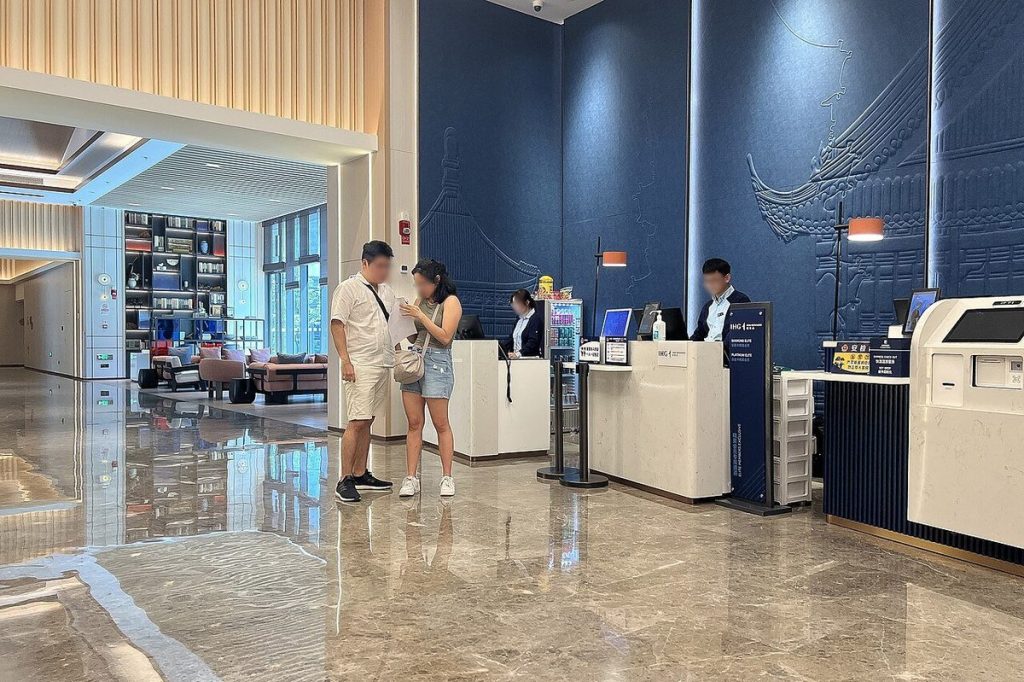
Checking into a hotel in China involves two administrative routines that frequently surprise international travelers: providing a mandatory security deposit (Yājīn, 押金) and completing real-name police registration with the Public Security Bureau (PSB). While the process requires a few more minutes than checking into a hotel in Western Europe or North America, understanding the regulatory requirements and payment mechanics ensures your room check-in is swift and smooth.
Every legally operating hotel in mainland China handles tourist registration automatically in the background through digital police network terminals. Whether you are paying your room deposit using an international credit card pre-authorization, Alipay, or cash, this guide covers everything you need to know about check-in formalities, deposit refunds, and police compliance.
Quick Takeaways: Hotel Check-In & Deposits in China
1. How Automatic Police (PSB) Registration Works
Under China’s national Exit and Entry Administration Law, every non-Chinese citizen staying on mainland soil must be officially registered with the local Public Security Bureau (PSB / Pàichūsuǒ, 派出所) within 24 hours of arrival. This legal registration generates the “Temporary Residence Registration Form” (Línshí Zhùsù Dēngjìbiǎo, 临时住宿登记表).
For travelers staying in commercial hotels, this process is completely seamless:
The front desk software (Lǚguǎnyè Xìtǒng, 旅馆业治安管理信息系统) connects directly to the municipal police database. When the receptionist scans your passport biographical page, your entry visa or visa-free entry stamp, and captures a quick facial photograph using the desktop camera, the system transmits your registration electronically in real time.
You do not need to fill out separate police forms or visit a precinct. The digital transmission fulfills your 100% legal compliance for that city. If you ever require a physical paper registration slip—for example, if applying for an onward consular visa or extending a stay at an immigration service hall—simply ask the front desk clerk to print and stamp your official “Registration Form of Temporary Residence” from their terminal.
Important Exception: If you choose to stay in a private residential apartment (such as an unmanaged residential rental or staying on the couch at a friend’s private flat), the automatic system does not apply. In that scenario, you and your local host must physically walk into the neighborhood police station with your passport, lease agreement, and host ID within 24 hours to register manually.

2. Hotel Check-In Documents: Original Passports for Everyone
Chinese regulations strictly enforce one passport per adult guest. Even if one traveler booked and paid for a king-bed room for two people on Trip.com, both individuals must present their physical original passports at the counter during check-in.
Front desk staff face severe municipal fines and suspension of their hotel operating license if they allow an unregistered guest to sleep in a room. Never attempt to check in using a photocopy, a laminated card, or a photo on your smartphone. Receptionists must physically place the actual passport book into their optical flatbed scanner.
3. Understanding Hotel Deposits: Cash, Cards & Pre-Authorizations
Even if you prepaid your room in full online before arriving, Chinese hotels almost universally require a security deposit (Yājīn, 押金) upon check-in. The deposit covers incidental expenses, such as mini-bar beverages, room service, laundry, telephone calls, or potential property damage.
You can settle the deposit using three common methods:
1. Credit Card Pre-Authorization (预授权, Yùshòuquán): The most common method for international travelers. The receptionist swipes or taps your physical Visa or Mastercard. Instead of completing a live purchase charge, the terminal places a temporary “hold” on your credit line for the deposit amount. No money actually leaves your account. When you check out and settle room incidentals, the front desk cancels the pre-authorization (Yùshòuquán Chèxiāo). However, depending on your home country’s issuing bank, the pending hold may take anywhere from 7 to 21 business days to disappear from your online banking portal.
2. Alipay or WeChat Pay Deposit: If you linked an international credit card to Alipay, you can scan the front desk QR code. Many modern hotel chains support “Deposit-Free Check-In” (Miǎnyājīn) through Alipay credit scoring, or process a digital deposit that reverses back to your credit card immediately upon checkout.
3. Cash Deposit: If you prefer not to have holds placed on your credit cards, pay the deposit in physical RMB banknotes (typically 200 to 500 RMB). The receptionist will print an official carbon-copy “Deposit Receipt” (押金条, Yājīntiáo). Keep this paper receipt safe! You must hand this slip back to reception at check-out to collect your cash refund.

4. The Check-Out Room Inspection Protocol
When checking out of a traditional Chinese hotel, the process involves a brief, polite inspection protocol:
1. You hand your keycards to the front desk and say “Tuìfáng” (退房, check out).
2. The receptionist radios housekeeping (Cháfáng, 查房): an attendant on your floor steps into the room for two minutes to confirm the room safe was emptied, verify that complimentary amenities were not mistaken for mini-bar items, and check that no personal belongings (such as phone chargers or passports) were left behind.
3. Once housekeeping radios the all-clear, the receptionist cancels your card pre-authorization or hands back your cash deposit with your final tax invoice (Fāpiào). Modern business hotel chains like Atour or Ji Hotel frequently offer “Flash Checkout” (Kùaikuài Tuìfáng), allowing you to simply drop your keycard into a lobby collection box and walk straight out.
5. The “Can Foreigners Stay Here?” Rule Explained
Historically, foreign travelers occasionally faced frustrating check-in rejections at ultra-budget motels because of legacy regulations requiring specialized “Foreign Guest Certification” (Shèwài Zīgé, 涉外资格).
In recent years, the Ministry of Public Security, the Ministry of Commerce, and the National Immigration Administration have issued nationwide directives explicitly prohibiting hotels from rejecting foreign guests due to lack of foreign qualification. Hotel software across all major domestic chains has been upgraded to scan foreign passports directly.
To ensure 100% peace of mind when booking accommodation, always book through Trip.com and check that the hotel listing displays the green checkmark badge: “Accepts Foreign Guests / All Guests Welcome”. This guarantees that front desk reception possesses the appropriate scanning hardware and bilingual guest intake procedures.