

For over two thousand years, the ancient Silk Road served as the world’s most critical conduit of trade, religion, philosophy, and architectural innovation. Camels, merchant caravans, and Buddhist monks carried silk, porcelain, jade, and manuscripts across four thousand miles of rugged terrain between the imperial capitals of China and the markets of Rome and Byzantium. Today, this epic overland journey no longer requires months of grueling desert trekking. China’s modern railway network connects the ancient eastern terminus in Xi’an all the way to the western oasis of Kashgar with air-conditioned high-speed bullet trains and modern overnight sleepers.
This comprehensive fourteen-day itinerary guides you across northwestern China, tracing the historic Hexi Corridor through Gansu Province into Xinjiang. You will journey from the Terracotta Warriors of Xi’an to the Buddhist grottoes of Dunhuang, the underground desert water canals of Turpan, and the mudbrick bazaar alleys of Kashgar.
Quick Route Summary: 14-Day Silk Road by Rail
1. Days 1–3: The Eastern Origin in Xi’an (Chang’an)
The Silk Road officially begins in Xi’an (西安), historically known as Chang’an, the imperial capital of thirteen Chinese dynasties. Under the Han and Tang dynasties, foreign merchants, Persian traders, and Sogdian emissaries lived within Chang’an’s monumental grid walls, trading goods at the bustling West Market (Xīshì, 西市).
Day 1: Imperial Roots and Ancient Walls: Arrive at Xi’an Xianyang International Airport (XIY) or Xi’an North Railway Station. Check into your hotel inside or adjacent to the city moat. In the afternoon, ascend the Xi’an Ancient City Wall (西安城墙) at Yongning Gate (South Gate). Rent a bicycle at the top ramp (45 RMB for three hours) and complete the 13.7-kilometer rectangular circuit along the stone ramparts. In the evening, explore the bustling pedestrian corridors of the Muslim Quarter (回民街, Huímín Jiē). Sample cumin-spiced lamb skewers (chuan’r), hand-stretched Biangbiang noodles, and persimmon pastries.
Day 2: The Terracotta Army & Shaanxi History: Take an early morning direct tourist bus from Xi’an Railway Station or a DiDi ride (120–150 RMB) to the Emperor Qinshihuang Mausoleum Site Museum (兵马俑, Terracotta Warriors) in Lintong. Reserve your 120 RMB admission ticket seven days ahead on the official booking system. Enter Pit 1 first at 8:30 AM before tour groups arrive, followed by the command headquarters in Pit 3 and the cavalry formations in Pit 2. Return to central Xi’an by mid-afternoon to tour the Shaanxi History Museum (陕西历史博物馆), home to exquisite Tang Dynasty tri-color glazed ceramics depicting camel-riding Central Asian merchants.
Day 3: Giant Wild Goose Pagoda & Rail Departure: Visit the Giant Wild Goose Pagoda (大雁塔, Dàyàntǎ), erected in 652 CE under Emperor Gaozong to house the Sanskrit Buddhist sutras brought back from India by the monk Xuanzang. Walk through the surrounding gardens before heading to Xi’an North Railway Station (Xī’ān Běi) to board the afternoon high-speed bullet train along the Hexi Corridor to Zhangye.
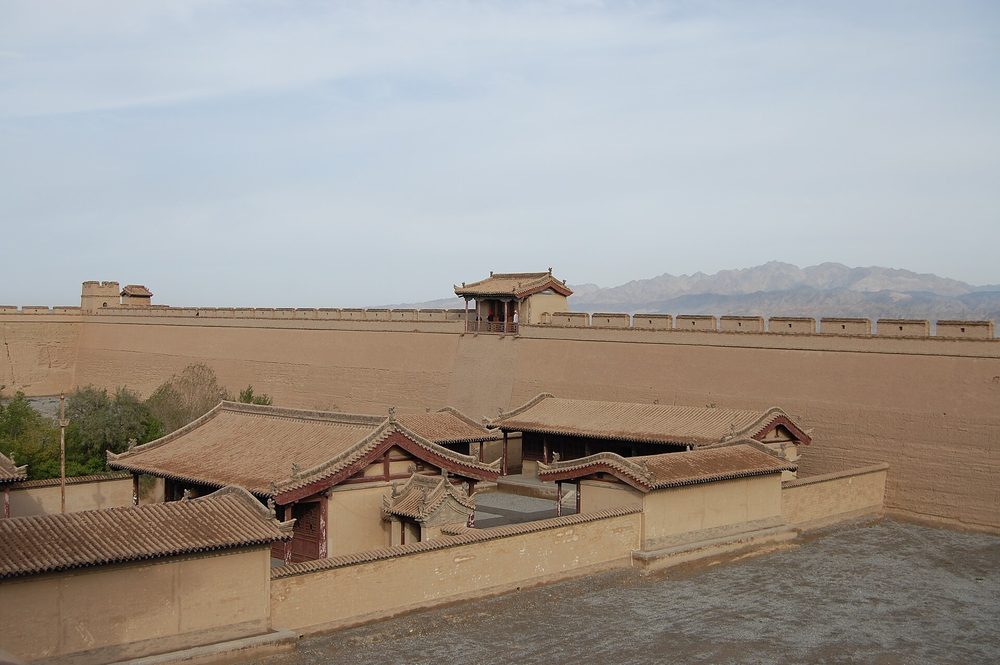
2. Days 4–5: The Hexi Corridor: Zhangye Rainbow Mountains & Jiayuguan Pass
The Hexi Corridor (河西走廊) is a thousand-kilometer narrow ribbon of oasis squeezed between the towering glaciated Qilian Mountains to the south and the harsh Badain Jaran and Gobi Deserts to the north. For centuries, this corridor was the sole fortified gateway linking inner China to Central Asia.
Day 4: Zhangye Danxia Landforms (张掖七彩丹霞): Arrive in Zhangye. Hire a licensed taxi or book a shared shuttle to the Danxia National Geological Park (admission 93 RMB including internal sightseeing shuttle). Millions of years of tectonic compression and mineral weathering have stripped the sandstone hills into vivid bands of crimson, ochre, gold, and turquoise. Visit viewing platforms 4 (Rainbow Clouds Platform) and 1 during the late afternoon when the low sun intensifies the mineral colors. Spend the night in Zhangye city and taste regional beef noodles (Zhangye niurou xiaofàn).
Day 5: Jiayuguan: The First and Greatest Pass Under Heaven: Board a morning D-train from Zhangye West to Jiayuguan (1 hour 20 minutes, 65 RMB). Visit Jiayuguan Fort (嘉峪关关城), constructed in 1372 during the Ming Dynasty. This fortress marked the absolute western frontier of Ming-era imperial defense. Beyond this mudbrick outpost lay the lawless Western Regions (Xīyù). Walk the defensive battlements, visit the Overhanging Great Wall (Xuánbì Chángchéng), and explore the First Fire Tower of the Great Wall perched on the sheer cliff above the Taolai River. In the late afternoon, catch a high-speed train to Dunhuang (2 hours, 110 RMB).
3. Days 6–8: Dunhuang: Mogao Grottoes & The Singing Sand Dunes
Dunhuang was the great desert crossroads where the northern and southern branches of the Silk Road diverged around the deadly Taklamakan Desert. It remains one of the world’s supreme cultural storehouses.
Day 6: The Mogao Caves (莫高窟): Start early at the Mogao Caves Digital Exhibition Center. Here, two 20-minute digital panoramic films explain the construction and art of the caves. Shuttle buses then transport visitors to the cliff face where 735 sandstone caves were carved over a millennium starting in 366 CE.
• Ticket Strategy: Official Type-A tickets (238 RMB) include the digital dome movies and a licensed English-speaking guide who unlocks eight distinct caves with personal flashlights. These sell out weeks ahead in peak seasons. If Type-A tickets are gone, emergency Type-B tickets (100 RMB) allow access to four basic caves without films or specialty guides.
• Cave Highlights: Marvel at Cave 96, containing the 35.5-meter colossal seated Maitreya Buddha (the third-largest Buddha statue in China), and Cave 148, housing an exquisite 15-meter Reclining Parinirvana Buddha surrounded by mourning arhats painted in vibrant lapis lazuli and malachite pigments.
Day 7: Mingshashan Crescent Lake & Yadan Geopark: In the morning, visit Mingshashan (鸣沙山, Singing Sand Dunes) and the Crescent Spring (月牙泉, Yuèyáquán), an ancient natural spring shaped like a half-moon cradled between towering desert ridges. Climb the wooden stairway built into the dunes for panoramic sunrise views. In the afternoon, hire a private car to Yumenguan (Jade Gate Pass, 玉门关) and the remote Ghost City Yadan National Geopark (雅丹魔鬼城) on the rim of the Lop Nor desert, where wind-carved yardang clay towers create dramatic silhouettes at sunset.
Day 8: High-Speed Train to Turpan: Take the modern morning bullet train (D-train) from Dunhuang or Liuyuan South to Turpan North Railway Station (吐鲁番北站) (approximately 3.5 to 4 hours, 195 RMB). As the train leaves Gansu and enters Xinjiang, you will glide across the vast Gobi wind corridors studded with thousands of white wind turbines.
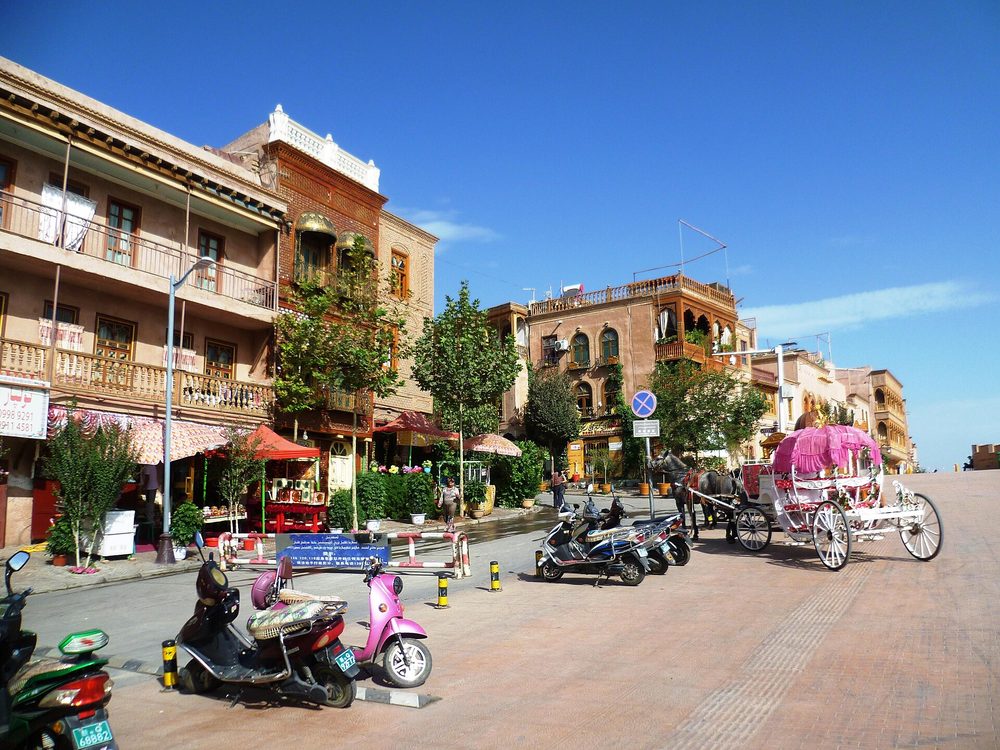
4. Days 9–10: Turpan: The Hottest Oasis on Earth
Located in the Turpan Depression, this remarkable oasis sits at 154 meters below sea level—the lowest geographic depression in China and the second lowest on Earth after the Dead Sea. Despite summer surface temperatures exceeding 45°C (113°F), Turpan flourishes thanks to ancient hydraulic engineering.
Day 9: Karez Well Systems & Jiaohe Ancient Ruins: Visit the Karez Well Folk Park (坎儿井民俗园) to understand how ancient residents tapped glacial snowmelt from the distant Tianshan mountains through underground gravity canals stretching over 5,000 kilometers, preventing evaporation in the desert heat. In the late afternoon, walk the evocative windblown streets of the Jiaohe Ancient Ruins (交河故城). Unlike cities built from bricks, Jiaohe was carved directly out of a 30-meter-high river plateau cliff between the Han and Tang dynasties. Wandering through the ruined Buddhist monasteries, government offices, and infant burial shrines during late golden hour is an unforgettable historical experience.
Day 10: Flaming Mountains & Grape Valley: Drive past the red sandstone gullies of the Flaming Mountains (火焰山), made famous by the Ming Dynasty epic Journey to the West. Cool down in Grape Valley (葡萄沟), where lush overhead trellises produce world-famous seedless green raisins dried in perforated adobe drying houses (chūnjù, 晾房). In the evening, board an overnight sleeper train or high-speed connection west toward Kashgar.
5. Days 11–14: Kashgar: The Living Heart of Central Asia
Kashgar (Kashi, 喀什) is China’s westernmost historic city, situated where the northern and southern Silk Road corridors re-converged before caravans crossed the high Pamir and Tian Shan ranges into modern-day Kyrgyzstan, Tajikistan, Pakistan, and Uzbekistan.
Day 11: Kashgar Old City (喀什古城): Check into your hotel near the historic quarter. Kashgar’s Old City is a sprawling maze of multi-story earth and poplar-wood houses with carved wooden balconies and courtyards. Attend the traditional 10:00 AM City Opening Ceremony at the East Gate, featuring traditional dance and horns. Wander the craft alleys: the Coppersmith Street, the Carpenter Street, and the Musical Instrument Alley where artisans hand-carve dutars and rawaps. Sip saffron-scented spiced tea (yàoxuè chá) at the century-old Old Tea House (百年老茶馆) while elderly locals play folk music.
Day 12: Id Kah Mosque & The Sunday Bazaar: Visit the Id Kah Mosque (艾提尕尔清真寺), built in 1442, featuring a sprawling yellow-tiled entrance, peaceful tree-shaded courtyards, and a prayer hall supported by 140 carved green wooden pillars. Remove your shoes and dress conservatively. Later, explore the bustling Kashgar Grand Bazaar (喀什中西亚国际贸易市场), browsing wool carpets, Xinjiang raisins, dried figs, and embroidered caps.
Day 13: The Karakoram Highway & Karakul Lake Excursion: Hire a licensed driver and vehicle for a day trip along the legendary Karakoram Highway (G314) toward the Pakistani border. Climb past the white sand dunes of Baisha Lake (White Sand Lake, 白沙湖) to reach Karakul Lake (喀拉库勒湖) at 3,600 meters elevation. The turquoise glacial lake reflects the towering snow-covered pyramids of Muztagh Ata (7,546m) and Kongur Tagh (7,649m). Kyrgyz yurt encampments line the grassy lakeshore. Return to Kashgar for dinner at the Night Market across from Id Kah Mosque, savoring roasted whole lamb (kǎoquányáng) and clay-oven baked samsa (kǎobāozǐ).
Day 14: Final Explorations and Departure: Take a quiet morning stroll through the less-commercialized Gaotai Ancient Homes (Gāotái Mínyū, 高台民居), perched on a 40-meter clay cliff overlooking the riverbed. Purchase dried spices and regional nuts before transferring to Kashgar Laining International Airport (KHG) for your connecting flight to Urumqi, Beijing, or Shanghai, or board a domestic train eastward.
6. Practical Logistics: Booking, Apps and High-Speed Train Etiquette
Executing a 14-day Silk Road rail journey requires careful advance planning. Keep the following operational rules in mind:
• 12306 Train Booking Window: Train tickets go on sale exactly 15 days in advance at staggered morning times. Popular long-distance routes like Dunhuang–Turpan and Turpan–Kashgar sell out quickly during summer and autumn. Register your passport early on the official 12306 app or book via Trip.com.
• Xinjiang Travel Permits: Kashgar Old City, Turpan, and Dunhuang do not require special foreign travel permits beyond your standard Chinese visa or visa-free entry stamp. However, day trips heading up the Karakoram Highway toward Tashkurgan or the Khunjerab Pass require a Frontier Defense Permit (Bīanfángzhèng, 边防证), which foreign passport holders must arrange through a licensed local Kashgar agency.
• Time Zone Reality: While all of China officially runs on Beijing Time (UTC+8), geographically Xinjiang is two time zones west. In Kashgar and Turpan, the sun does not set until 21:30 or 22:00 in summer. Shops and government offices open around 10:00 AM Beijing Time, lunch is typically eaten at 14:00, and dinner starts after 20:30.
• Cash vs Mobile Payments: Alipay and WeChat Pay with linked foreign cards function seamlessly throughout hotels, restaurants, and markets across Gansu and Xinjiang. However, carry 300 to 500 RMB in physical cash for small rural highway roadside melon stands or mountain yurt stalls.