
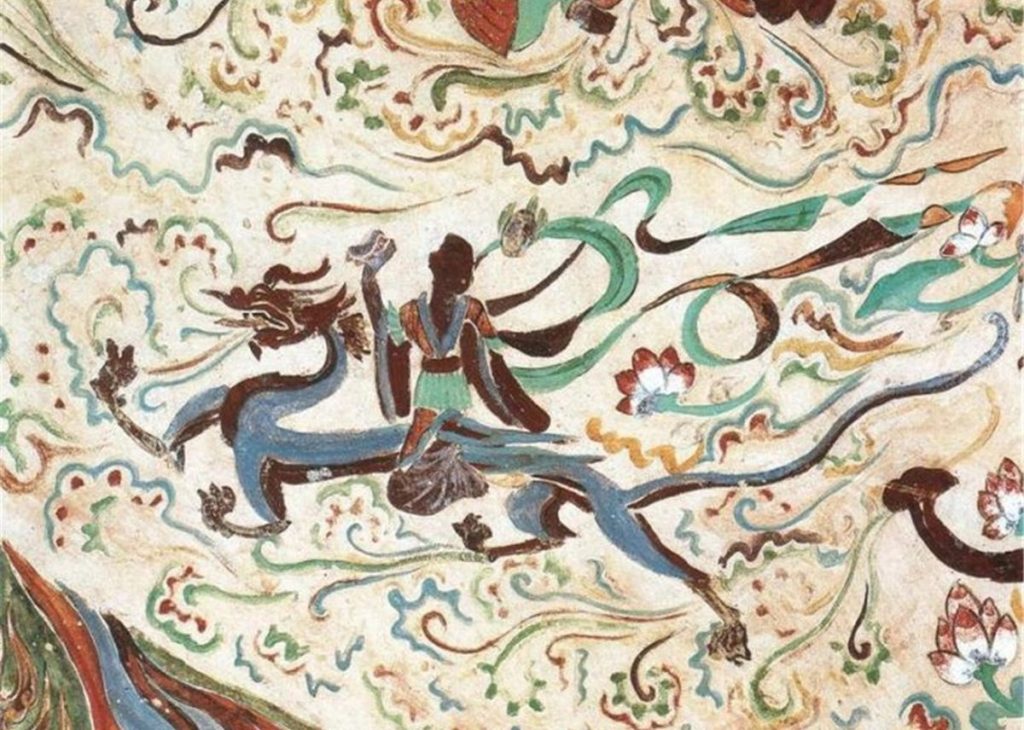
Located on the western edge of the Hexi Corridor in Gansu Province, where the Taklamakan and Gobi deserts collide, Dunhuang was once the vital oasis crossroad of the ancient Silk Road. For over a millennium, merchants, Buddhist pilgrims, and imperial envoys rested their camel caravans beneath desert dunes before embarking on perilous trans-Eurasian journeys.
Today, Dunhuang is home to the Mogao Caves (莫高窟)—the greatest treasury of Buddhist mural art and sculpture on earth—alongside the dramatic golden singing dunes of Mingsha Mountain and the legendary Crescent Lake oasis. Because cultural authorities enforce strict daily visitor quotas to preserve delicate 1,500-year-old mineral pigments, securing the right ticket category and timing your desert excursions properly is essential.
Quick Takeaways: Visiting Dunhuang & Mogao Caves
1. Understanding the Mogao Caves and Ticketing Categories
Carved into a 1.6-kilometer sandstone cliff along the Daquan River, the Mogao Caves comprise 492 surviving grottos containing 45,000 square meters of hand-painted murals and over 2,400 polychrome clay sculptures created between the 4th and 14th centuries. To protect fragile organic binders and ancient mineral pigments from carbon dioxide and humidity introduced by human breath, the Dunhuang Academy strictly caps daily visitor volume.
Two primary ticket tiers are available:
Type A Full Ticket (238 RMB / ~$33 USD): This is the premier ticket and the only option international visitors should target. It begins at the Mogao Grottoes Digital Exhibition Center on the outskirts of Dunhuang. You watch two immersive documentary films: an IMAX historical orientation and a spectacular 360-degree spherical dome theater presentation that reconstructs the caves in photorealistic 8K detail. An air-conditioned shuttle bus then transports you 15 kilometers to the physical cliffside caves, where an official English-speaking Dunhuang Academy guide unlocks and guides your small group through 8 distinct historical caves.
Type B Emergency Ticket (100 RMB / ~$14 USD): Issued only when daily Type A allocations sell out during peak summer travel periods. Type B bypasses the digital theater entirely, buses visitors directly to the cliff, and permits entry into only 4 caves with open-access flow rather than an assigned expert docent.
Special Caves (特窟, Tèkū): High-level art lovers can apply on-site to view specialized masterwork caves (such as Cave 45 with its exquisite Tang Dynasty bodhisattvas, or Cave 220 featuring early Tang orchestral murals). These caves carry individual preservation fees ranging from 150 to 200 RMB per cave and are opened only when daily atmospheric humidity remains within strict safe limits.
2. How Foreigners Book Mogao Caves Tickets Step by Step
Tickets go on sale exactly 30 days in advance at 7:00 AM Beijing time. During peak season (July through October), Type A morning slots sell out within hours.
Follow this booking protocol:
Option 1: Official WeChat Mini-Program or Website. Search for the official mini-program “Mogao Caves Ticket Reservation” (莫高窟参观预约网). Navigate to the English or foreign passport booking section. Input your passport number, legal name, and date of birth. Pay using Alipay or WeChat Pay linked to your international card.
Option 2: Authorized Travel Agencies (Trip.com). If the Chinese mini-program interface presents language difficulties, book a verified entrance ticket or guided day tour via Trip.com, which directly integrates with the Dunhuang Academy’s ticketing API and secures English-group slots.
On the day of your visit, arrive at the Digital Exhibition Center 30 minutes before your booked time slot. Present your physical passport at the international visitor service desk (Hǎiwài Yòukè Chuāngkǒu) to print your official paper admission barcode.
3. The Cave Visit Experience and Conservation Rules
Inside the cliffside grottoes, conservation is taken with the utmost seriousness. Temperature, relative humidity, and carbon dioxide levels are monitored in real time by automated wireless sensors. If human moisture causes humidity to rise above 62%, grottos are locked immediately until air circulation stabilizes.
To ensure preservation:
• Strict Zero-Photography Rule: Cameras, tripods, selfie sticks, and camera backpacks must be checked into free lockers at the visitor entrance. Smartphone photography inside the caves is strictly prohibited; flash, infrared autofocus sensors, and phone lights accelerate pigment degradation.
• Specialized Guide Flashlights: Caves do not contain internal artificial electric lights. Your academy guide carries a specialized cold-spectrum optical flashlight, illuminating individual fresco panels, ceiling lotus mandalas, and painted clay statues while explaining the historical iconography through personal wireless earpieces.
• The Giant Buddha (Cave 96): Every standard tour concludes at the Nine-Story Pagoda (Jiǔcénglóu, 九层楼) built against the cliff face, housing a colossal 35.5-meter seated Maitreya Buddha statue carved directly from the sandstone bedrock during the reign of Empress Wu Zetian.
4. Mingsha Mountain & Crescent Lake Oasis: Sunset & Camel Treks
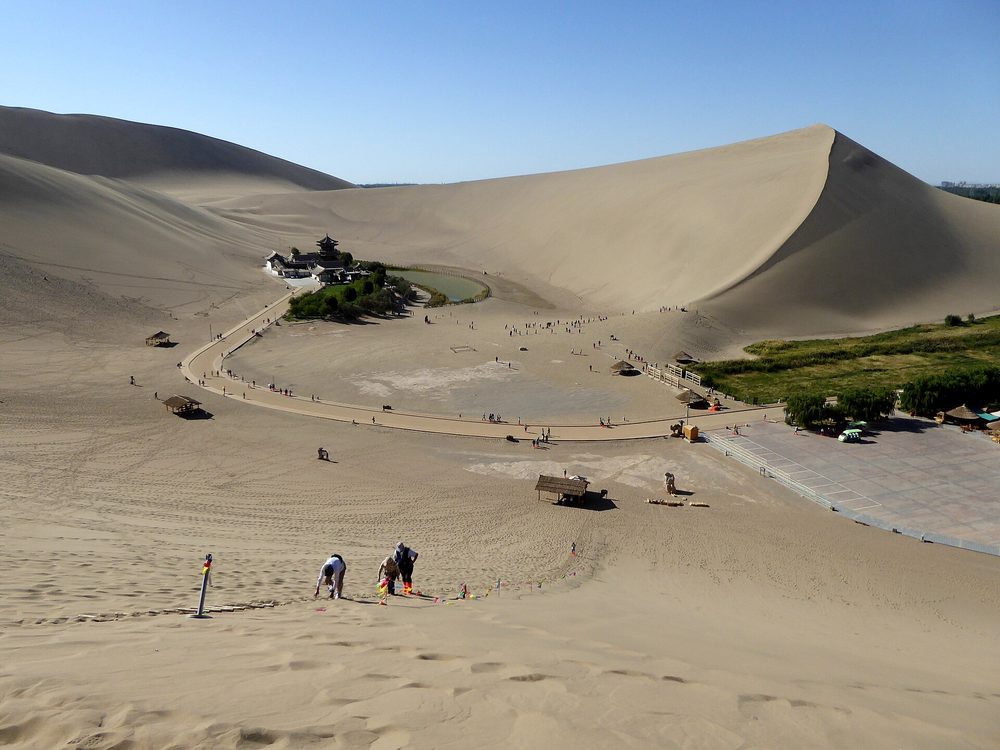
Located just six kilometers south of downtown Dunhuang, Mingsha Mountain (Míngshāshān, 鸣沙山) is named for the rumbling acoustic resonance produced when wind whips across the massive golden sand dunes. Nestled inside a steep natural amphitheater of sand sits Crescent Lake (Yuèyáquán, 月牙泉), a natural crescent-shaped spring that has remained filled with crystal water for thousands of years without being buried by shifting sands.
Essential advice for your desert outing:
Timing Your Entry: In summer, desert surface temperatures easily exceed 45°C (113°F) at midday. Arrive at the scenic entrance around 17:30 or 18:00. In northwestern China, sunset occurs late—often around 20:30 to 21:00—giving you three hours of comfortable exploration under golden evening light.
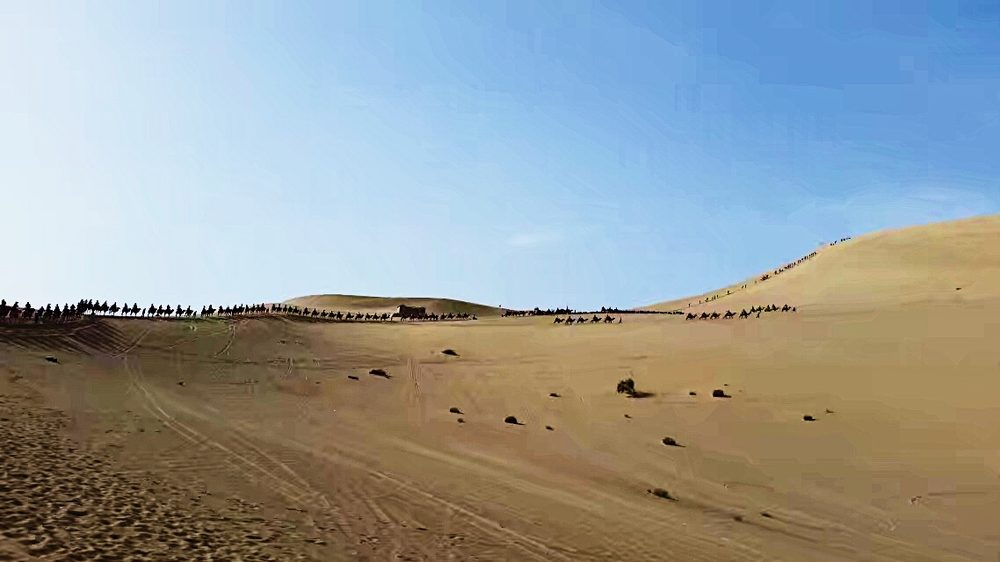
Camel Caravan Treks: Regulated camel rides cost a standard 100 RMB ($14 USD) per person for a 45-minute trek. You mount two-humped Bactrian camels linked in caravans of four or five, winding along desert ridgelines before dismounting at the base of Crescent Lake. Camel handlers are attentive, and camel shoe covers prevent discomfort.
Shoe Covers and Sand Ladders: Rent high-top orange fabric shoe covers (Fángshātào, 防沙套, 15 RMB) at the park gate to keep ultra-fine powdery desert sand from filling your walking shoes. To climb the high dunes above Crescent Lake for sunset views, use the wooden rope ladders (Tīdào) pinned to the sand ridges, which prevent you from sliding backward with every step.
5. Evenings at the Shazhou Night Market (沙洲夜市)
After a day exploring desert grottos and dunes, head into downtown Dunhuang to the bustling Shazhou Night Market (Shāzhōu Yèshì). Open until well past midnight, this lively open-air bazaar features carved wooden rooflines, craft stalls, and hundreds of sizzling food vendors.
Must-try Silk Road culinary specialties include:
• Yellow Noodles with Donkey Meat (驴肉黄面, Lǘròu Huángmiàn): Dunhuang’s most famous culinary specialty, featuring hand-pulled golden wheat noodles tossed in a savory mushroom-soy sauce and served with tender braised donkey meat.
• Charcoal Roasted Lamb Skewers (烤羊肉串, Kǎo Yángròuchuàn): Tender Gansu lamb seasoned generously with toasted cumin seeds and ground chili pepper.
• Sweet Apricot Peel Water (杏皮茶, Xìngpí Chá): An ice-cold, tart and sweet traditional drink brewed from sun-dried desert apricots, rock sugar, and hawthorn berries—the ultimate refreshing beverage after a dusty day in the dunes.